
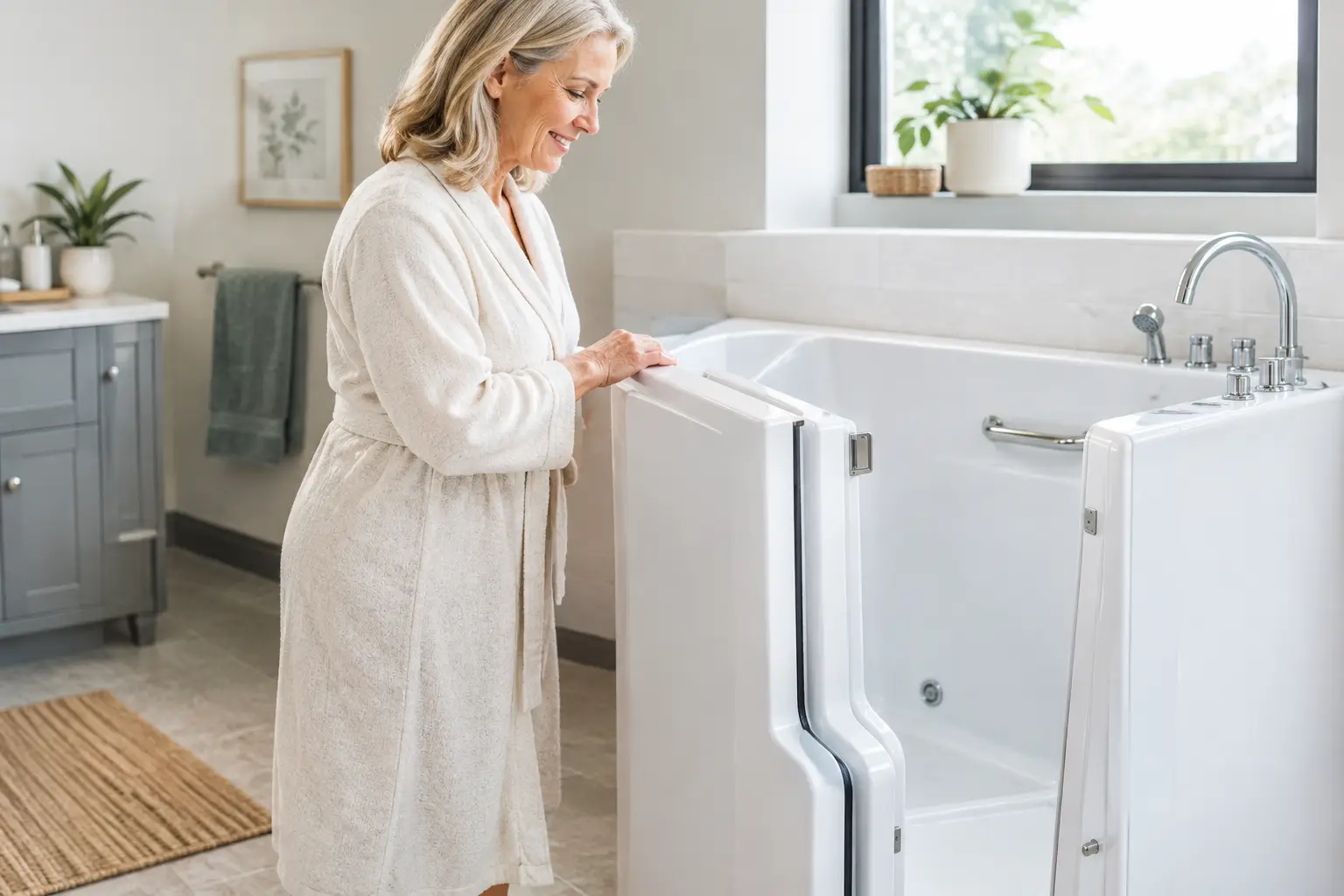
A tub door review should look beyond a glossy photo or a long feature list. For someone who has started bracing against the bathroom wall, relying on a spouse for help, or thinking ahead about aging at home, the door can shape the entire bathing experience. It determines how you enter, how you settle into the seat, and how much room is available when mobility changes.
For Las Vegas and Henderson homeowners, a bathing solution also needs to make sense in the real bathroom they already have. The useful question is not simply, “Does this door open?” It is, “Can I use it comfortably and confidently on an ordinary day, and will it still suit me later?”
Why the Door Deserves a Closer Look
The sidewall of a standard bathtub creates the hardest part of bathing for many people: stepping over a high edge while standing on a potentially wet surface. A walk-in tub replaces that climb with a low entry threshold and a watertight door. Secure Bath uses the term sit-in bath because the purpose is straightforward: enter through the door, sit down securely, then close the door before bathing.
That sequence matters. A person recovering from a knee procedure may have trouble lifting one leg over a tub wall. Someone with arthritis may manage the step one day but find it painful or unsteady the next. An adult child may notice that a parent has begun skipping baths because getting in and out feels like too much work. A door that supports seated entry changes the task from a balancing challenge to a more controlled routine.
Still, not every walk-in tub door works the same way. Direction of swing, frame material, clearance, latch operation, and threshold height are all worth reviewing before making a decision.
Walk-In Tub Door Review: The Outswing Difference
Many walk-in tubs use an inward-swinging door. This can be a workable design, particularly in a bathroom with tight floor space. But it also means the bather generally must step through a narrow opening and move into position before the door closes.
A sit-in bath with a 180-degree outswing door approaches entry differently. The door opens fully outward, allowing the user to approach the bath, turn, and sit down before closing it. For people with limited leg strength, reduced range of motion, or a wheelchair transfer routine, that extra access can be meaningful. There is less need to twist around a partially open door or maneuver past it while standing.
The word “outswing” should not be treated as an automatic answer for every bathroom. The door needs clear floor space to open. During an in-home consultation, the room layout should be measured carefully, including the toilet location, vanity, nearby walls, and how the homeowner uses mobility aids. A well-designed feature only helps when it fits the space and the person using it.
What 180 Degrees of Opening Can Change
A door that opens 180 degrees can rest back against the side of the bath rather than stopping midway into the room. This creates a wider, more open path to the built-in seat. It can make the bathroom feel less confining for a caregiver who needs to stand nearby, too.
This is especially practical for homeowners planning ahead. Mobility needs do not always change suddenly, but a bathroom that is easy to use today can reduce the chance of needing another major remodel later. The goal is to plan once for changing needs, while preserving privacy and independence.
Aluminum Door and Frame: Why Material Matters
A bathing door is used around water every day, so its construction deserves more attention than decorative finishes. Secure Bath's sit-in bath features a durable aluminum door and frame. Aluminum is valued for its strength and resistance to corrosion, qualities that are particularly relevant in a wet environment.
The frame provides structure around the opening, while the door and seal work together to keep water inside the bath during use. Homeowners should ask how the frame is built, how the door latches, and what routine care the seal requires. A knowledgeable installer should explain these points in everyday terms rather than asking customers to accept vague promises about quality.
A sturdy material is not just about appearance. The door will be opened, closed, and latched repeatedly. It should feel solid and straightforward to operate without requiring awkward force. If hand strength is a concern, bring it up during the consultation. The right choice depends on the individual's comfort, not a one-size-fits-all feature sheet.
A Door Is Only One Part of Safe, Comfortable Bathing
The door gets attention because it is visible, but safe bathing depends on the full path from entering the bathroom to leaving the bath. A low threshold reduces the step at entry. Built-in seating means the user does not need to lower themselves to the tub floor. Grab bars offer a stable handhold, while slip-resistant surfaces can provide more secure footing in areas that may become wet.
Together, these features support a calmer routine. They do not guarantee that a fall or injury will never happen, and they do not replace good lighting, sensible footwear, or individual care needs. They can, however, reduce the demands of a task that has become difficult in a traditional tub.
Comfort matters as much as safety. Seat height, seat width, controls, faucet placement, and water depth should all be discussed. A bath that is technically accessible but uncomfortable to use will not provide the daily value a homeowner expects.
Questions to Ask During a Tub Door Review
Before selecting a sit-in bath, focus on how the person will use it rather than comparing brochures alone. A useful conversation should cover the entry motion, available room around the bath, and whether the person can sit and stand comfortably from the built-in seat.
Ask to see how far the door opens and where it rests when fully open. Confirm the threshold height and discuss whether a walker, cane, wheelchair, or caregiver affects the needed clearance. Ask about the aluminum frame, latch, seal, and what care is expected over time. It is also reasonable to ask what installation involves in the existing bathroom and how the team will address plumbing, walls, and finished surfaces around the new bath.
Cost should be discussed honestly as part of the full project, not reduced to a single advertised number. Bathroom layout, plumbing conditions, installation details, and selected features all affect the scope. Clear recommendations and transparent pricing help homeowners weigh immediate expense against the longer-term value of remaining comfortable at home.
Is an Outswing Sit-In Bath Right for Your Home?
An outswing door may be a strong fit for a homeowner who finds stepping and turning difficult, wants more open access to the seat, or is planning for future mobility needs. It can also be helpful when a spouse or family member wants to be nearby without crowding the doorway.
An inward-swing door may make more sense where outward clearance is limited. The answer depends on the bathroom, the user's current mobility, and how those needs may reasonably change. That is why an in-home evaluation is more useful than a quick showroom impression or an online comparison alone.
For homeowners in Las Vegas, Henderson, and the surrounding Las Vegas Valley, Secure Bath offers local, owner-led guidance without pressure. The focus is on recommending a sit-in bath that suits the home and the person who will use it - not pushing features that do not solve a real problem.
If bathing has become a source of hesitation, or if you simply want to make a thoughtful plan before it does, start with the “Got Questions? Ask Away!” chat and schedule a free in-home consultation. No Step. No Slip. No Stress.
Questions about walk-in tubs? Ask away
Free in-home consultation: call (702) 789-7780
Get a free quote →