
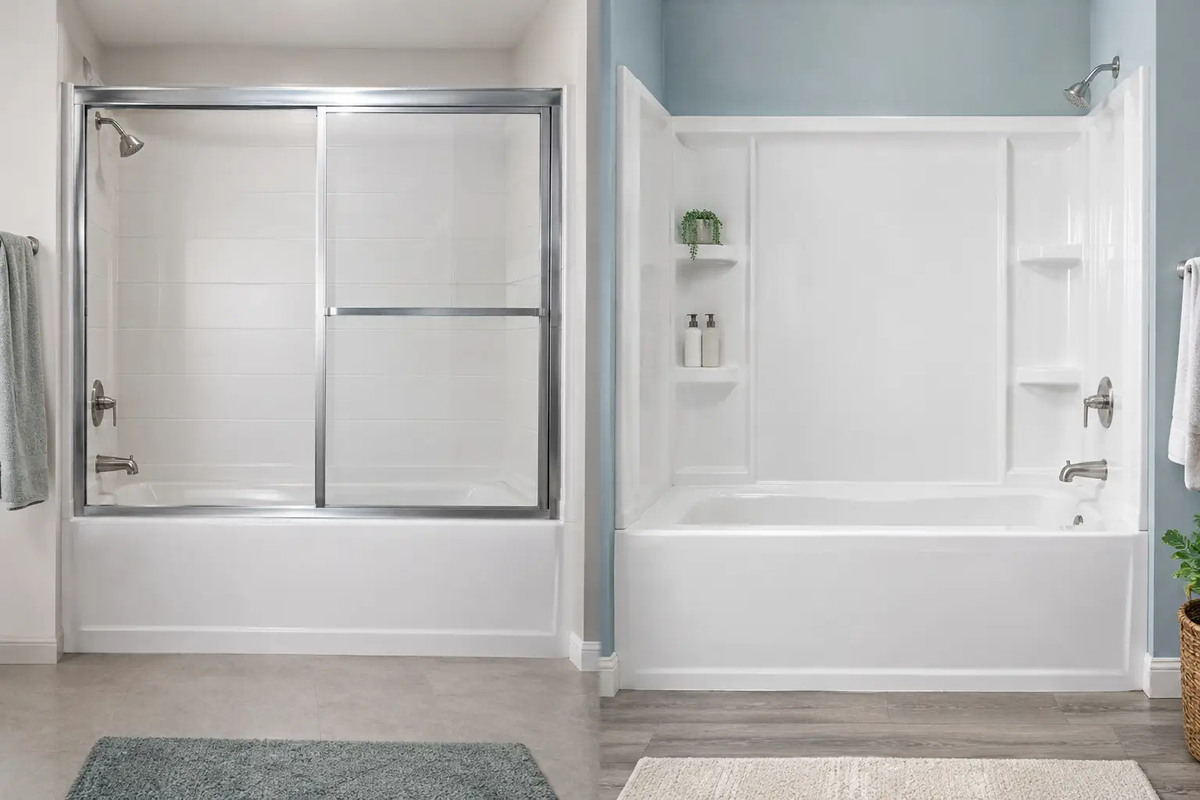
A bathing door may look like a small detail until stepping over a standard tub wall becomes difficult. When comparing aluminum versus plastic tub doors for a walk-in tub or sit-in bath, the real question is not simply which material looks better. It is whether the door feels secure, operates easily, holds its alignment over time, and supports a safer, more comfortable bathing routine.
For a homeowner planning to age in place, recovering from surgery, or helping a parent remain independent, the door is part of the daily experience. It affects how someone enters, sits down, closes the bath, and gets back out. That deserves more attention than a showroom glance.
Aluminum versus plastic tub doors for accessible bathing
First, the comparison can be confusing because manufacturers use the word "plastic" broadly. It may refer to an acrylic, composite, or molded polymer door panel, while the bath shell itself may also be acrylic. Aluminum doors and frames use metal in the door structure, frame, or both. The quality of hinges, latch hardware, seals, and installation matters alongside the material.
Still, material makes a meaningful difference, especially on a door that is opened and closed every day.
An aluminum door and frame are generally chosen for stiffness and long-term structural support. Aluminum resists corrosion, which is useful in a wet bathroom, and it can help the door maintain its shape as it carries the weight and motion of hinges, handles, and latches. A solid frame can also help keep the door properly aligned with its seal.
Plastic-based doors can be lighter and may suit some bath designs well. They do not rust, and their smooth surfaces can be easy to wipe down. But a lighter molded door may have more flex than a metal-framed design. Over years of regular use, that flexibility can matter if it affects how consistently the door meets the gasket or how the latch feels.
Neither material alone guarantees a better bathing experience. A well-built plastic door is preferable to a poorly designed metal one. But for people who want a substantial, frequently used entry door, aluminum often offers the more confidence-inspiring structure.
Why door movement matters as much as door material
The way a tub door opens can have a bigger effect on everyday independence than its finish or color. Many walk-in tubs have inward-opening doors. Because the water pressure helps hold the door closed while the bath is filled, this is a common design. However, an inward-swinging door reduces the available space inside the bathing area while a person is getting situated.
An outswing door changes that process. Secure Bath's sit-in bath uses a durable aluminum door and frame with a 180-degree outswing door. The door can open fully outward, allowing the bather to approach the seat, sit down first, and then close the door from a stable seated position.
That sequence can be especially helpful for someone with limited balance, stiff knees, a walker, or a wheelchair transfer routine. Instead of stepping into a confined area and turning around, the person has room to position themselves at the built-in seat. The goal is simple: reduce awkward movements around a high tub wall.
The door should also be easy to grip and operate. A well-placed handle, a latch that does not require excessive force, and hinges that move smoothly all matter. During an in-home consultation, it is reasonable to ask to see how the door opens, where it rests when open, and how much clearance is needed in the bathroom.
A note about bathroom layout
An outswing door needs clear space in front of the bath. In a compact Las Vegas or Henderson bathroom, that does not automatically rule it out, but it should be planned carefully. The installer needs to account for the toilet, vanity, door swing, mobility equipment, and the path a caregiver may need to use.
This is one reason a personalized recommendation is more useful than choosing a model from a brochure. The best door is the one that works safely in the actual room and for the person who will use it.
Durability, cleaning, and everyday care
Bathrooms in Southern Nevada often have hard water, and mineral buildup can affect nearly any surface or seal if it is left unattended. Door material does not eliminate the need for care, but it can affect what that care looks like.
Aluminum frames are valued because they are stable and corrosion-resistant. They should still be wiped dry as part of normal cleaning, particularly around seams, hinges, and the bottom edge of the door. Use cleaning products recommended for the bath and avoid harsh abrasives that could damage finishes or seals.
Plastic or acrylic doors are also easy to clean with nonabrasive products, but they can be more prone to visible scratching from rough scouring pads. Some finishes may show discoloration or dullness over time, depending on cleaning habits and water conditions. A homeowner should ask what cleaning products are appropriate before installation, not after a finish has been damaged.
More important than daily shine is the condition of the seal. The gasket creates the watertight barrier when the door is closed. Keep it clean, look for wear or debris, and avoid slamming the door. If the door ever stops closing smoothly or appears out of alignment, have it evaluated rather than forcing the latch.
The safety features that work with the door
A strong door is only one part of a mobility-friendly bathing solution. The most useful design is one in which each feature makes the next step easier.
A low threshold reduces the height a person must step over. Built-in seating lets the bather sit rather than lower themselves to the tub floor. Grab bars provide a secure handhold when sitting down or standing up, while slip-resistant flooring helps support more confident footing. Together with a wide-opening door, these details make the transition into and out of the bath less demanding.
For many households, this is the practical appeal of a sit-in bath: it is not about adding gadgets. It is about making an ordinary routine more manageable while preserving privacy and dignity. The right configuration depends on the user's height, strength, transfer needs, and whether a spouse or caregiver will assist.
Hydrotherapy options may also be available in some models for homeowners who value a relaxing soak. They should be viewed as a comfort feature, not a substitute for choosing the right entry, seating, and safety design first.
How to compare doors during a consultation
When you are looking at aluminum versus plastic tub doors, do not rely on material labels alone. Open and close the door several times. Sit in the bath if possible. Pay attention to whether you can reach the handle comfortably after sitting and whether the open door leaves enough space for your usual movement.
Ask how the frame supports the hinges, what routine care the seal needs, and who will handle service if an adjustment is needed. Also ask how the door opening affects installation in your particular bathroom. Clear answers about fit, price, timing, and what is included are part of a good local consultation.
Planning before mobility becomes a major concern can be a practical financial decision as well as a comfort decision. A homeowner who chooses an accessible bathing solution now may avoid remodeling the same bathroom again when needs change. That does not mean everyone needs a sit-in bath immediately. It means the decision should be based on the home, the person, and the years ahead rather than on a one-size-fits-all sales pitch.
For homeowners in Las Vegas, Henderson, and the surrounding valley, a free in-home consultation can turn general questions into a clear plan. See the door in context, talk through the available space, and choose features that make sense for your household. The right bathing setup should leave you with a feeling that fits the Secure Bath promise: No Step. No Slip. No Stress.
Questions about walk-in tubs? Ask away
Free in-home consultation: call (702) 789-7780
Get a free quote →