
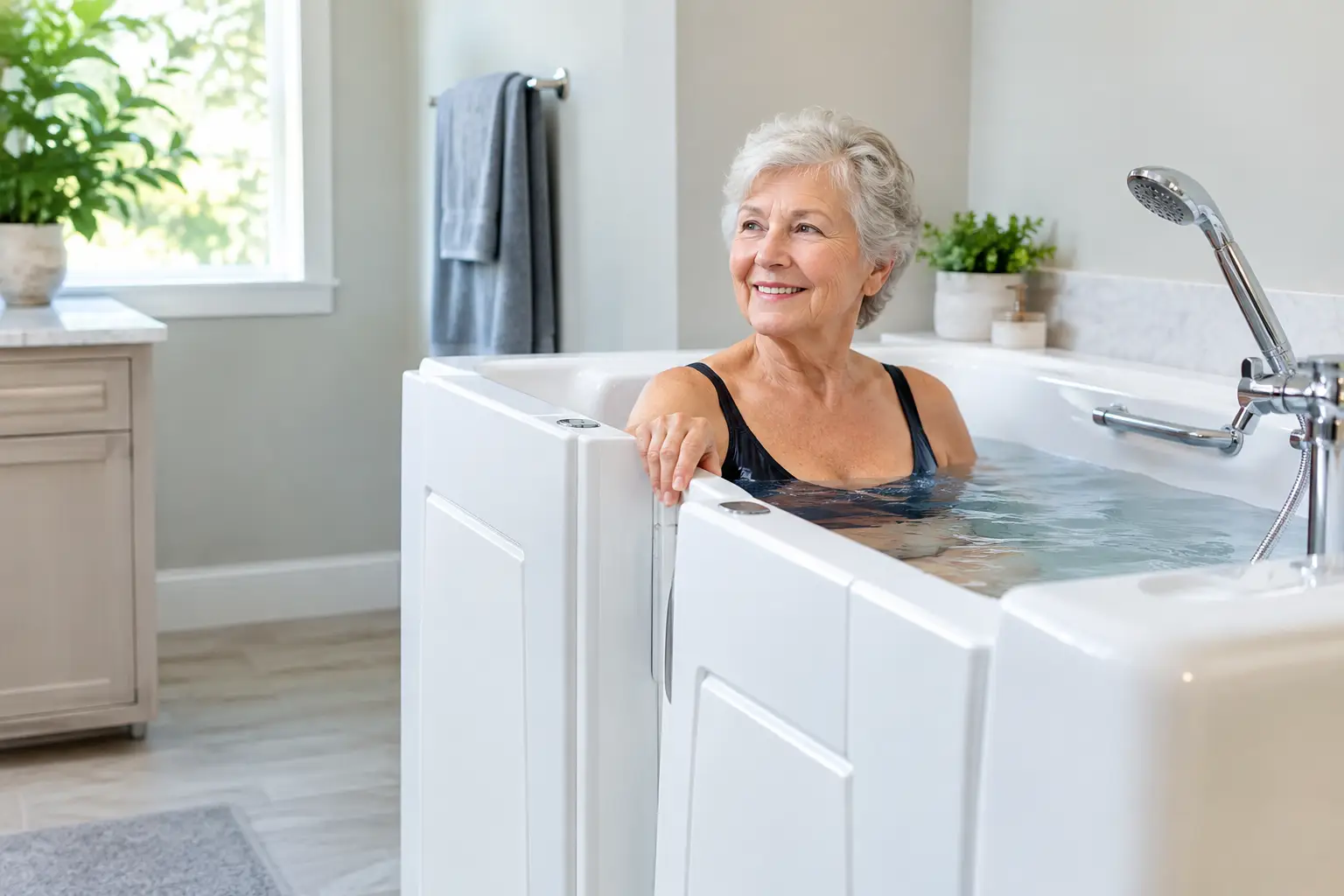
A traditional bathtub can become difficult long before someone considers themselves “disabled.” Maybe stepping over the tub wall now requires holding the counter. Maybe a knee replacement has made standing in the shower tiring. Or perhaps an adult child notices a parent avoiding baths altogether. Senior bathing is not just about adding equipment to a bathroom. It is about making a daily routine feel manageable, private, and comfortable at home.
For many homeowners, a walk-in tub is worth considering when the existing tub creates uncertainty or extra effort. The right accessible bathing solution can reduce the need to balance on one foot, create a stable place to sit, and support a plan to remain in a familiar home as needs change.
When Senior Bathing Starts Taking More Effort
The clearest sign is often not a fall or emergency. It is a change in routine. A person may start rushing through showers because standing feels unsteady, skip bathing on days when pain flares up, or ask a spouse to stay nearby just in case. These changes deserve attention, but they do not need to be treated as a crisis.
The high wall of a standard tub is the problem in many bathrooms. To enter it, a person typically has to lift one leg over the edge, shift weight while standing on a wet surface, then lower themselves into the tub or turn toward the shower. Reversing those movements to get out can feel even more difficult.
A sit-in bath changes that sequence. Instead of stepping over a tub wall, the user opens a door, steps through a low threshold, and sits on a built-in seat before closing the door. This is a practical difference for someone with limited range of motion, balance concerns, weakness after surgery, or a wheelchair or walker nearby for support.
Why a Walk-In Tub Door Design Matters
Not all walk-in tubs work the same way. Door direction, threshold height, seating, and the strength of the door frame affect how the bath feels in daily use.
Secure Bath’s sit-in bath uses a 180-degree outswing door with a durable aluminum door and frame. The door opens fully outward, creating a broad, accessible entry. That matters because the user can sit down first, then bring the door closed, rather than squeezing past a partially opened door or trying to maneuver while standing in a tight space.
For a homeowner using a wheelchair, recovering from an injury, or simply finding turns and transfers harder than they used to be, room to approach the seat can be as meaningful as the low entry itself. The aluminum door and frame are designed for repeated everyday use while providing a solid, dependable feel.
Inside the bath, a built-in seat lets the bather remain seated rather than standing through the bathing routine. Slip-resistant surfaces and strategically placed grab bars provide places to steady oneself during entry, seating, and exit. None of these features can promise to prevent every injury, but together they can make the routine more controlled and less physically demanding.
The goal is simple: No Step. No Slip. No Stress.
Is a Sit-In Bath the Right Choice?
A sit-in bath often makes sense for homeowners who still want the experience of bathing but want a simpler way to get in and out. It can be especially useful when standing for a full shower is tiring or when lowering into a standard tub has become uncomfortable.
That said, it depends on the person and the bathroom. Someone who prefers a quick standing shower and has no difficulty with a low-entry bathing area may have different needs. A person with significant mobility limitations may need to consider how they transfer from a mobility device to the built-in seat. Bathroom dimensions, existing plumbing, door swing clearance, and who uses the space all affect the recommendation.
This is why an in-home consultation is more useful than choosing a model from a brochure alone. Looking at the actual bathroom helps identify whether the bath can fit comfortably, how the outswing door will operate in the room, and which features are meaningful rather than unnecessary.
Planning Ahead Is Often Easier Than Reacting Later
Many people wait until bathing becomes a daily struggle before changing the bathroom. That is understandable, since a traditional tub may have worked well for decades. But planning ahead gives homeowners more choices and less pressure.
A homeowner in Las Vegas or Henderson may be remodeling for the long term, even if mobility is currently good. An accessible bath can be a way to plan once for changing needs instead of facing another major bathroom decision after an injury, surgery, or sudden change in balance. It is not an assumption that health will decline. It is a practical way to make the home more adaptable.
This forward-looking approach can also make life easier for a spouse or family caregiver. When bathing requires less lifting, steadying, and watching, the person bathing may retain more privacy and the helper may feel less strain.
Comfort Features Are Personal, Not One-Size-Fits-All
Safety is usually the starting point, but comfort matters too. A bath should not feel clinical or awkward. Seat shape, interior room, controls, water depth, and optional therapeutic features can influence whether a homeowner will genuinely enjoy using the bath.
Some people appreciate hydrotherapy features for a relaxing soak after a busy day or to ease everyday stiffness. Others care most about simple controls, a comfortable seat, and a door that is easy to operate. A straightforward configuration may be the better value when the priority is safe entry and independence rather than extra features.
The important question is not, “Which tub has the most options?” It is, “Which features solve the actual problem in this bathroom?” A thoughtful recommendation considers mobility, preferences, household routines, and budget without pushing features that do not add practical value.
What Installation Usually Involves
Replacing a standard tub with a sit-in bath is more involved than swapping one fixture for another, but the process should be clear before work begins. An installer will assess the tub area, access to plumbing, wall conditions, floor support, and the electrical needs of any selected features. The home’s existing bathroom layout helps determine what preparation is required.
Homeowners should also ask practical questions before moving forward: How will the new door open in the available space? Where will controls be positioned? What will the finished wall area look like? How will the installation team protect nearby parts of the home during the project? Clear answers help avoid surprises.
A locally led, no-pressure consultation is especially valuable because it focuses on the home in front of you, not a generic package. Secure Bath helps Las Vegas Valley homeowners understand their sit-in bath options, the installation considerations, and the trade-offs involved so they can make a decision at their own pace.
Questions Homeowners Often Ask About Senior Bathing
Do walk-in tubs require a person to stand while bathing?
No. A sit-in bath is designed around a built-in seat, allowing the person to enter, sit, and bathe while seated. Some movement is still required to enter and transfer onto the seat, so it is helpful to discuss individual mobility needs during a consultation.
Will an outswing door work in a smaller bathroom?
Sometimes, but door clearance must be measured carefully. A 180-degree outswing door provides generous access, yet it needs room to open. The location of the vanity, toilet, and bathroom entry door can affect the best configuration.
Should a homeowner wait until bathing is difficult?
There is no requirement to wait. Many homeowners choose an accessible solution while they can take time to compare options and plan the project around their schedule. Planning early can be less stressful than making a quick decision after a mobility change.
A safer bathing routine is not about giving up independence. For many people, it is one way to hold onto it. If your current tub has started to feel like an obstacle, or you want to plan for the years ahead, use the Got Questions? Ask Away! chat and schedule a free in-home consultation.
Questions about walk-in tubs? Ask away
Free in-home consultation: call (702) 789-7780
Get a free quote →