
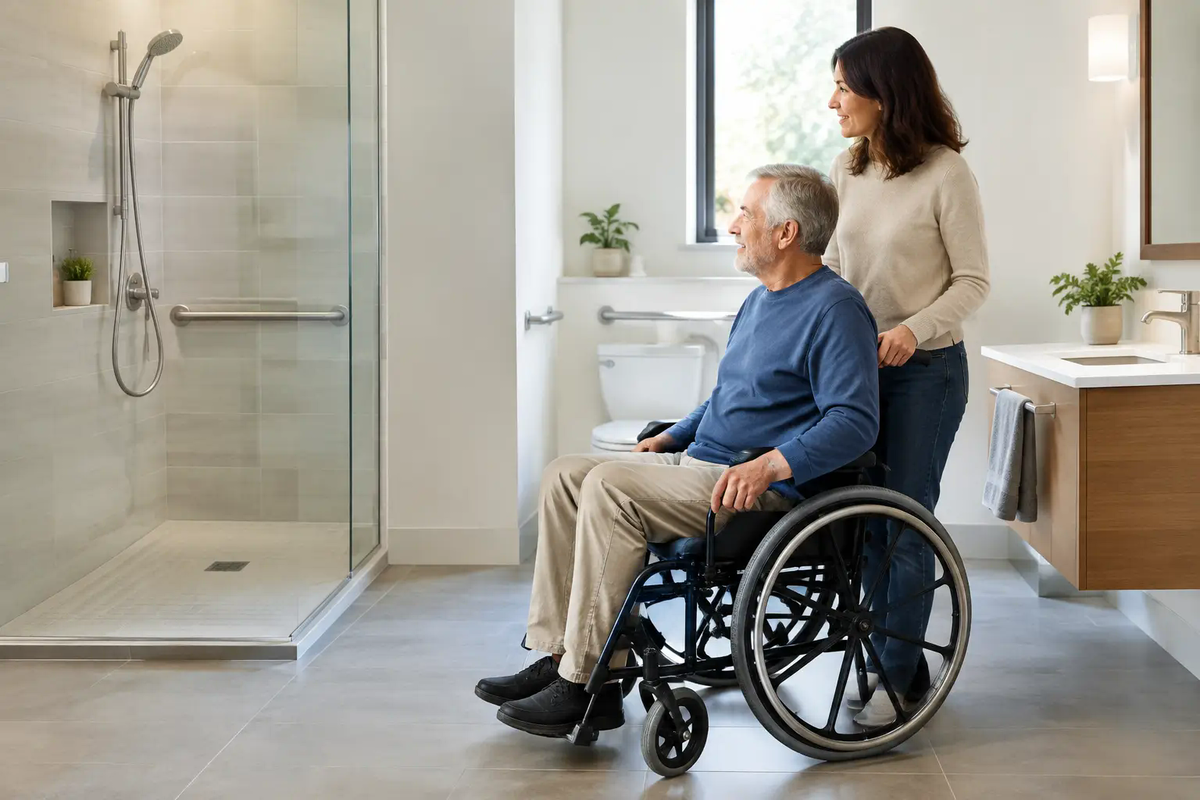
A bathroom can work perfectly for years, then become frustrating after a knee replacement, a change in balance, or the first time someone has to steady themselves on the tub wall. Bathroom accessibility timing is less about predicting the future and more about recognizing when a familiar routine is becoming harder than it needs to be.
For many homeowners, the best time to consider a more accessible bathing setup is before the current tub becomes an everyday obstacle. Planning early creates more choices, avoids a rushed decision during recovery, and lets the bathroom support independence at home.
Why bathroom accessibility timing matters
A traditional bathtub asks a person to lift one leg over a high sidewall, shift their weight while standing on a wet surface, and lower themselves into the tub. That may be manageable now, but it can become uncomfortable after an injury, surgery, or a gradual change in strength or balance.
Waiting until bathing feels impossible is not the only path. Homeowners who plan ahead can choose a solution based on their routines, bathroom layout, budget, and long-term goals. They can also make the change at a convenient time rather than trying to coordinate it around a sudden health event or a caregiver’s urgent concern.
This does not mean every homeowner needs to replace a bathtub at the first sign of stiffness. The right timing depends on how the space is being used and whether a person can bathe comfortably and confidently without relying on risky workarounds. The goal is practical: make daily bathing easier while preserving privacy and dignity.
Signs it may be time to rethink the tub
Difficulty stepping over the tub wall is often the clearest sign, but it is not the only one. A person may start holding tightly to a towel bar, avoiding baths altogether, asking a spouse to stand nearby, or delaying bathing because the process feels tiring. These small adjustments can signal that the bathroom is no longer matching the household’s needs.
Timing also matters when a homeowner is planning elective surgery or returning home after an injury. A bathroom update completed before recovery can remove one major concern from the return-home plan. For adult children and caregivers, it can also reduce the pressure of trying to solve a bathing problem quickly while supporting someone else’s recovery.
There is a planning side, too. A homeowner in Las Vegas or Henderson may be remodeling an older bathroom, replacing worn flooring, or updating plumbing anyway. That can be a sensible point to assess whether the current tub should be replaced with a walk-in tub, sit-in bath, or accessible shower. Addressing access during a planned project can be more straightforward than reopening the bathroom later.
Planning ahead does not mean overbuilding
Some people hear “aging in place” and picture a clinical-looking bathroom. Accessible bathing does not have to mean that. It means choosing features that reduce unnecessary effort for the people who use the room now, while leaving room for changing needs later.
A sit-in bath is often a strong fit for someone who prefers a bath but wants to avoid climbing over a conventional tub wall. Instead of stepping into a deep basin, the user enters through a low threshold and sits down before bathing. Built-in seating, grab bars, and slip-resistant surfaces can make the process feel more stable and manageable.
For Secure Bath’s sit-in bath, the 180-degree outswing door is especially relevant to bathroom accessibility timing. The durable aluminum door and frame allow the door to open fully outward, so the user can sit down before closing it. That can be helpful for people who have difficulty turning, backing into a tight opening, or balancing while lowering themselves into a tub.
The feature is not only about mobility today. It can make the space easier to use if a walker, wheelchair, or caregiver assistance becomes part of the routine later. During an in-home assessment, door swing and clear floor space should be considered carefully. An outswing door needs room to open, so the bathroom layout matters.
The practical trade-offs to consider
Accessible bathing solutions solve different problems, and no single option is right for every household. A sit-in bath can preserve the comfort of soaking while removing the high tub wall. It does, however, require the user to enter, close the door, and remain seated while the bath fills and drains. For someone who strongly prefers a quick standing shower, a walk-in or curbless shower may be a better match.
A roll-in shower can be especially practical for wheelchair access, but it requires enough bathroom space and careful water-management planning. A tub-to-shower conversion may improve entry and simplify the room, although it removes the bathing option that some homeowners value for comfort and relaxation.
Costs also vary based on the product selected, bathroom size, plumbing conditions, electrical needs, wall repairs, and the extent of installation work. The lowest initial price is not always the best value if the result does not meet likely needs a few years from now. On the other hand, adding features that a household will never use can strain a budget without adding meaningful benefit.
This is why a personalized recommendation matters. A good conversation starts with how a person currently bathes, what is difficult, who may use the bathroom, and how long the homeowner expects to remain in the home.
A useful timeline for accessible bathing decisions
The ideal schedule is usually earlier than people expect, but it should still be driven by real needs. Consider the following situations as natural decision points:
- A planned bathroom refresh, plumbing update, or replacement of an aging tub.
- A coming surgery, rehabilitation period, or return home after an injury.
- New difficulty lifting a leg over the tub wall or getting up from a low tub floor.
- A spouse or family member beginning to provide regular bathing assistance.
- A homeowner’s decision to remain in the home for the long term.
In the first situation, planning is proactive. In the middle situations, it is responsive. In either case, the best next step is usually to understand the available options before an emergency creates pressure.
What to discuss during an in-home consultation
Measurements alone do not determine whether a walk-in tub or sit-in bath will work. A useful consultation should consider how the user moves through the bathroom, whether the door has adequate clearance, the location of the toilet and vanity, and the condition of the existing plumbing.
It should also cover the bathing experience itself. Does the homeowner want to sit and soak? Are grab bars needed near the toilet as well as the bathing area? Would a shower wand make rinsing easier? Is the current floor slippery when wet? These everyday questions often reveal more than a simple product brochure.
Secure Bath provides free, no-pressure in-home consultations for homeowners in Las Vegas, Henderson, and surrounding Las Vegas Valley communities. Local guidance can be valuable because the recommendation is based on the actual bathroom, not a one-size-fits-all estimate. Homeowners should feel comfortable asking about installation scope, timing, product features, and transparent pricing before deciding.
A bathroom that supports the next chapter
There is no need to wait for a dramatic moment to make bathing easier. Sometimes the right time is when stepping over the tub has become annoying. Sometimes it is before a recovery period. Sometimes it is while planning a home that will remain comfortable for years to come.
The most useful accessibility updates are the ones that fit real life: a low threshold, a stable place to sit, a door that opens where it should, and surfaces that feel more secure underfoot. No Step. No Slip. No Stress. begins with giving yourself enough time to choose the bathroom solution that feels right for your home and your routine.
Questions about walk-in tubs? Ask away
Free in-home consultation: call (702) 789-7780
Get a free quote →