
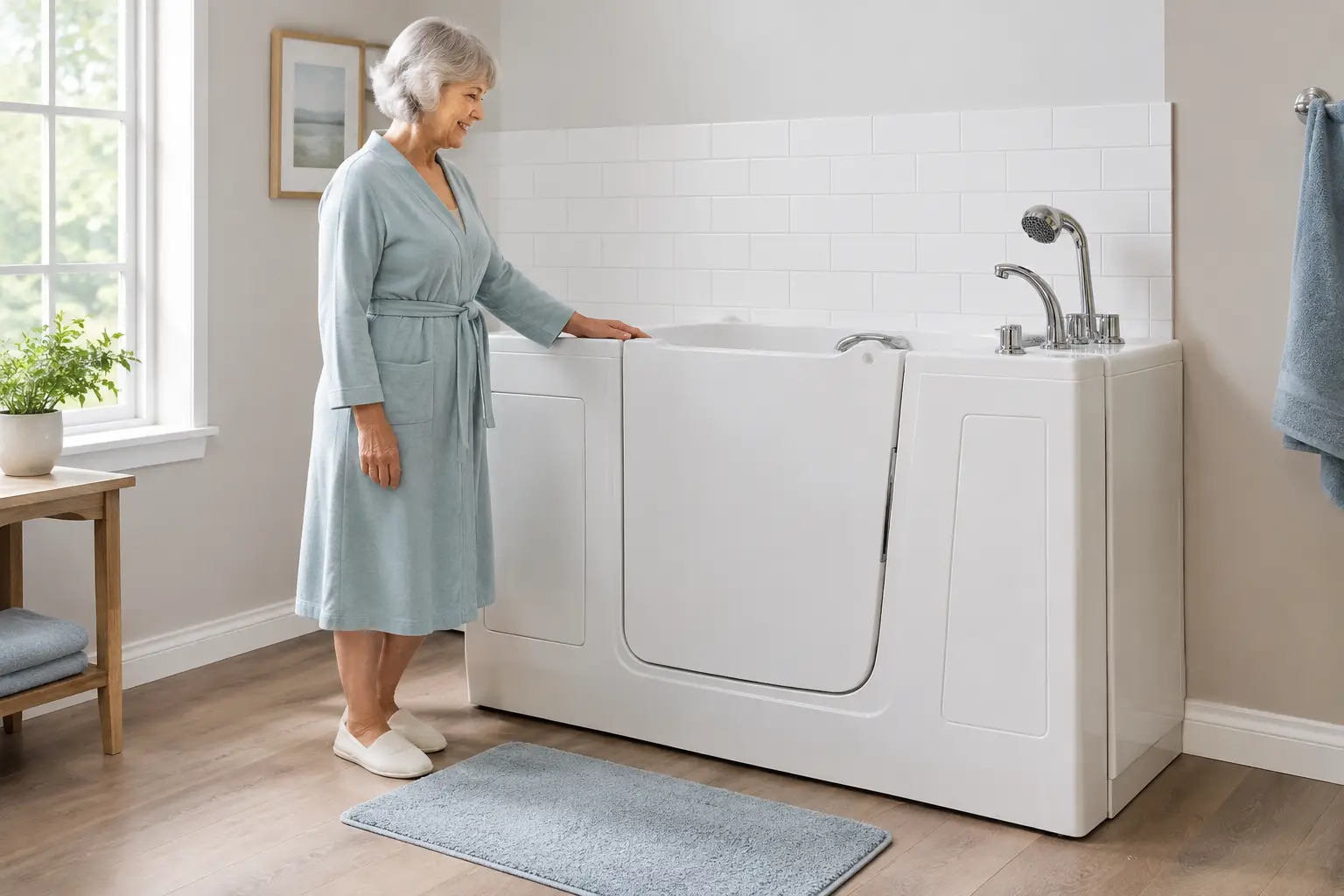
A homeowner may be ready to replace a hard-to-use bathtub but hesitate at the thought of electrical work. So, do walk-in tubs need electricity? Usually, yes - but the amount of electrical work depends on the features selected. The door, low-entry threshold, built-in seat, and slip-resistant floor do not need power. Features such as hydrotherapy jets, heated surfaces, lights, and certain drain systems may.
For many people in Las Vegas and Henderson, understanding this distinction makes the decision much simpler. A properly planned accessible bath installation considers the room's plumbing, electrical capacity, layout, and the person who will use it every day. The goal is not to add complicated gadgets. It is to create a bathing space that feels comfortable, practical, and easier to use.
Do Walk-In Tubs Need Electricity for Basic Use?
A basic walk-in tub can hold water, drain, and provide seated bathing without electricity for its most essential functions. The safety benefits people often want most - a low threshold, a watertight door, a chair-height seat, secure handholds, and a textured floor - are physical design features rather than powered ones.
That is especially true of a Secure Bath sit-in bath. Its 180-degree outswing door allows the user to sit down before closing the door, rather than stepping over a tall tub wall and trying to balance while standing. The durable aluminum door and frame are designed for everyday use, and the door itself does not rely on electricity to open or close.
Electricity becomes part of the project when a homeowner chooses comfort or convenience features that use a motor, heating element, or control panel. That may include water jets, air jets, inline water heating, heated seating, chromotherapy lighting, or an electrically assisted drain. Not every sit-in bath includes every feature, and not every homeowner needs them.
Which Walk-In Tub Features Use Power?
The answer depends on the model and options, but electrical needs commonly fall into a few practical categories.
Hydrotherapy systems use pumps to move water or air through jets. They require electrical power, as do controls that adjust the intensity or pattern of the jets. Some systems also include a heater intended to help maintain water temperature during a longer bath. This can be welcome for a person who enjoys soaking, but it may increase the electrical requirements of the installation.
An assisted drain can also use power. Because a sit-in bath door must remain closed until the tub is empty, a quicker drain may be a meaningful comfort feature for someone who does not want to sit and wait after bathing. However, drain performance also depends on the home's plumbing arrangement. It should be discussed as part of the whole installation, not viewed as an electrical feature alone.
Other optional features, such as lights or heated surfaces, use relatively little power compared with pumps and heaters, but they still need safe, code-appropriate connections. A simple seated bath without these upgrades may have much more modest electrical needs.
What Electrical Work Might Be Needed?
Many homes already have adequate service for an accessible bath, but a qualified installer and electrician should evaluate the existing bathroom before making assumptions. Older homes may have limited circuit capacity, while a newer home may have an available path for the dedicated circuits certain equipment requires.
Bathroom electrical work must account for water. Outlets and equipment need appropriate protection, and wiring must be installed according to local code. Depending on the sit-in bath's specifications, the project may call for one or more dedicated circuits. A dedicated circuit serves one major appliance or system, helping avoid overloads caused by sharing power with other bathroom equipment.
The practical question is not simply, "Is there an outlet nearby?" It is whether the electrical system can safely support the exact bath features selected. An in-home evaluation can identify where power is available, whether panel capacity needs attention, and how the work can be coordinated with plumbing and wall finishing.
This is one reason a free in-home consultation is useful. Measurements and product brochures are helpful, but they cannot show the condition of wiring behind the walls or the best route for new electrical service.
Electricity Is Only One Part of Installation
Electrical planning matters, but it should not overshadow the features that affect daily use. A person recovering from surgery may be focused on avoiding a high step over a traditional tub wall. An adult child helping a parent may be concerned about whether the door is easy to manage. Someone planning to age in place may want a solution that supports independence now and remains useful if balance or mobility changes later.
In those situations, the layout and entry design often matter more than a long feature list. An outswing door can be particularly helpful because it opens fully into the room. The user can approach the seat, sit down, and then close the door from a stable seated position. For wheelchair users or people who use a walker, adequate clear floor space outside the bath is also an essential part of planning.
The sit-in bath's built-in seating reduces the need to lower down to the bottom of a conventional tub and then push back up. Slip-resistant surfaces and well-placed grab bars provide additional points of support. These features do not promise to prevent every fall or solve every mobility challenge, but they can make the bathing routine less demanding and more manageable.
That is the practical meaning behind No Step. No Slip. No Stress. It is not about turning a bathroom into a medical setting. It is about reducing an everyday obstacle in a familiar room of the home.
Should You Choose Fewer Powered Features?
It depends on how the bath will be used. A homeowner who wants a straightforward, low-entry bathing solution may prefer a simpler configuration with fewer electrical requirements. This can keep the project focused on access, seating, and dependable daily use.
Someone with sore muscles after activity, stiffness that makes relaxing difficult, or a strong preference for a spa-like soak may decide that jets or heated features are worthwhile. Those options can add comfort, but they also add equipment, controls, and installation considerations. The right choice is not the most feature-packed bath. It is the one that fits the household's needs, habits, and budget without adding things that will go unused.
Planning ahead is also reasonable. A homeowner does not need to wait for a major mobility problem to make bathing easier. Choosing an accessible bath before it becomes urgent gives more time to compare options, consider electrical needs, and make decisions without pressure. It is a way to plan once for changing needs rather than face another major bathroom project later.
Common Questions About Power and Sit-In Baths
Will the bath still work if the power goes out?
The door, seat, and basic bathing area remain physical features. However, powered options such as jets, heaters, lighting, and an electrically assisted drain will not operate until power returns. The exact impact depends on the features installed. This is worth discussing before selecting a model, particularly if a homeowner wants an assisted drain.
Can an existing bathroom handle a powered walk-in tub?
Often it can, but it should be evaluated rather than guessed. The home's electrical panel, available circuits, distance from the bathroom, and the chosen bath features all affect the answer. A professional installation plan accounts for these details before work begins.
Does an outswing door need a motor?
No. The 180-degree outswing aluminum door and frame are designed to provide a stable, accessible entry without depending on a motor. The benefit is simple: sit down first, then close the door, rather than stepping over a tub wall.
Is electrical work always required when replacing a standard tub?
No. If the selected sit-in bath has no powered features, electrical changes may be minimal or unnecessary. If it includes jets, a heater, or an assisted drain, electrical work is more likely to be part of the installation. The product specifications and the home's existing setup determine what is needed.
A bathing solution should make sense in the real home, not just on a showroom floor. For homeowners weighing a sit-in bath in Las Vegas, Henderson, or the surrounding Las Vegas Valley, Secure Bath can assess the space, explain which features need power, and provide straightforward recommendations without pressure. Use the Got Questions? Ask Away! chat or schedule a free in-home consultation to talk through the details before making a decision.
Questions about walk-in tubs? Ask away
Free in-home consultation: call (702) 789-7780
Get a free quote →