
A Safer Way to Bathe: A Comparison of Walk-In Tubs and Sit-In Baths
Not all walk-in tubs are the same. The direction the door swings is the single most important safety feature, and most companies sell the less safe design. Here is what you need to know.
A Safer Way to Bathe: A Comparison of Walk-In Tubs and Sit-In Baths
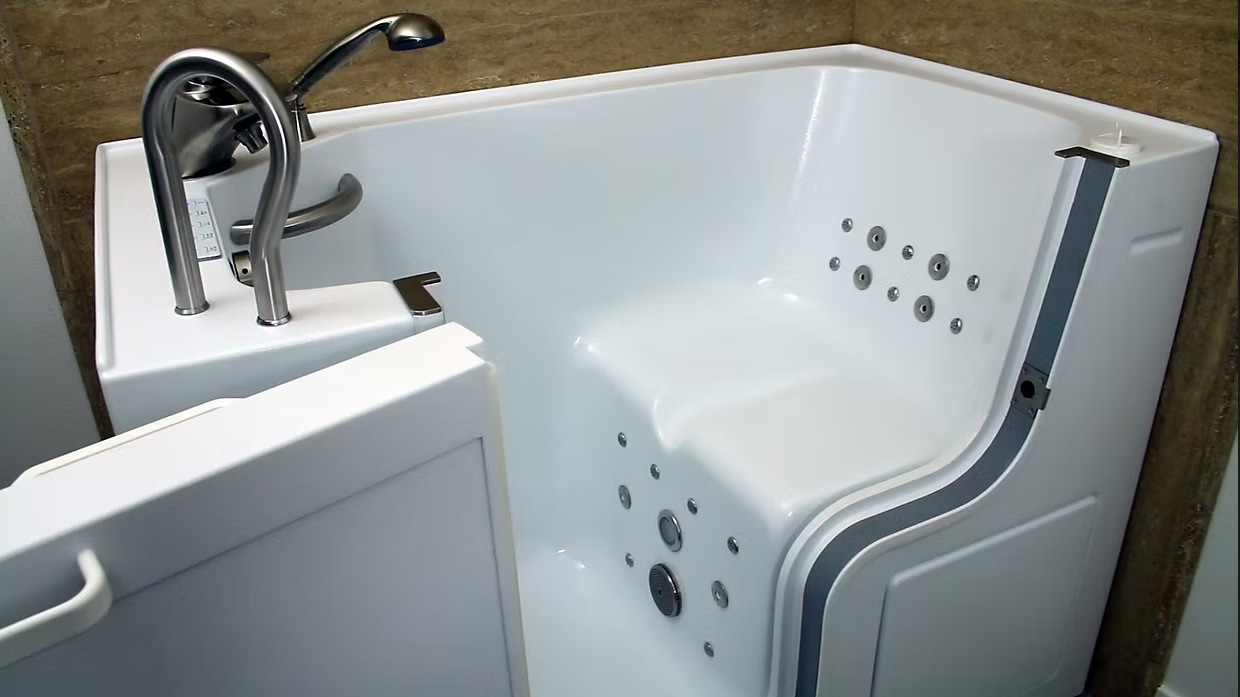
If you have been researching walk-in tubs, you have probably noticed that most companies describe their products in similar ways: low-threshold entry, built-in seat, grab bars, available hydrotherapy jets. The features sound the same across every brand. So what actually separates one walk-in tub from another? The answer is the door. Specifically, the direction the door swings, the width of the opening, and how the door design affects the sequence of movements you go through every time you enter and exit the tub.
Rick, the owner of Secure Bath, spent 9 years at one of the largest walk-in tub manufacturers in the country. During that time, he installed thousands of walk-in tubs with inswing doors and heard directly from customers about what worked and what did not. The inswing door was the number one complaint. That is why every tub Secure Bath installs uses an outswing door instead.
Most walk-in tubs on the market use an inswing door. The door opens inward, into the tub. The entry sequence: open the door inward (it takes up space inside the tub), step over the low threshold, stand inside the tub while you close the door behind you, sit down, then fill the tub. The exit is the reverse: drain while seated, stand up in the tub, open the door inward (stepping back to clear the swing path), then step out. The problem is the standing-inside-the-tub step. You are standing on a wet surface with no water for support, relying on balance while reaching behind you to close the door. For someone with balance issues or fear of falling, this is the most dangerous moment of the entire bathing process.
A sit-in bath with Secure Bath's outswing door reverses the entire sequence. You open the door outward (it swings 180 degrees, completely clearing the opening). You sit down on the seat from outside the tub at chair height. You close the door while seated. You fill the tub. At no point are you standing inside the tub. You are seated before the door closes. You are seated while the tub fills. You are seated while you bathe. And you are seated while the tub drains.
Here is how the two designs compare. Entry: inswing requires stepping in and standing in the tub before sitting, while a sit-in bath means sitting first. Door clearance: an inswing door takes up interior space, while an outswing door clears the tub entirely. Exit: inswing requires standing in the drained tub, while a sit-in bath lets you open the door while seated. Wheelchair accessibility: an inswing door limits opening width, while an outswing door on a wheelchair accessible model clears completely for lateral transfer. Seal technology: both use identical watertight compression seals. Features: both offer hydrotherapy jets, grab bars, slip-resistant surfaces, heated seats, and quick drain systems. The difference is entirely in the door.
If outswing doors are safer, why do most companies sell inswing models? Rick's answer from 9 years inside the industry: cost and simplicity. Inswing doors are cheaper to manufacture. The hinge mechanism is simpler. For manufacturers focused on production volume, the inswing door is the economically rational choice. But the economically rational choice for the manufacturer is not the safest choice for the customer. Rick started Secure Bath because he believed customers deserved the safer design at a fair price. For more detail, read our article on outswing vs inswing walk-in tub doors.
When comparing walk-in tubs, the door should be the first thing you evaluate. Ask every company: does your door swing inward or outward? Beyond the door, evaluate grab bar placement (positioned for your height or generic positions?), seat height and width (bariatric models have wider, deeper seats), hydrotherapy options, drain speed, threshold height, and installer credentials.
Secure Bath installs only outswing door sit-in baths. Every model, from standard walk-in tubs to bariatric models to wheelchair accessible tubs to walk-in tub shower combos, uses the outswing design. Rick offers a free in-home consultation where he demonstrates the difference. For a broader comparison including showers, read walk-in tubs vs walk-in showers. For pricing, see walk-in tub costs. Call (818) 754-9580 to schedule.
Frequently Asked Questions
← Back to all blog posts
View All PostsWhat Our Customers Say
Real reviews from homeowners we've helped across Henderson and Las Vegas.
Ready to Make Your Bathroom Safe?
Free quotes with no pressure, no obligation.
Call (818) 754-9580