
What Happens After a Bathtub Fall? Injuries, Recovery, and How to Prevent the Next One
A bathtub fall changes everything in an instant. Here is what actually happens next: the ER visit, the diagnosis, the surgery, the recovery, the fear, and how to prevent it from happening again.
What Happens After a Bathtub Fall? Injuries, Recovery, and How to Prevent the Next One
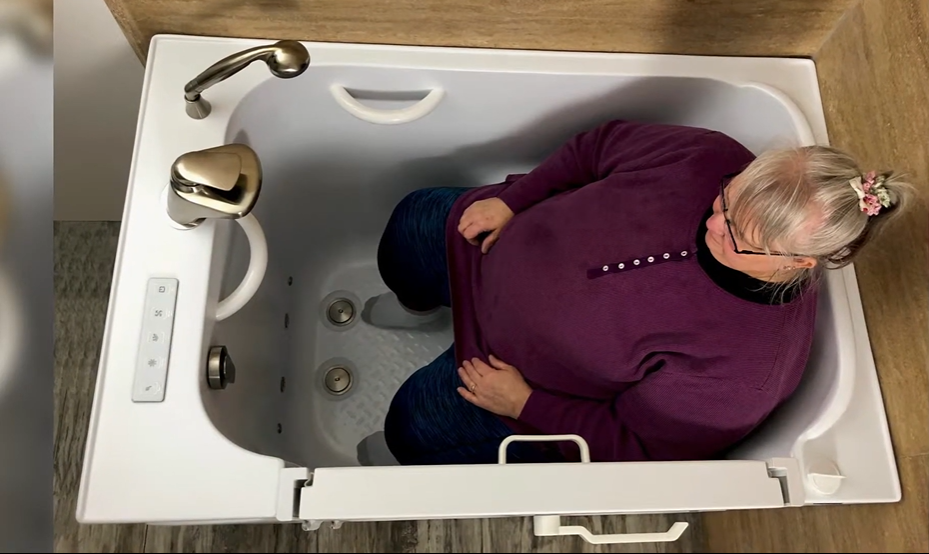
One moment you are stepping into the tub or standing up after a bath. The next, you are on the floor, in pain, and unsure whether you can get back up. What happens next is a sequence that plays out the same way for thousands of seniors every year. Secure Bath hears this story in some form during nearly every consultation. A senior or their family member calls because a fall already happened, or because a near-miss scared them enough to take action.
According to the CDC, approximately 235,000 people over the age of 15 visit emergency rooms each year for injuries that occurred in the bathroom. About 80% are caused by slips and falls. Two-thirds occur during bathing or showering. For adults 65 and older, nearly 30% of those injured are diagnosed with fractures. Among adults 85 and older, 38% are hospitalized. Falls are the leading cause of injury-related deaths among adults over 65, and the bathroom is one of the highest-risk locations.
The first challenge after a bathtub fall is getting up. Many seniors who fall cannot get up on their own. If they are alone, they may lie on a hard, wet surface for minutes or hours until someone finds them. If someone is home, they call 911 or help the person up. If the person hit their head, lost consciousness, or cannot bear weight on a limb, paramedics transport them to the emergency room. In the ER, imaging (X-rays, CT scans) assesses for fractures, head injuries, and soft tissue damage.
The most common serious injury is a hip fracture. According to the CDC, more than 300,000 older adults are hospitalized for hip fractures each year, and more than 95% of hip fractures are caused by falling. A hip fracture almost always requires surgery within 24 to 48 hours, followed by days in the hospital and transfer to a rehabilitation facility. The average cost of a hip fracture including surgery, hospitalization, and rehabilitation ranges from $30,000 to $40,000 or more. Other common injuries include wrist and arm fractures, head injuries and concussions, spinal injuries, and significant bruising and soft tissue damage.
After a hip fracture surgery, the typical recovery includes 3 to 7 days of post-surgical hospitalization, 2 to 4 weeks in a rehabilitation facility, 3 to 6 months of physical therapy, and 6 to 12 months before full mobility is restored for those who do fully recover. The reality is that many seniors do not fully recover. Research shows that approximately 20% of seniors who fracture a hip pass away within one year. Among those who survive, many never regain their pre-fall level of mobility and independence.
The physical injuries heal to whatever degree they are going to heal, but the psychological impact persists. Researchers call it post-fall syndrome or fear of falling, and it affects the majority of seniors who experience a fall. The fear is rational. The conditions that caused the fall are still there when they return home. The CDC confirms that once a senior has fallen, their risk of falling again doubles. This fear leads to behavior changes. Seniors start avoiding bathing, showering less frequently, or only bathing when someone else is home.
After a fall, the family often faces a difficult conversation: modify the house or move to assisted living? For families where the parent's only safety issue is the bathroom, modifying the bathroom is the targeted solution. A walk-in tub with our outswing door eliminates the dangerous step. A curbless shower removes the threshold entirely. Grab bars, slip-resistant flooring, and anti-scald valves address the remaining hazards.
If a fall has already happened, prevention becomes urgent because the risk of a second fall has doubled. Eliminate the step by replacing the tub with a walk-in tub or barrier-free shower. Install grab bars at every transition point, anchored into wall studs. Add slip-resistant flooring inside the shower and on the bathroom floor. Install an anti-scald valve to prevent temperature spikes. Add a built-in seat or shower bench so bathing is seated. Install a handheld showerhead that works at seated height. For a complete room-by-room assessment, see our bathroom safety checklist for seniors. The best time to act is before the fall, but if a fall has already happened, the urgency is real. Call (702) 789-7780 for a free in-home consultation.
Frequently Asked Questions
← Back to all blog posts
View All PostsWhat Our Customers Say
Real reviews from homeowners we've helped across Henderson and Las Vegas.
Ready to Make Your Bathroom Safe?
Free quotes with no pressure, no obligation.
Call (702) 789-7780