
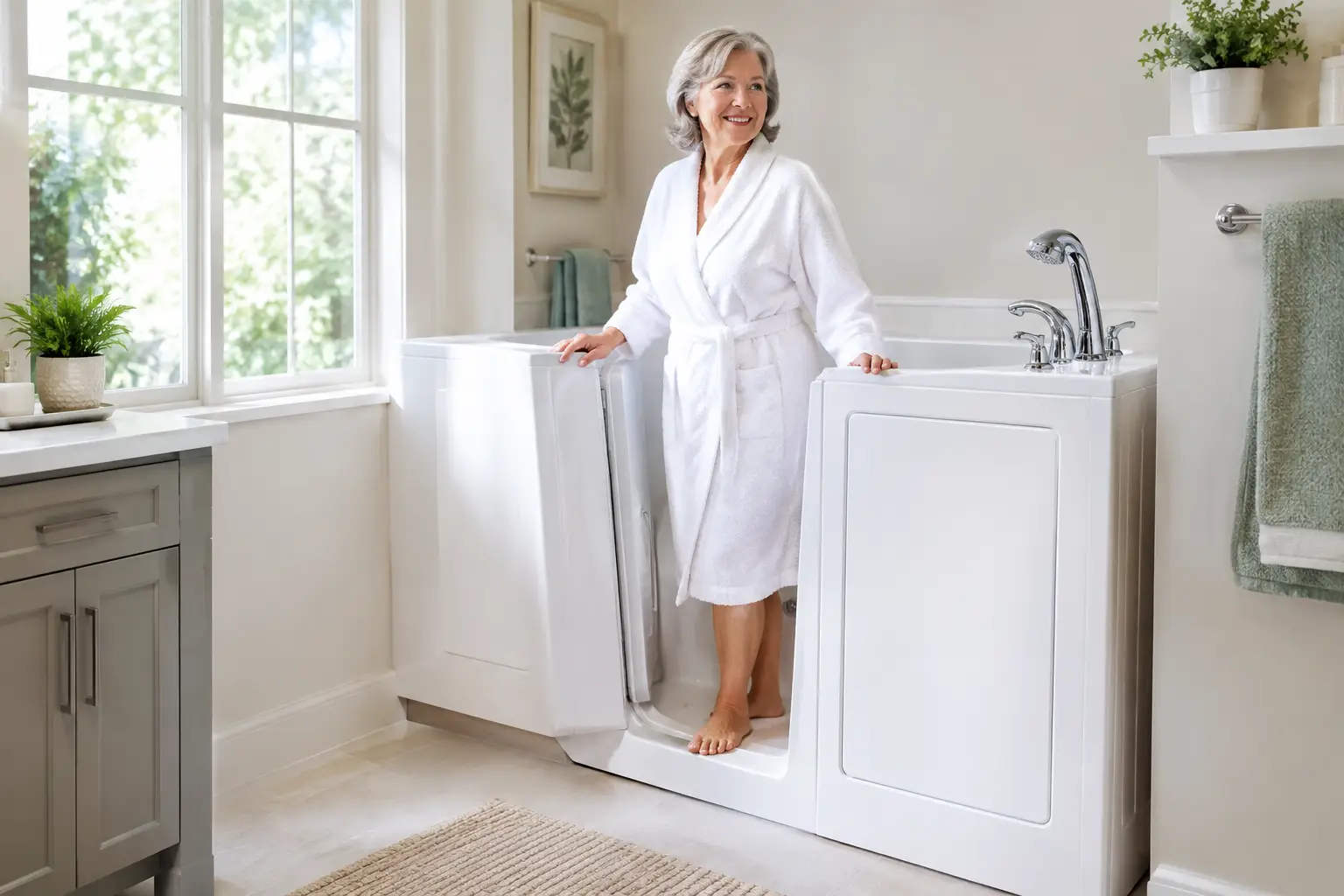
A bathtub can become difficult long before a homeowner considers themselves “disabled.” A stiff knee, unsteady balance after surgery, arthritis in the hips, or simply the need to hold onto the wall while stepping over a tall tub edge can turn an ordinary routine into a frustrating one. Walk-in tubs are designed around that real-life problem: getting seated safely before bathing rather than climbing over a tub wall.
For homeowners who want to stay comfortable and independent at home, the right accessible bathing choice is less about buying a complicated fixture and more about making one daily task feel manageable again. A sit-in bath can offer a practical path forward, especially when it is selected for the person, the bathroom, and the way the household actually lives.
What Walk-In Tubs Change About Daily Bathing
Traditional tubs ask the bather to lift one leg over a high sidewall, shift weight while standing on a wet surface, and lower themselves into the tub. Reversing those movements after bathing can be even harder, particularly when muscles are tired or joints are sore.
A sit-in bath changes the order of those steps. The user opens the door, moves through a low threshold, and sits on a built-in seat before closing the door and filling the tub. Instead of balancing while stepping into a bathtub, the goal is to get comfortably seated first.
That difference matters to people with limited mobility, adults recovering from an injury or procedure, wheelchair users who need a more accessible transfer, and family members concerned about a parent bathing alone. It can also be a thoughtful choice for homeowners who do not have a major mobility concern today but prefer to plan once for changing needs.
The benefit is not a promise that every bathing risk disappears. Good habits still matter, including using grab bars properly, keeping the floor clear, and taking time when transferring. But a bathing space designed to reduce unnecessary stepping and balancing can make the routine feel far less demanding.
Why the Door Design Matters in a Walk-In Tub
Not every accessible tub works the same way. Door direction, opening size, threshold height, seat design, and the strength of the frame all affect whether a tub fits a particular home and person.
Secure Bath uses the term sit-in bath for its accessible tub, and one of its defining features is a 180-degree outswing door with a durable aluminum door and frame. The door opens fully outward, allowing the user to sit down before closing it. For someone who has trouble maneuvering in a narrow opening or who uses a wheelchair, that room to approach and position themselves can be especially useful.
The aluminum door and frame are practical components, not decorative details. A sturdy door structure supports regular use and helps create a solid, dependable entry point. The wide-opening design can also give a caregiver more workable space when assistance is needed.
There is one important planning consideration: an outswing door needs clear floor space in front of the tub. A good recommendation accounts for nearby cabinets, toilets, vanities, and bathroom traffic patterns. In a compact Las Vegas or Henderson bathroom, measuring the room carefully is just as important as choosing the tub itself.
Features that support a more comfortable routine
A well-designed sit-in bath brings several details together. The low threshold reduces the need to lift a leg high. Built-in seating gives the bather a stable place to sit while washing. Slip-resistant surfaces provide better footing during entry and exit, while strategically placed grab bars offer a secure handhold.
Hydrotherapy features may also be available depending on the configuration selected. Some homeowners enjoy them for a more relaxing bathing experience, while others prefer a straightforward bathing setup. The right choice depends on personal preferences, comfort needs, available space, and budget priorities.
Is a Sit-In Bath the Right Choice for Your Home?
A sit-in bath is often a strong fit when the main challenge is stepping over a conventional tub wall or lowering into a standard bathtub. It may be especially helpful for a homeowner who wants to continue bathing privately, a spouse who wants less physical strain when helping, or an adult child who is looking ahead for a parent living alone.
Still, it is not automatically the right answer for every household. One trade-off is that the door must be closed before filling and cannot be opened until the water has drained. That means the bather remains seated for a short period at the beginning and end of the bath. For many people, that is an acceptable part of the routine. For others, it is a factor that deserves a careful conversation before deciding.
Bathroom layout is another consideration. The existing plumbing location, doorway width, floor condition, and the dimensions of the current tub area all help determine what is practical. A personalized in-home evaluation is more useful than trying to choose solely from a photo or a one-size-fits-all online description.
Planning Ahead Without Rushing the Decision
Many homeowners begin researching after a close call in the bathroom or when a loved one says they are having trouble stepping into the tub. Those are valid reasons to act. But planning ahead can be equally sensible.
An accessible bathing update can be part of an aging-in-place plan, much like improving lighting or reducing tripping hazards. It does not mean a person has given up independence. Often, it is a way to protect it. Selecting a sit-in bath before mobility becomes a daily concern can allow more time to compare features, think through layout, and make a decision without pressure.
This approach is particularly relevant in Southern Nevada, where many homeowners intend to remain in the homes and communities they know. The question is not whether every person will need a mobility-friendly bathroom. It is whether the current setup supports the household well now and leaves room for future comfort.
Questions to Ask During a Walk-In Tub Consultation
A useful consultation should feel like a practical conversation, not a sales presentation. Bring up the parts of bathing that are difficult now, even if they seem minor. Is the issue stepping over the tub wall, getting down to the tub floor, standing for the full shower, or fitting a mobility aid into the room? Those details guide a better recommendation.
It also helps to ask about installation scope, the expected condition of the surrounding bathroom area, and how the door will operate in the available floor space. Homeowners should understand the product features included in their recommendation, what affects the total project cost, and how long the household may be without use of that bathing area during installation.
Consider these five questions before moving forward:
- Can the door open fully without blocking the toilet, vanity, or bathroom entrance?
- Is the seat height and interior space comfortable for the intended user?
- How will the bather transfer into the seat from a walker, wheelchair, or standing position?
- Which safety features are included, and which are optional?
- What preparation or bathroom adjustments, if any, are needed before installation?
Clear answers help homeowners compare options based on everyday use, not just on a feature list.
A More Practical Kind of Peace of Mind
The right bathing solution should fit the person, not force the person to adapt to an awkward design. For some homeowners, a sit-in bath means less hesitation at the edge of the tub. For others, it means a spouse feels more confident that help is available without turning every bath into a difficult task.
Secure Bath offers local, no-pressure guidance for homeowners in Las Vegas, Henderson, and nearby Las Vegas Valley communities who want to understand their accessible bathing options. The focus is straightforward: “No Step. No Slip. No Stress.”
If bathing has become harder than it should be, or if planning ahead simply makes sense, use the Got Questions? Ask Away! chat and schedule a free in-home consultation.
Questions about walk-in tubs? Ask away
Free in-home consultation: call (702) 789-7780
Get a free quote →