
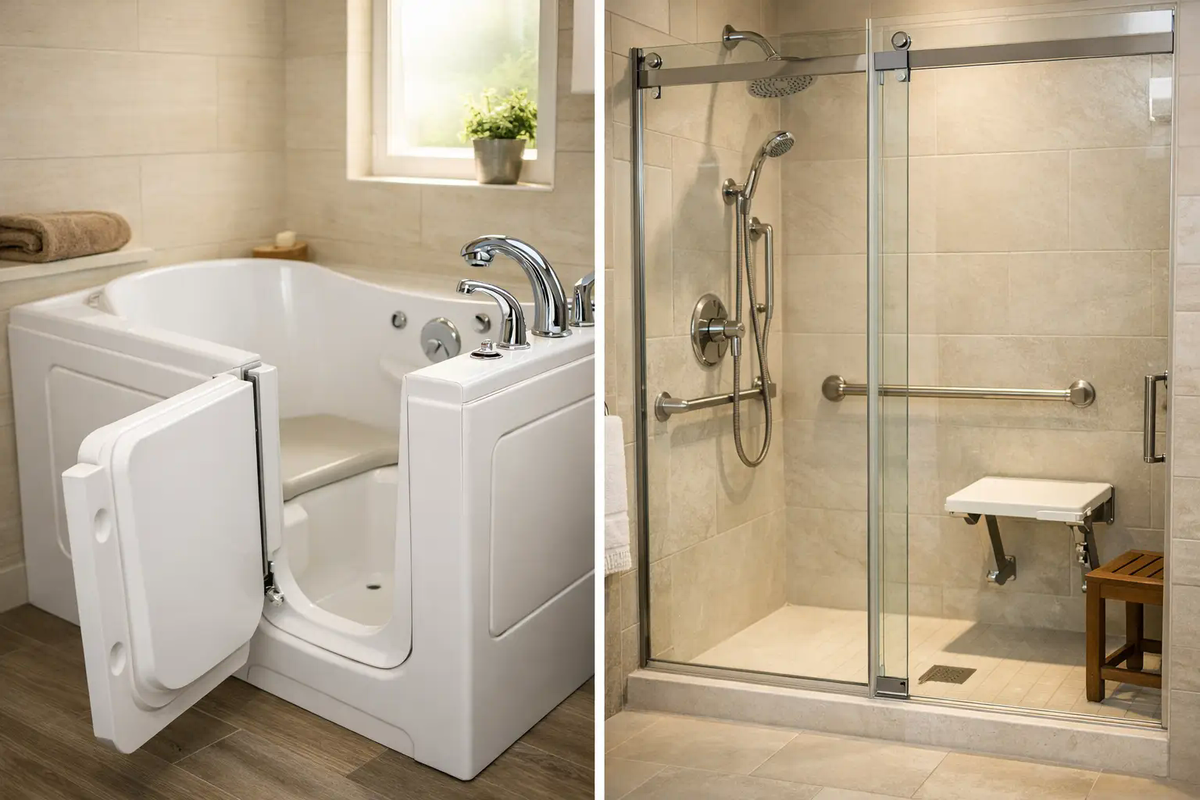
A bathroom can work perfectly for years, then one difficult step over a tub wall changes how it feels. When homeowners compare a walk in tub vs walk in shower, they are usually not choosing between two finishes or layouts. They are deciding what will make bathing feel safer, more comfortable, and more manageable at home.
For some people, a walk-in shower is the right answer. For others, especially those who have trouble standing for a full shower or stepping over even a small threshold, a walk-in tub or sit-in bath offers better day-to-day support. The best choice depends on the person using it, the caregiver’s needs, the existing bathroom, and how the household wants to plan for the years ahead.
Start With the Actual Bathing Challenge
A traditional tub-shower combination asks a lot of a person with limited balance, painful joints, weakness after surgery, or reduced mobility. They must lift a leg over a high tub wall, turn carefully, remain standing on a wet surface, and step back out when they are tired and wet. That process can become stressful long before someone considers themselves to have a serious mobility issue.
The right accessible bathing solution should reduce the difficult parts of that routine without taking away privacy or dignity. That is why the question is not simply, “Which option has fewer steps?” It is also, “Can this person bathe comfortably and confidently on an ordinary day?”
A walk-in shower provides an open standing shower area, often with a low or curbless entry. A walk-in tub provides a watertight door, a very low threshold, and a built-in seat so the bather can enter, sit down, and bathe without climbing over a conventional tub wall. A Sit-in Bath by Secure Bath basically eliminates the step completely that a walk in tub still has. The wide outswing door lets you sit first without any step which is a huge value since mobility declines with aging.
Walk In Tub vs Walk In Shower: Key Differences
The largest difference is how each option supports the bather while bathing. A walk-in shower is generally designed around standing, even when it includes grab bars or a shower chair. A walk-in tub is designed around seated bathing from the start.
A shower can be a good fit for a homeowner who is steady on their feet, prefers quick showers, and wants a more open bathroom layout. A properly designed curbless or roll-in shower can also be a practical option for wheelchair access when there is enough room for safe movement and, if needed, caregiver assistance.
A walk-in tub or sit-in bath is often better for someone who needs to sit during bathing, finds standing tiring, or wants the comfort of soaking in warm water. Built-in seating is not an add-on that takes up space. It is central to how the tub works. The bather enters through the door, sits down first, closes the door, and fills the tub.
That seated position can be especially helpful for homeowners recovering from an injury or surgery, adults with balance concerns, and seniors who want to stay independent in the home they know. It can also give family members greater peace of mind without making the person receiving care feel dependent.
Why Door Design Matters More Than Most People Expect
Not every walk-in tub door works the same way. Many designs use an inward-swinging door. That can require the user to step in, turn around within the bathing area, and position themselves before closing the door. For a person with limited mobility, that extra movement may be awkward.
Secure Bath’s sit-in bath design uses a 180-degree outswing door with a durable aluminum door and frame. The door opens fully outward, allowing the bather to approach the seat, sit down first, and then close the door. This is a practical difference, not a cosmetic one.
Sitting before closing the door can reduce the amount of standing, turning, and balancing required during entry. The aluminum construction also matters because the door and frame are used every day and should feel solid and dependable. For many homeowners, this setup reflects the purpose of accessible bathing: No Step. No Slip. No Stress.
An outswing door also deserves careful planning. The bathroom needs enough clear floor space for the door to open without striking a vanity, toilet, or other fixture. Secure Bath has a door that swings over most toilets as tall as 20 inches. A knowledgeable in-home consultation should account for the actual room, not just a product brochure.
Safety Features: What Helps in Real Life
Both accessible showers and walk-in tubs can include useful safety features. Grab bars, handheld showerheads, slip-resistant flooring, and well-placed controls can improve usability in either setting. The details matter because features only help when they are within comfortable reach and suited to the person using them.
A walk-in shower may be the simpler choice for someone who can stand but wants to remove the tall sidewall of a standard tub. Adding a fixed or fold-down seat can provide a place to rest, although it may not offer the same secure, enclosed seated bathing experience as a sit-in bath.
A walk-in tub combines several features in one bathing space: a low entry threshold, built-in seat, grab bars, slip-resistant surfaces, and controls that can be reached from a seated position. Some homeowners also value hydrotherapy features for relaxation and comfort. Those features are personal preferences, not a substitute for medical care, but they can make bathing more enjoyable.
The key is to be honest about the user’s needs. If standing through a shower is already difficult, a beautiful roll-in shower may not solve the real problem. If the homeowner strongly dislikes baths and is fully comfortable standing, a walk-in tub may be more than they need.
Cost, Installation, and Long-Term Value
Cost is a fair concern, and there is no single price that applies to every home. The final investment depends on the product selected, bathroom dimensions, plumbing, electrical needs, demolition, wall finishes, and the accessibility features included. A curbless shower can involve substantial floor and drainage work, particularly when the existing bathroom was not built for a level entry.
Walk-in tubs also vary widely in size, door design, features, and installation requirements. It is wise to compare the complete scope of work instead of comparing one advertised starting price with another. Ask what is included, what changes may be needed in the bathroom, who will complete the installation, and how service will be handled after the project is finished.
For many Las Vegas and Henderson homeowners, the better value is the option that prevents a second remodel later. Planning once for changing needs does not mean assuming every person will lose mobility. It means considering whether the bathroom will still serve the household after a knee replacement, an unexpected injury, or the normal changes that can come with age.
Choosing the Right Option for Your Household
A walk-in shower is often a strong choice when easy wheelchair access, a spacious layout, or a quick standing shower is the priority. It may be especially appropriate when the user can transfer safely to a shower chair or when a caregiver needs room to assist.
A walk-in tub is often the stronger choice when independent seated bathing is the priority. It can be particularly well suited to someone who has difficulty standing, needs a stable place to sit, or wants to continue enjoying a bath without climbing over a tub wall. The 180-degree outswing door can be a meaningful advantage for people who cannot comfortably step into a small enclosure and turn around.
It also helps to think about everyday habits. Does the person prefer a bath or shower? Are they able to stand long enough to wash comfortably? Will a spouse use the same bathroom? Is a wheelchair or walker part of the picture now, or could it be later? A good recommendation should reflect those answers rather than pushing every homeowner toward the same product.
How to Compare Bathing Companies Honestly
Accessible bathing is a major home decision, so take time to research the company as carefully as the product. Do not look only at the overall star rating or a page of positive reviews. Read negative reviews, too, and look for patterns involving communication, installation concerns, warranty questions, or how problems were addressed.
Company age alone does not tell the full story. Products improve, materials change, and a newer local company may offer a more current design, better value, or more personal service than a larger company. Focus on the actual tub or shower, the safety features, the installation plan, the responsiveness of the team, and whether the recommendation makes sense for your home.
At Secure Bath, the conversation starts with the person who will use the bathroom. A free in-home consultation allows homeowners in Las Vegas, Henderson, and nearby Las Vegas Valley communities to discuss the room, their mobility needs, and their preferences without pressure or sales games.
The best time to explore accessible bathing is not necessarily after a crisis. It is when you can make a thoughtful choice, ask clear questions, and create a bathroom that supports comfort, independence, and dignity on your own terms.
Questions about walk-in tubs? Ask away
Free in-home consultation: call (702) 789-7780
Get a free quote →