
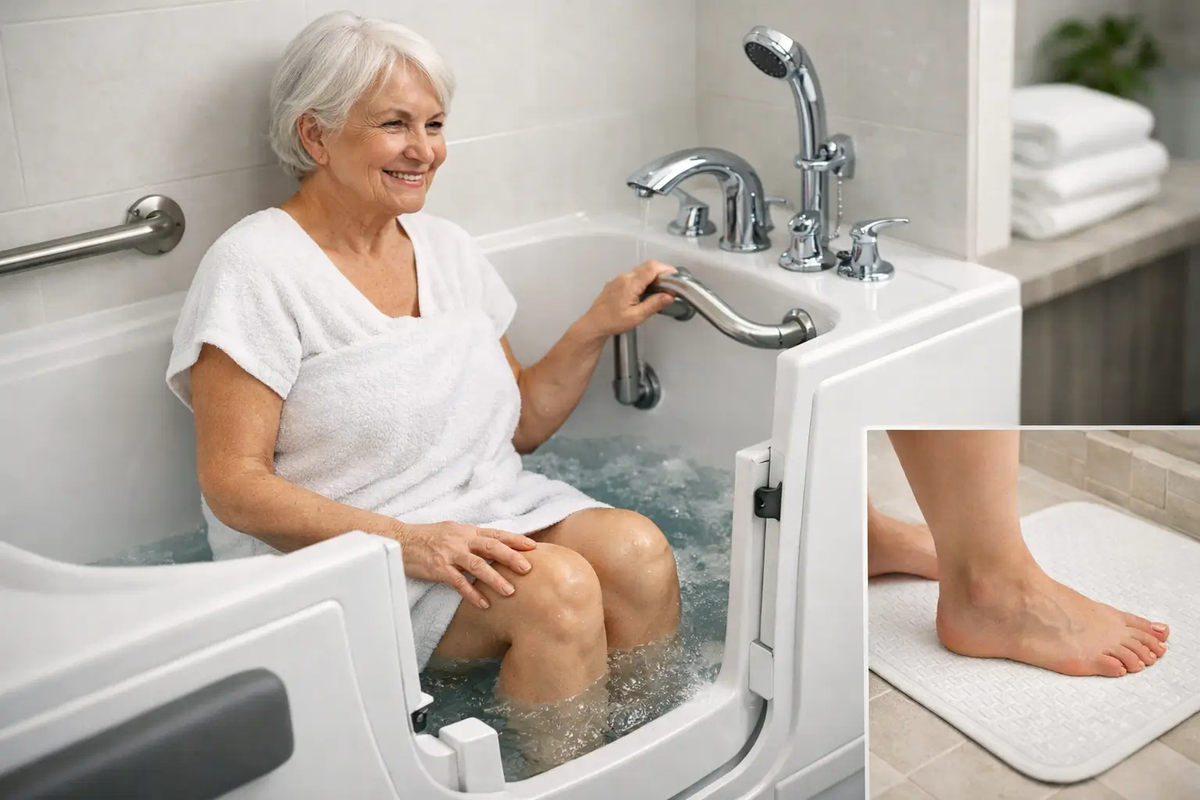
A traditional tub asks you to do the hardest part of bathing while standing on one foot: lift a leg over a high wall, find your balance on a wet surface, and lower yourself down. For someone with sore knees, limited balance, a recent surgery, or a caregiver nearby, that routine can become frustrating long before it becomes impossible. The right walk in tub safety features change the sequence. Instead of climbing in and hoping for steady footing, you can enter at floor level, sit down, and bathe from a more secure position.
That difference is why accessible bathing deserves more thought than simply choosing a tub with a door. Features need to work together for the person using the bathroom, the space available, and the way they bathe each day. A well-planned sit-in bath can support privacy and independence while helping a homeowner plan once for changing needs.
Walk In Tub Safety Features That Work Together
The most useful safety features are not complicated. They reduce the moments when a person has to balance, twist, reach, or transfer their weight in a wet bathroom. When comparing options, look at how entering, sitting, bathing, and exiting will actually feel.
A low entry reduces the difficult move
The main barrier in a standard bathtub is its tall sidewall. A low-threshold entry allows the user to step through an opening instead of lifting a leg over the tub wall. That can be particularly helpful for homeowners using a cane or walker, those recovering from a joint procedure, or anyone who no longer feels confident with the usual step-over motion.
A lower entry is not a substitute for moving carefully, and it does not make every bathroom layout accessible on its own. It does, however, remove one of the most awkward parts of bathing. That is the practical idea behind “No Step. No Slip. No Stress.”: fewer difficult movements can make the routine feel far more manageable.
An outswing door can make transfers easier
Door design matters more than many shoppers realize. Secure Bath’s sit-in bath uses a 180-degree outswing door with a durable aluminum door and frame. Rather than stepping into a tub and then trying to lower yourself, the door opens fully outward so the user can approach the seat, sit down, and close the door from a stable seated position.
This arrangement can be especially useful for a person who transfers from a wheelchair or needs help from a spouse or caregiver. The full opening creates a more direct path to the seat and avoids the tight, sideways maneuver common with smaller inward-opening doors.
There is a trade-off worth discussing during an in-home consultation: an outswing door needs clear floor space in front of the bath to open fully. In a compact Las Vegas or Henderson bathroom, the location of the vanity, toilet, and existing door can affect what will fit comfortably. A good recommendation considers that clearance before installation, not after.
The aluminum door and frame also deserve attention. Bathing equipment is exposed to moisture every day, so the door should feel solid, close securely, and be designed for regular use. A durable frame supports reliable operation without making the door unnecessarily difficult to handle.
Built-in seating changes the entire bathing position
A seat is central to a sit-in bath, not an extra convenience. Sitting down before turning on the water means less standing on a wet surface and less need to lower yourself all the way to the bottom of a conventional tub. It can also make it easier to wash lower legs and feet without bending as far.
Seat height, depth, and comfort are personal. Someone tall may need different legroom than someone petite. A homeowner with limited hip mobility may prioritize a seat that makes standing back up feel more natural. This is one reason generic online comparisons can only go so far. The right fit comes from discussing the user’s mobility, height, bathroom dimensions, and daily routine.
Grab bars provide a stable point of contact
Grab bars offer support when sitting, adjusting position, or standing after the bath. They are most helpful when they are placed where a hand naturally reaches, rather than added as an afterthought somewhere on the wall.
Within a sit-in bath, integrated grab bars give the bather a firm point to hold during the movements that matter most. Additional properly installed bars near the bathroom entrance, toilet, or shower area may also be useful, depending on the room. Towel bars are not designed to carry body weight, so they should never be treated as a substitute.
Slip-resistant surfaces support steadier footing
Water, soap, and smooth bathroom materials are a familiar combination. Slip-resistant flooring in the bathing area gives footwear or bare feet more traction while entering and exiting. Textured surfaces should still be comfortable and easy to clean, since an overly aggressive texture can be unpleasant for sensitive feet or harder to maintain.
This feature works best as part of a larger approach. A low entry, stable handhold, seating, and good lighting all reduce the need to rely on traction alone. No product can promise to prevent every fall or injury, but thoughtful surfaces can help make footing more predictable.
Safety Also Means a Bath That Fits Daily Life
A walk-in tub or sit-in bath is not the same as a walk-in shower, and the better choice depends on bathing preferences. A seated bath is often appealing to homeowners who enjoy soaking, want a contained bathing space, or need the support of a built-in seat. A curbless or roll-in shower may be a better fit for someone who prefers a quick shower or requires direct wheelchair access.
One consideration with any walk-in bathing unit is the fill-and-drain routine. The user enters and closes the door before the bath fills, then remains seated until the water drains before opening it. For some people, that is a worthwhile trade for seated comfort and a low entry. For others, drain time and the preference for showers may point toward an accessible shower solution instead.
Hydrotherapy features can add comfort for people who enjoy a warm soak, but they should not be the first safety feature on the list. Start with entry, door operation, seat comfort, handholds, and the ability to move safely around the room. Comfort features are more valuable when the core design already suits the user.
Questions to Ask Before Choosing a Sit-In Bath
Before selecting a model, walk through the routine in plain terms. Can the person approach the bath with the mobility aid they use now? Is there room for the outswing door to open? Can they sit, close the door, and reach the controls comfortably? Will a spouse or caregiver have enough room to assist if needed?
It also helps to think ahead without assuming the worst. A homeowner may be doing fine today but want to avoid another costly remodel if balance, stamina, or joint mobility changes later. Others may be making a bathroom easier to use after an injury or surgery. Both are reasonable reasons to explore accessible bathing.
Installation details matter as well. A professional should assess the existing bathroom, plumbing location, electrical needs if applicable, flooring, doorway widths, and the path for bringing the unit into the home. This is where local experience has real value. An owner-led, no-pressure consultation can identify practical constraints in a Las Vegas Valley home and explain the options clearly before work begins.
A Safer Routine Starts With the Right Questions
The best bathing solution is not necessarily the one with the longest feature list. It is the one that makes entering, sitting, washing, and exiting feel more comfortable for the person who will use it every day. For many homeowners, a sit-in bath with a low entry, secure seating, grab bars, slip-resistant surfaces, and a 180-degree outswing aluminum door offers a more confident path than continuing to climb over a traditional tub wall.
If your current bath has become difficult, or you simply want to plan ahead while you have choices, a free in-home consultation can turn broad safety features into a practical recommendation for your own bathroom. The goal is not to rush a decision. It is to create a bathing space that continues to feel comfortable, private, and workable at home.
Questions about walk-in tubs? Ask away
Free in-home consultation: call (702) 789-7780
Get a free quote →