
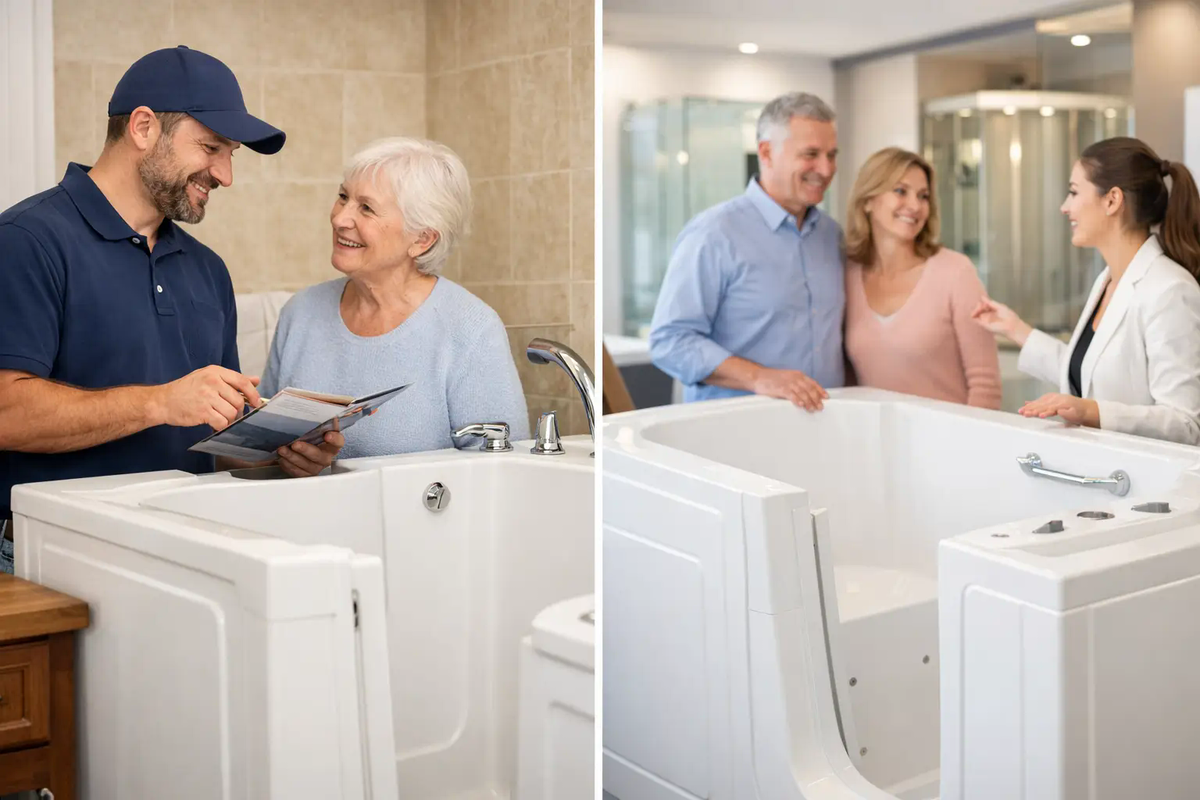
Is a $25,000+ Walk-In Tub Really Worth It?
When a sit-in bath can provide easier, safer access to bathing, is it worth paying $25,000 or more for a Safe Step or $30,000+ for a Kohler walk-in tub? For many Las Vegas-area homeowners, that is the question worth asking before signing a contract. Big national brands may offer name recognition and extensive marketing, but a higher price does not automatically mean a better fit for your bathroom, your mobility needs, or the support you receive after installation. Secure Bath takes a more local, practical approach—combining an accessible sit-in bath design, a 32-inch-wide aluminum door and frame, and personalized in-home service without assuming that homeowners need to spend $25,000–$30,000+ to get a safer way to bathe. The real comparison isn't simply big brand vs. local company. It's what are you actually getting for your money?
Why the Door Design Changes the Experience
Many walk-in tubs use an inward-swinging door. That may work well in some bathrooms, but it can be difficult for someone who uses a wheelchair, walker, or caregiver assistance. The user generally needs to step into the tub opening, turn around in a limited space, and close the door from inside.
A Secure Bath sit-in bath takes a different approach. Its 180-degree outswing door opens fully into the bathroom, so the user can approach the seat, sit down first, and then close the door. This matters because sitting is often more stable and manageable than trying to step over a tub wall while balancing.
The durable aluminum door and frame are also more than a visual detail. A well-built frame supports regular use and helps the door operate smoothly over time. For homeowners with limited hand strength or a recovering hip, knee, or back, the difference between a cramped opening and a wide, accessible entrance can shape whether bathing feels manageable on their own.
Is a 32-Inch-Wide Door the Right Fit?
A 32-inch-wide door opening can be especially helpful for people who need more room to enter, turn, and position themselves before sitting. It may also make transfers easier for some wheelchair users or caregivers. Still, wider is not automatically better in every home.
The available bathroom clearance matters. An outswing door needs enough open floor area to swing without hitting a vanity, toilet, or nearby wall. During an in-home consultation, the right questions are practical: Where will the door open? Can the user approach the seat comfortably? Is there room for a caregiver if one is needed? Will a wider opening create a better daily routine, not just look better on paper?
That is why measurements should be paired with a conversation about how the household actually bathes. A small bathroom may call for a different layout or an accessible shower instead. The goal is not to force one product into every room. It is to create a safer, easier path to bathing.
Comparing Big Walk-In Tub Brands and Local Service
Large national walk-in tub brands can offer extensive advertising, familiar names, and a range of package options. For some homeowners, that recognition is reassuring. However, a brand name alone does not answer the questions that tend to matter most after the sale: Who measures the space? Who explains the door swing? Who handles installation details? Who can you call locally with a concern?
A local company can provide a more personal comparison process. In Las Vegas, Henderson, and nearby Las Vegas Valley communities, bathroom layouts vary widely, from compact older homes to newer homes with larger primary suites. A local, owner-led consultation can focus on the actual doorway, plumbing, floor space, and the user's mobility rather than a standard sales package.
Value should include more than the initial price. Consider the product design, installation work, bathing comfort, long-term usability, and the confidence of knowing there is local accountability. Transparent pricing and no-pressure recommendations are particularly valuable when a family is making a decision for an aging parent or spouse.
What a Sit-In Bath Should Make Easier
The central benefit is simple: it should reduce the need to step over a high tub wall. A low threshold, built-in seat, grab bars, and slip-resistant flooring can make the bathing process feel more controlled. These features do not guarantee that a fall or injury will never happen, but they can reduce common points of strain and uncertainty.
For example, a homeowner recovering from surgery may temporarily struggle with the traditional sequence of stepping in, lowering down, and standing back up. Another person may be fully independent but notice that balance is not what it once was. Planning ahead can prevent the need for another costly bathroom remodel later if needs change.
Hydrotherapy features can be worth considering for comfort, but they should not overshadow access. First, make sure the person can enter, sit, close the door, reach the controls, and exit comfortably. The best feature list is one the homeowner will use.
Questions to Ask Before You Choose
Before selecting a sit-in bath or walk-in tub, ask whether the door opens in a way that works for the bathroom, whether the seat height supports comfortable transfers, and whether the controls are easy to reach. Discuss how long installation may take, what changes to plumbing or electrical service could be needed, and who will coordinate the work.
It is also reasonable to ask for a clear explanation of the total project scope. A good consultation should leave you informed, not rushed. Secure Bath offers free in-home consultations to help homeowners compare practical options for safer, more independent bathing.
A well-chosen sit-in bath is not about predicting every future need. It is about making one of the most private daily routines easier to manage now and more adaptable later. No Step. No Slip. No Stress.
Questions about walk-in tubs? Ask away
Free in-home consultation: call (702) 789-7780
Get a free quote →