
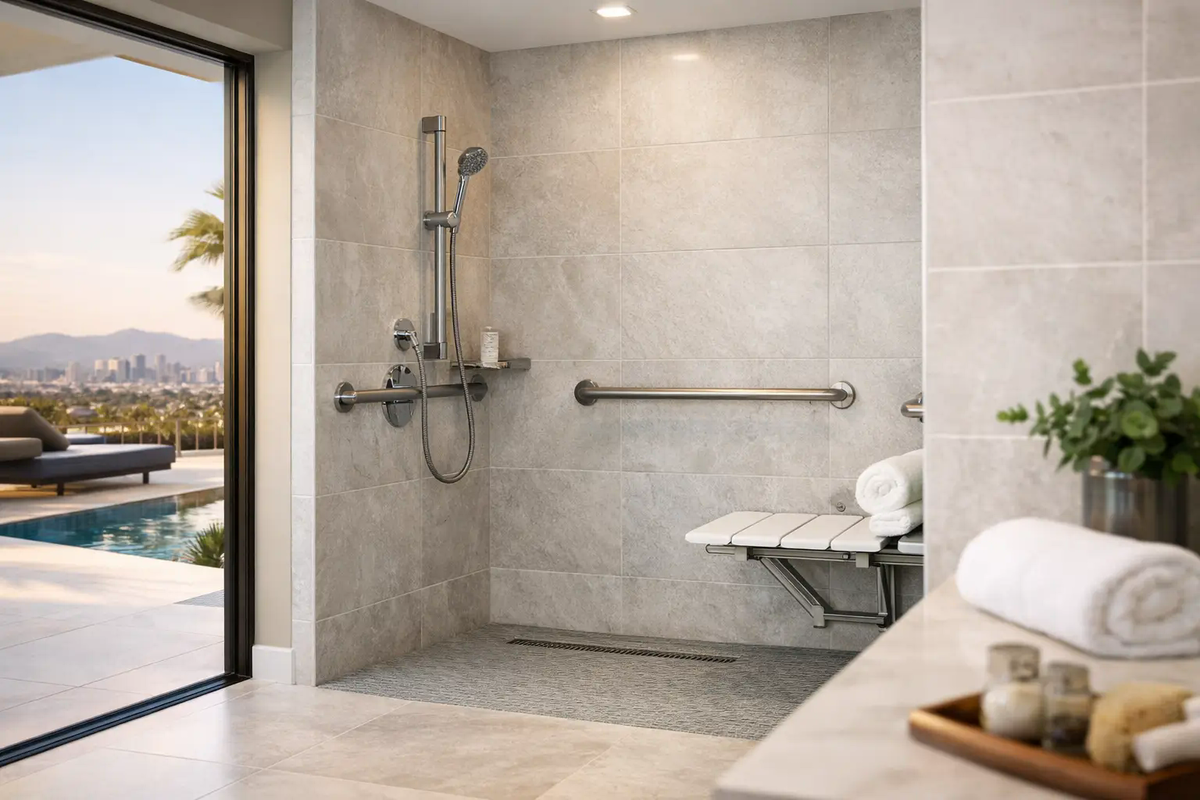
A standard tub can become a daily obstacle long before someone considers themselves to have a mobility problem. For homeowners considering roll in shower installation Las Vegas, the real question is not simply whether a shower looks modern. It is whether the bathing area will be safe, comfortable, and practical for the person using it now and in the years ahead.
A roll-in shower can be an excellent accessible bathing solution, especially for a wheelchair user or someone who prefers to shower while seated. But it is not automatically the best answer for every household. A walk-in tub or sit-in bath may offer more support, warmth, privacy, and comfort for a person who struggles with standing. The right choice depends on mobility, bathing preferences, the existing bathroom, and the level of help a person needs.
What Roll-In Shower Installation Means in Las Vegas
A roll-in shower has a low or zero-threshold entry rather than a tub wall to step over. The bathroom floor and shower floor are designed so a person can walk in without lifting their feet over a curb, or roll in with a wheelchair when the layout allows. A properly planned shower usually includes slip-resistant flooring, grab bars in useful locations, a handheld showerhead, and enough room for a shower chair or wheelchair.
The details matter. A shower can be labeled accessible yet still be difficult to use if the controls are out of reach, the floor does not drain correctly, the opening is too narrow, or a bench is placed where it interferes with transfers. This is why an in-home evaluation is more valuable than choosing a shower from a photo.
Las Vegas Valley homes also have a wide variety of bathroom layouts. Some bathrooms have limited space around the existing tub, while others can accommodate a larger curbless shower. Plumbing placement, wall structure, flooring, and drain location all affect what is realistic and what the installation may cost.
When a Roll-In Shower Is a Good Fit
A roll-in shower is often a strong option for someone who uses a wheelchair, has trouble clearing a tub wall, or wants the easiest possible entry. It can also work well for a homeowner who wants a clean, open bathing space and expects to remain comfortable standing or sitting on a shower chair.
For a caregiver, an open shower can provide better access than a traditional tub. There is less reaching over a high wall and more room to assist with bathing when needed. A handheld showerhead makes it easier to direct water without requiring the bather to stand and turn repeatedly.
Still, open showers involve trade-offs. They can feel cooler than a tub, especially during winter mornings or for someone who gets chilled easily. Water management must be designed carefully, and a large open shower does not provide the same seated, enclosed bathing experience as a walk-in tub. A person who enjoys soaking, needs a stable built-in seat, or has limited standing tolerance may be happier with a sit-in bath instead.
Features That Make the Difference
Accessibility is more than removing a curb. A useful roll-in shower design considers the full bathing routine: entering, turning, transferring, reaching controls, washing, rinsing, and exiting safely.
The most helpful features commonly include a slip-resistant shower floor, properly positioned grab bars, a reachable handheld showerhead, easy-to-operate controls, adequate lighting, and seating. Some homes also benefit from a wider doorway or changes outside the shower, where a tight toilet or vanity can limit wheelchair movement.
Grab bars deserve special attention. Towel bars and decorative accessories are not built to hold a person’s weight. A real grab bar must be securely installed and placed where it supports a natural movement, such as stepping in, sitting down, standing up, or turning around.
Roll-In Showers vs. Walk-In Tubs and Sit-In Baths
Homeowners sometimes assume a shower is the only accessible option because it eliminates the tub wall. Yet a walk-in tub addresses a different set of needs. Instead of standing to shower, the user enters through a low threshold, sits down first, and bathes from a stable seated position.
Secure Bath’s sit-in baths use a 180-degree outswing door with a durable aluminum door and frame. That design allows the user to sit down before closing the door, rather than stepping into a tub and trying to balance while standing. For many people with weak knees, balance concerns, or post-surgery limitations, that sequence feels more manageable and dignified.
A sit-in bath can be especially practical when a person prefers baths, wants built-in seating, or does not feel secure in an open shower. Slip-resistant surfaces and grab bars add support, while the enclosed tub helps the bather stay warm. Hydrotherapy options may be meaningful for comfort, although they should be viewed as a personal comfort feature rather than a substitute for medical care.
There are trade-offs here, too. A walk-in tub requires the user to enter before filling and remain seated while it drains. A roll-in shower may be quicker for a person who prefers a short shower or receives caregiver assistance. Neither option is universally better. The best solution is the one that matches the person’s routine and allows them to bathe with less strain and more confidence.
What Affects Roll-In Shower Installation Cost?
There is no responsible one-price answer for roll-in shower installation because the work varies greatly from one bathroom to another. A straightforward tub-to-shower conversion generally differs from a full curbless shower project that requires floor changes, drain relocation, plumbing adjustments, wall repair, and accessibility modifications.
Material choices also matter. Wall surrounds, tile, shower doors or open-entry designs, fixtures, seating, and specialty hardware can all change the budget. The lowest initial price is not always the lowest long-term cost if the shower is poorly planned or needs to be altered as mobility needs change.
When comparing estimates, ask what is included in the installation scope. Find out how drainage will be handled, whether grab bars are included, what wall preparation is needed, and who is responsible for unforeseen conditions discovered after demolition. A clear explanation is more useful than a vague low number.
The same thinking applies to walk-in tub pricing. Ask about the actual door design, frame material, seating, safety features, installation requirements, and how well the unit fits the user. Planning once for changing needs can be more valuable than completing a basic remodel now and facing another major bathroom change later.
How to Choose a Local Accessible Bathing Company
A bathroom accessibility project affects daily life, so homeowners deserve time, straight answers, and recommendations tailored to the person using the space. A good consultation should begin with practical questions: Can the person stand safely? Do they use a walker or wheelchair? Do they prefer a shower or bath? Is a caregiver involved? What does the current bathroom make difficult?
Do not judge a company only by its overall star rating or a collection of positive reviews. Read negative reviews, too, and look for patterns. Pay attention to how companies respond to communication concerns, installation problems, warranty questions, and unresolved customer issues. That provides a fuller picture of what happens after the sale.
Company age alone should not decide the issue, either. Newer companies may offer updated materials, newer product designs, and more personal service, while established companies may have a longer local track record. Focus on the product, safety, usability, installation process, service, and total value.
For Las Vegas and Henderson homeowners, local accountability matters. A knowledgeable local team understands the homes, the neighborhoods, and the importance of showing up when questions arise. Secure Bath approaches consultations with a simple standard: dignity first, safety always, and no pressure.
Plan Before Bathing Becomes Harder
Waiting for a serious fall, a surgery, or a crisis is not the only reason to improve a bathroom. Many homeowners choose an accessible shower or walk-in tub while they still have options, time, and the ability to make a thoughtful decision. That is not assuming the worst. It is making the home easier to live in as life changes.
If stepping over a tub wall has started to feel awkward, if balance is less reliable than it once was, or if a family member worries about bathing alone, it is worth having an honest conversation now. The most helpful accessible bathing solution is one that fits the person, the home, and the life they want to keep living: No Step. No Slip. No Stress.
Questions about walk-in tubs? Ask away
Free in-home consultation: call (702) 789-7780
Get a free quote →