
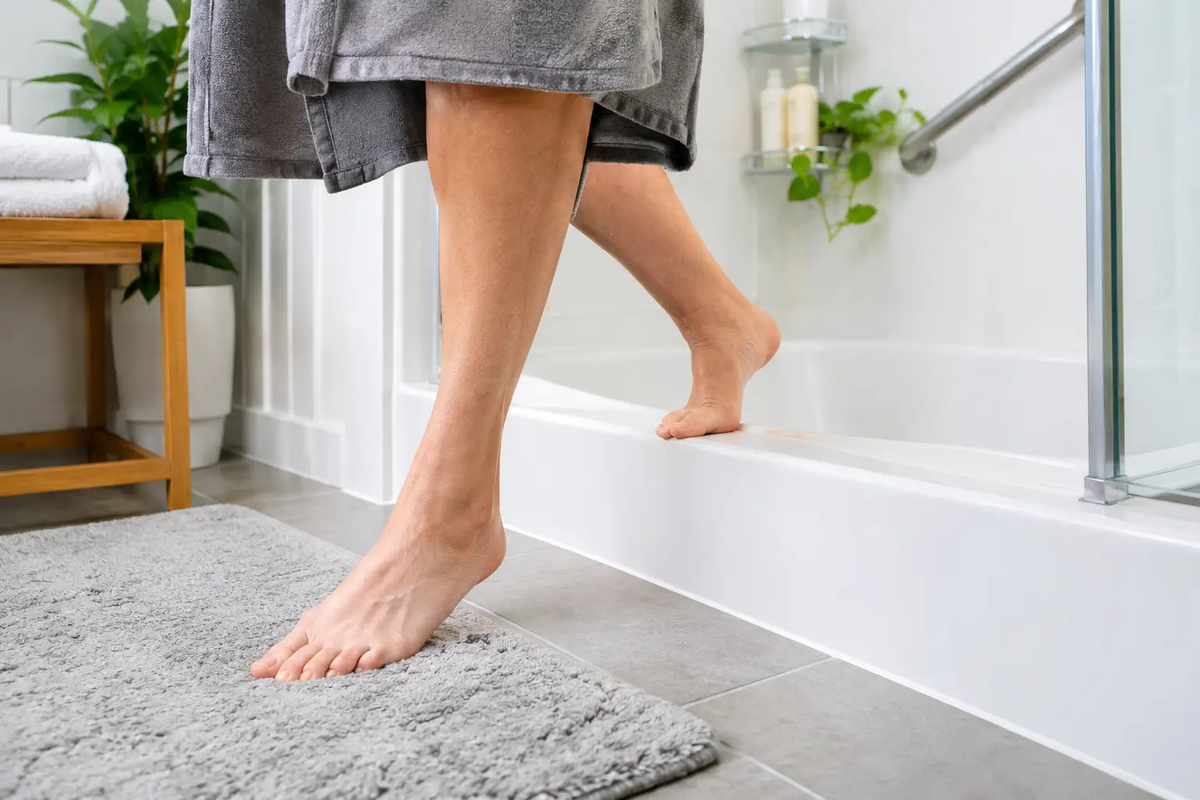
That tub wall can seem minor until getting over it requires a hand on the counter, a pause to regain balance, or help from a spouse. To reduce bathtub threshold hazards, look beyond a non-slip mat and consider the entire sequence of bathing: entering the tub, lowering down, standing back up, and stepping out on a wet floor.
For many Las Vegas and Henderson homeowners, the goal is not to turn the bathroom into a medical-looking space. It is to keep a familiar daily routine comfortable, private, and manageable at home. The right solution depends on current mobility, the bathroom layout, and whether you are planning ahead or responding to an immediate challenge.
Why the tub threshold is such a difficult obstacle
A conventional bathtub requires a person to lift one leg over a high sidewall while standing on a potentially wet surface. Then they must shift their weight, clear the wall with the second leg, and lower themselves into a low tub floor. Reversing those movements after bathing can be even harder, especially when legs feel stiff, balance is less reliable, or a person is recovering from surgery or injury.
The threshold itself is only part of the issue. Traditional tubs usually offer limited places to sit while bathing and little support when standing. A towel bar, glass door, or vanity edge may feel convenient to grab in the moment, but these features are not designed to support a person's weight.
This does not mean every homeowner needs a full bathroom remodel. Small changes may improve comfort for someone with mild concerns. But if stepping over the tub wall has become a regular source of hesitation, a more accessible bathing setup is often worth considering.
Start with the full bathing routine
Before choosing a product, think through where the difficult moments occur. Is the concern getting into the tub, sitting down at the bottom, standing back up, or all three? Does a caregiver need enough room to assist? Is a wheelchair or walker part of the routine? These answers help determine whether grab bars, a shower conversion, or a sit-in bath is the better fit.
A practical assessment also considers the bathroom outside the tub. Good lighting, a dry pathway, easy-to-reach towels, and a door that opens without crowding the room can make a meaningful difference. In some homes, a loose bath rug or a narrow path around the vanity adds more difficulty than expected.
Make basic support features work harder
Professionally installed grab bars can provide steady handholds at the point of entry and near seating. Their location matters. A bar should support the movement a person actually makes, rather than simply filling an empty wall.
A shower seat or transfer bench may help when the main challenge is lowering into the tub or standing from it. These options can be useful, but they do not eliminate the tub wall. A person may still need to swing their legs over the threshold, which can remain difficult for people with limited hip movement, weakness, or balance concerns.
Slip-resistant flooring and a handheld showerhead can also make bathing more manageable. They are sensible additions, particularly in a shower. Still, they should be viewed as parts of a safer routine, not as a substitute for a bathing entrance that fits the user's mobility.
Reduce bathtub threshold hazards with a sit-in bath
When a standard tub wall is the central problem, a walk-in tub or sit-in bath changes the process entirely. Instead of stepping over a conventional tub side, the user opens a door, enters through a low threshold, and sits down before bathing.
Secure Bath's sit-in bath is designed around this everyday advantage. Its 180-degree outswing door opens fully outward, giving the user a wide, clear approach to the seat. Rather than squeezing past a partially opened inward-swinging door or trying to balance while stepping into a tub, a person can sit down first and close the door afterward.
That order matters. Sitting before closing the door can feel more natural for homeowners who use a walker, have reduced balance, or simply prefer not to stand on one foot while clearing a tub wall. The durable aluminum door and frame are also designed for repeated daily use while providing a solid, practical entry point.
Inside, built-in seating means there is no need to lower down to the floor of a traditional bathtub. Grab bars provide places to hold during entry and exit, while slip-resistant surfaces add traction where water is present. Together, these features support the simple idea behind accessible bathing: No Step. No Slip. No Stress.
Why an outswing door can be a better fit
Door design is not a minor detail. An inward-swinging walk-in tub door can require more room inside the tub and may make entry less convenient for someone who needs to sit promptly. An outswing door opens away from the bathing area, allowing a person to approach the built-in seat directly.
It is especially useful when the person entering needs space to turn, position a walker nearby, or transfer from a wheelchair with assistance. The right layout still depends on the room itself. An outswing door needs clear floor space in front of the bath, so a local in-home assessment should confirm that nearby fixtures and the bathroom door will not interfere.
Sit-in bath, walk-in shower, or tub-to-shower conversion?
A curbless or roll-in shower can be an excellent accessible bathing option, especially for a wheelchair user who needs a straightforward transfer area or for a household that prefers showering. It removes the high tub wall and can create an open feel. However, it may require more extensive changes to the shower area, drainage, and floor structure.
A tub-to-shower conversion may be a good choice for someone who no longer takes baths and wants a lower-entry shower. Adding seating, grab bars, and a handheld showerhead can make the space easier to use. The trade-off is that a shower seat may not provide the enclosed, seated bathing experience some homeowners prefer.
A sit-in bath is often a strong choice for people who enjoy soaking, want a secure built-in seat, or need to avoid stepping over a traditional tub wall. Some models may include hydrotherapy features, which can add comfort, but the primary decision should start with entry, seating, and the ability to bathe independently.
There is no single best answer for every home. A homeowner with a roomy bathroom and a wheelchair may lean toward a roll-in shower. Someone who wants to remain seated throughout a bath may prefer a sit-in bath with an outswing door. The best choice is the one that works with real routines, not just a catalog photo.
Plan before the bathroom becomes limiting
Many homeowners begin researching accessible bathing after a near-miss, a surgery, or a change in a spouse's mobility. Those are understandable reasons to act, but planning earlier can offer more choices and less pressure. It allows the household to weigh layout, features, budget, and long-term needs without having to make a rushed decision.
Planning ahead does not mean assuming mobility will decline. It means recognizing that bathrooms are one of the most demanding rooms in the house and choosing a setup that can remain useful as needs change. A well-chosen accessible bath can also help prevent the need for another major remodel later.
Cost varies based on the bath selected, the existing plumbing, electrical needs, the condition of the bathroom, and the scope of installation. Be cautious with broad price promises that do not account for your home. A useful estimate should explain what is included, what may affect the final cost, and why a particular layout is recommended.
For Las Vegas Valley homeowners, a free in-home consultation from a local, owner-led company can make these decisions clearer. Secure Bath can evaluate the existing tub area, discuss practical options without pressure, and recommend a sit-in bath or another accessible bathing approach based on how the household actually uses the space.
The most helpful next step is simple: notice which part of bathing feels uncertain, then address it before it becomes a reason to give up comfort or independence at home.
Questions about walk-in tubs? Ask away
Free in-home consultation: call (702) 789-7780
Get a free quote →