
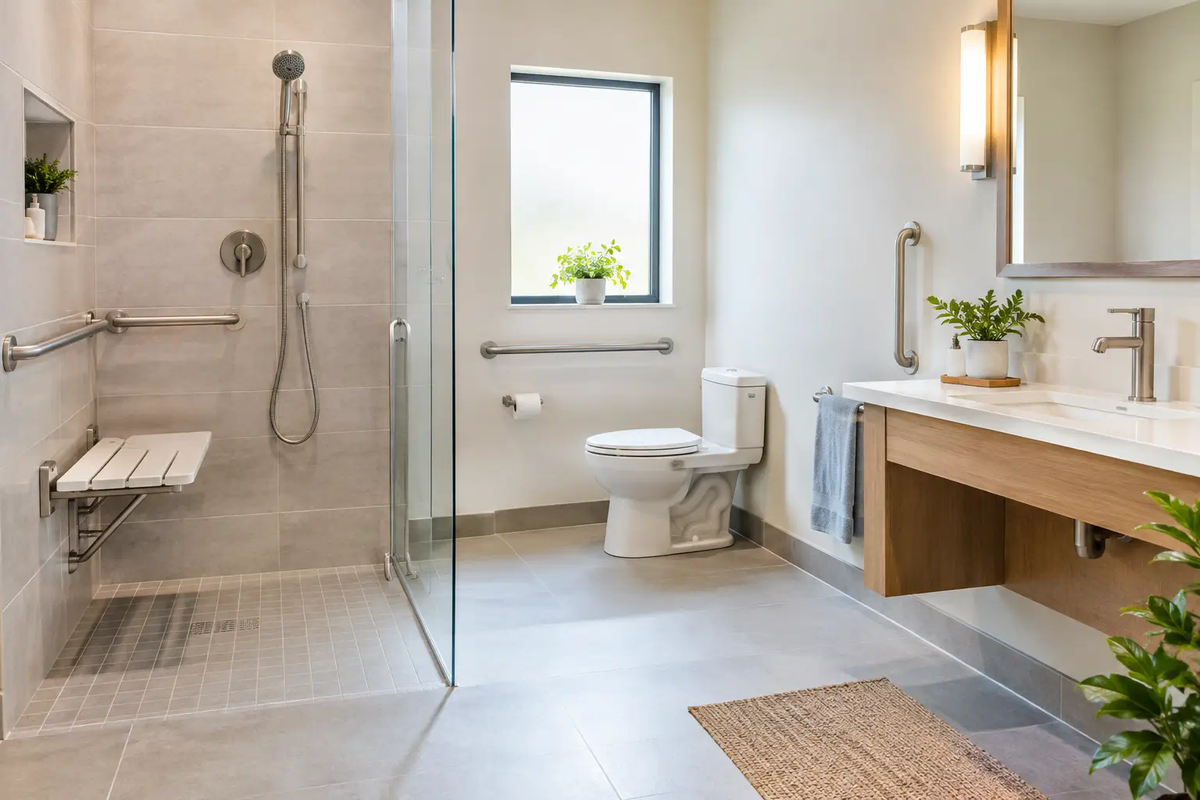
A bathroom can work perfectly for years, then become difficult after a knee replacement, a change in balance, or simply the realization that stepping over a high tub wall no longer feels comfortable. To plan a mobility-friendly bathroom well, start with the activity that asks the most of a person physically: bathing. A thoughtful plan can make daily routines easier without making the room feel clinical or requiring another major remodel later.
For many homeowners, the goal is not to create a hospital-style bathroom. It is to remain comfortable, private, and independent at home. That means choosing features that fit the person using the space now while allowing for changing needs over time.
Start With the Bathing Barrier You Have Today
The most common bathroom obstacle is the traditional tub-and-shower combination. Its tub wall requires a person to lift one leg over the side, shift their weight, and balance on a wet surface before they can sit or stand securely. Even someone who manages this today may find it tiring during injury recovery or when arthritis, reduced flexibility, or balance concerns enter the picture.
Look at the current routine honestly. Does someone steady themselves on the vanity? Avoid bathing unless another person is nearby? Sit on the edge of the tub before attempting to step in? Those habits do not automatically mean a person needs a full renovation, but they do point to where the room is asking too much.
A good mobility plan addresses the difficult transfer first. It then supports the rest of the bathing experience with stable seating, reachable controls, secure handholds, and a floor that is easier to navigate when wet.
Choose the Right Accessible Bathing Option
There is no single best solution for every household. A walk-in shower, roll-in shower, or sit-in bath can each be a sensible choice depending on how someone bathes, how much support they need, and the bathroom's available space.
Sit-in baths for seated, comfortable bathing
A sit-in bath is often a strong fit for people who prefer a bath but no longer want to step over a conventional tub wall. The user enters through a low threshold, sits down before bathing, and can use built-in seating, grab bars, and a slip-resistant floor. This setup can be particularly practical for seniors aging in place, people recovering from surgery, and caregivers who want a more manageable bathing routine.
Secure Bath's sit-in bath is designed around an especially useful feature: a 180-degree outswing door with a durable aluminum door and frame. Rather than requiring the user to step in and close a door while standing inside, the door swings fully outward. The person can sit down first, then close the door from a stable seated position. That distinction matters when standing balance is limited or a wheelchair transfer is part of the routine.
The aluminum door and frame are also built for the repeated use that a primary bathing fixture receives. When comparing accessible tubs, ask to see how the door operates, how much room it needs when open, and whether the layout permits a safe approach to the seat.
Walk-in and roll-in showers
A curbless or roll-in shower can be an excellent option for a person who prefers showering, uses a wheelchair, or needs room for a caregiver to assist. The absence of a raised threshold can simplify entry, but the overall design still matters. The shower needs enough clear floor space, a properly sloped surface for drainage, a fixed or fold-down seat when needed, and controls that can be reached from a seated position.
A shower conversion may feel more open than a tub, but it does not provide the soaking experience many people enjoy. It can also involve more extensive floor and drainage work than homeowners expect. The right choice depends on whether easy shower access, seated soaking, caregiver assistance, or a combination of those priorities comes first.
Plan the Layout Around Real Movement
Mobility-friendly planning is not just about what fixture you buy. It is also about how a person gets to it, turns around, and reaches what they need without twisting or stretching.
Keep a clear route from the bathroom door to the toilet, vanity, and bathing area. A walker, wheelchair, or helper may need more space than the current layout allows. If the door swings into a tight room, an outward-swinging or pocket door may free up valuable maneuvering space. These changes are not always necessary, but they are worth discussing before selecting a larger bathing fixture.
Think about the sequence of use as well. Towels, soap, clean clothing, and mobility aids should be reachable without crossing a wet floor. A handheld showerhead can make rinsing easier from a seated position and can also be useful for a caregiver. Lever-style faucet handles are generally easier to operate than small knobs, especially for hands with limited grip strength.
Lighting deserves the same attention. Bright, even lighting near the entrance, vanity, and bathing area helps people see changes in floor level, water, and bath controls. Night lighting can be helpful for overnight bathroom trips, particularly when a person is still waking up and moving more slowly.
Add Safety Features That Feel Natural
Accessibility features work best when they are placed for a specific use, not added as decoration. Grab bars should be securely installed where a person needs support during transfers, such as near the toilet or at the bathing entry. Towel bars are not designed to hold body weight and should not be used as a substitute.
Slip-resistant flooring can improve footing, but it is not a replacement for a safe bathing entry or a stable seat. Choose a finish that is comfortable underfoot and practical to clean. Small loose bath mats can create a tripping concern, so consider mats with secure backing or a bath surface designed to reduce slipping.
A comfortable seat is another feature that changes the experience of bathing. With a sit-in bath, the integrated seat lets the bather settle into position before turning on the water. In a shower, a built-in or properly secured fold-down seat can reduce the need to stand through the entire shower. The best option depends on the person's comfort, transfer ability, and bathing preferences.
Plan Once for Changing Needs
Waiting until a bathroom becomes an urgent problem can limit choices. A rushed decision may mean selecting the quickest available option instead of the fixture and layout that truly fit the homeowner's routine. Planning ahead does not assume that mobility will decline. It simply recognizes that homes should be adaptable to life changes.
This approach can also protect the value of a remodel. If a homeowner installs a standard replacement tub now and later needs seated access, they may face the cost and inconvenience of changing the bathroom again. Choosing accessible bathing from the beginning can be a practical long-term investment in comfort and independence.
Costs vary with the fixture, plumbing changes, electrical needs, wall repairs, and the condition of the existing bathroom. A straightforward replacement may be less involved than a full reconfiguration for a curbless shower. The useful question is not only, “What does this cost today?” It is also, “Will this arrangement still work if our needs change?”
Questions to Ask Before You Commit
Before moving forward, ask how the bathing solution fits the specific person and the specific room. Can the user sit before closing the door? Is there enough room for a mobility aid or caregiver? Are the controls reachable while seated? How will the existing plumbing and surrounding walls be handled? What preparation or cleanup will be required during installation?
It also helps to ask for clear pricing and an explanation of what is included. A local, in-home assessment allows measurements and daily routines to guide the recommendation rather than relying on a one-size-fits-all answer. In Las Vegas, Henderson, and nearby Las Vegas Valley communities, a free in-home consultation with Secure Bath can help homeowners compare a sit-in bath with other accessible bathing options without pressure.
The most useful mobility-friendly bathroom is one that makes everyday bathing feel less complicated. Whether the right choice is a sit-in bath with an outswing door, a low-entry shower, or a few targeted upgrades, the goal remains simple: No Step. No Slip. No Stress.
Questions about walk-in tubs? Ask away
Free in-home consultation: call (702) 789-7780
Get a free quote →