
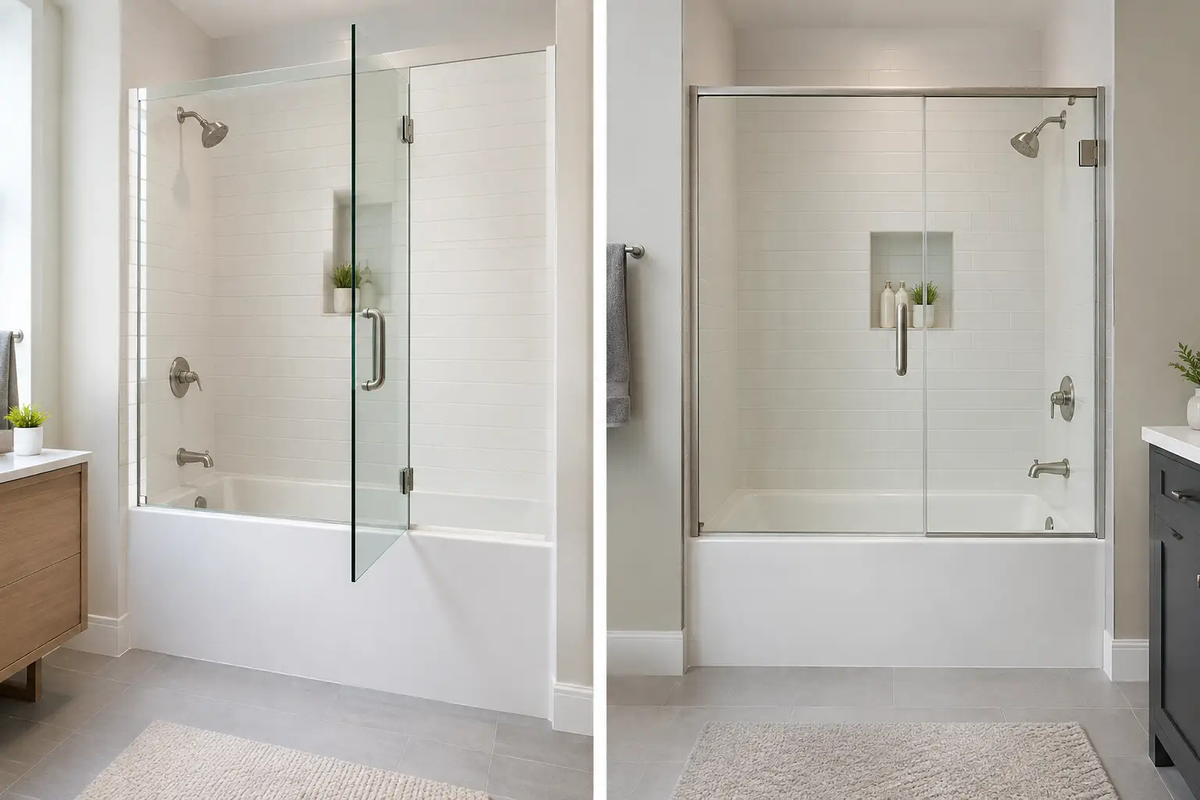
A tub door can look like a small detail until stepping over the side of a conventional bathtub becomes uncomfortable, unsteady, or simply exhausting. When comparing outswing versus inswing tub doors, the right choice usually comes down to how a person gets into the bath, how much room the bathroom has, and what will feel practical not only now but years from now.
For many homeowners planning to age in place, an outswing door offers a more natural way to enter a sit-in bath: open the door, back up to the seat, sit down, then bring your legs inside. That is very different from standing on one foot while stepping over a high tub wall. Still, an outswing design needs clear floor space in front of the tub. Understanding that trade-off is the best place to start.
What Is the Difference Between Outswing and Inswing Tub Doors?
An outswing tub door opens into the bathroom, away from the bathing area. An inswing door opens inward, into the tub or shower enclosure. Both styles are found in accessible bathing products, but they create very different entry experiences.
With an inswing door, the person generally needs to step into the bathing area before closing the door. This can work well in a compact room where there is little open floor space outside the tub. It may be familiar to someone used to a standard shower door, but it does not necessarily solve the challenge of getting safely seated before closing the enclosure.
An outswing door opens toward the person using the bath. On Secure Bath's sit-in bath, the durable aluminum door and frame open a full 180 degrees. That wide opening allows a person to approach the built-in seat from the front or side, sit first, and close the door once they are stable. For a homeowner with reduced balance, sore knees, a walker, or a wheelchair transfer routine, that sequence can make a meaningful everyday difference.
Why an Outswing Door Often Works Better for Sit-In Baths
A walk-in tub is designed around seated bathing, not around standing in a slippery enclosure. The door should support that purpose.
Sit down before closing the door
The most practical advantage of a 180-degree outswing door is the ability to sit before managing the door. Rather than stepping into a narrow area and turning around while standing, the bather can position themselves at the seat, use the available grab bars for support, and close the door from a seated position.
Consider a homeowner recovering from knee surgery or someone whose balance is less reliable late in the day. They may still be able to bathe independently, but lifting a leg over a tub wall and pivoting on wet flooring can feel like the hardest part of the routine. A low-threshold sit-in bath with an outswing door changes that entry process without requiring the person to give up the comfort of a bath.
More room for transfers and caregiver assistance
An outswing door can also create a clearer path for people who use mobility aids or receive occasional help from a spouse, adult child, or caregiver. When the door opens 180 degrees, it moves out of the way instead of narrowing the entrance.
This does not mean every wheelchair user will have the same transfer needs. Seat height, bathroom dimensions, turning radius, the location of grab bars, and whether a person transfers independently all matter. But a wide, outward-opening door gives an installer more flexibility to plan around the person rather than asking the person to adapt to a tight opening.
A solid door and frame matter, too
Door direction is only part of the decision. The materials and construction of the door matter because it is a component used repeatedly and relied on for a watertight bathing experience. A durable aluminum door and frame are designed for regular use while providing a sturdy, substantial feel when opening and closing the bath.
For homeowners comparing walk-in tubs, it is reasonable to ask about the door frame, latch operation, threshold height, and how the seal works. A door should be easy to manage from a seated position without feeling flimsy or difficult to align.
When an Inswing Door May Make Sense
Inswing doors are not automatically the wrong choice. They can be a reasonable fit when bathroom floor space is limited and an outward-opening door would interfere with a vanity, toilet, laundry door, or main walking path.
In a small bathroom, an outswing door that cannot open fully is not useful. Some homeowners also prefer an inswing shower door because it keeps the bathroom aisle clear. If the primary goal is a walk-in shower rather than seated soaking, an inswing configuration may suit the layout well.
The trade-off is that an inswing door occupies space inside the bathing area. In a sit-in bath, that can make entering, turning, or positioning more restrictive. It also may be less convenient when a family member needs to assist. The best choice depends on the complete layout, not the door alone.
Outswing Versus Inswing Tub Doors: Questions to Ask at Home
Before choosing a door style, look at the way the bathroom is used on an ordinary day. Measurements matter, but so do habits. Ask whether the door can open fully without hitting a toilet, vanity, or bathroom entry door. Think about where a walker would be parked, whether there is room for a caregiver to stand nearby, and how the bather will move from the doorway to the seat.
It also helps to consider future needs without assuming the worst. A homeowner may be perfectly comfortable today but want a bathroom that remains workable after a planned surgery, during a temporary injury, or as mobility changes over time. Planning once for changing needs can be more practical than completing a conventional remodel now and another accessibility remodel later.
A professional in-home consultation is useful because the recommendation should account for real conditions: room width, door swings, plumbing location, floor structure, access to the home, and the individual's bathing routine. A product that looks ideal in a showroom may need a different configuration in a particular Las Vegas or Henderson home.
Safety Features That Work Alongside the Door
No single feature makes bathing easier by itself. An outswing door is most helpful when it is part of a thoughtful accessible-bathing design.
A low threshold reduces the need to step high over a tub wall. Built-in seating lets the person bathe while seated rather than standing for the entire shower. Grab bars provide a stable handhold for sitting and standing, while slip-resistant surfaces can offer more secure footing during entry and exit. These features support everyday comfort and confidence without making the bathroom feel clinical.
The bathing sequence matters as well. With a sit-in bath, the user enters and closes the door before filling the tub, then drains the water before opening the door at the end. Homeowners should consider whether they are comfortable with that routine and how long they prefer to sit. Those who want a quick standing shower may be better served by a curbless or roll-in shower, while those who value a seated soak may prefer a walk-in tub or sit-in bath.
Choosing for Your Bathroom, Not a Brochure
The best door is the one that fits the person and the room. An inswing door can preserve outside floor space, but an outswing door can make seated entry and transfers far easier. For many seniors, caregivers, and homeowners planning ahead, the ability to open a door wide, sit down first, and close it from a stable position is the deciding advantage.
Secure Bath offers free, no-pressure in-home consultations in Las Vegas, Henderson, and surrounding Las Vegas Valley communities. A local, owner-led visit makes it possible to discuss the bathroom you actually have, the concerns you actually face, and whether a sit-in bath with a 180-degree outswing aluminum door and frame makes sense for your home.
A well-planned bathing space is not about preparing for a limitation. It is about preserving privacy, comfort, and choice at home - No Step. No Slip. No Stress.
Questions about walk-in tubs? Ask away
Free in-home consultation: call (702) 789-7780
Get a free quote →