
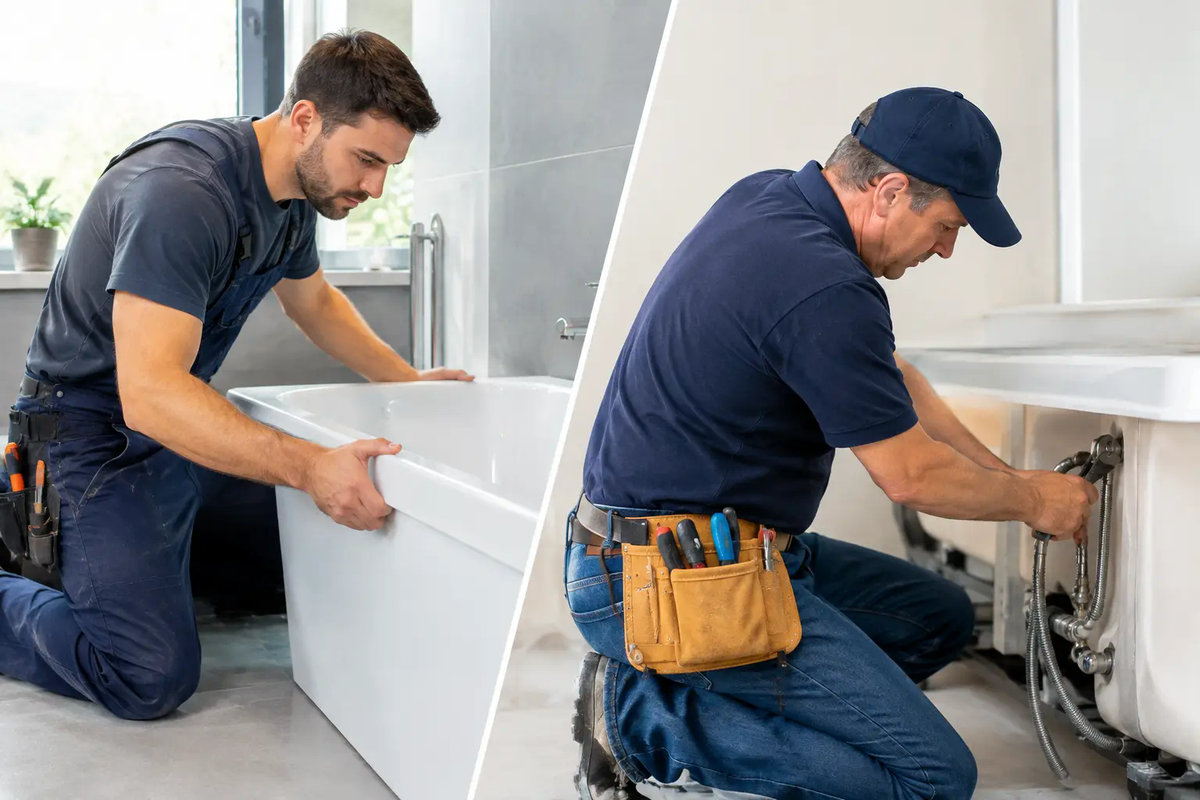
A bathtub can become difficult long before someone considers themselves “old.” Maybe stepping over the tub wall feels less steady after knee surgery. Maybe a spouse has started waiting nearby during bath time. Or perhaps you are planning ahead, so your home continues to work for you as needs change. When comparing local versus national tub installers, the real question is not simply who can sell a walk-in tub. It is who will help you choose a bathing solution that fits your home, mobility, routine, and budget.
For Las Vegas and Henderson homeowners, a sit-in bath or walk-in tub is a meaningful home decision. It affects daily comfort, privacy, and the ability to remain independent at home. The installer you choose matters just as much as the features you choose.
Local Versus National Tub Installers: The Main Difference
National walk-in tub companies can offer broad brand recognition, polished advertising, and a large selection of models. A local installer can often offer something different: direct knowledge of local homes, personal accountability, and a consultation centered on the person who will actually use the bath.
Neither option is automatically right for every homeowner. A national company may be appealing if you already know the exact product line you want and are comfortable working through a centralized sales and service process. A local company may be a better fit when you want a more personal assessment, clear answers about your specific bathroom, and a familiar point of contact after installation.
The comparison becomes especially important with accessible bathing. This is not a standard fixture replacement. Door swing, wall clearance, plumbing access, the location of the drain, the user’s height, transfer needs, and caregiver access can all affect whether a tub feels comfortable once it is installed.
Why a Home Assessment Matters More Than a Brochure
A brochure can show a beautiful walk-in tub, but it cannot show how that tub will work in a particular bathroom. Many Las Vegas Valley homes have bathrooms where every inch matters. The existing tub may sit beside a toilet, against a tight vanity, or near a door that limits how much space is available.
A good in-home consultation should start with practical questions. Can the user comfortably sit and stand from the built-in seat? Is an inward-swinging door appropriate, or would an outward-swinging door make entry easier? Will the bathroom layout allow a caregiver or family member to assist if needed? What is the condition of the existing plumbing and subfloor?
These questions are particularly useful for homeowners who use a walker, have limited knee or hip movement, use a wheelchair, or are recovering from an injury or surgery. The goal is not to predict every future need. It is to plan once for changing needs instead of completing one remodel now and another later.
The value of an outswing door
Most walk-in tubs use an inward-swinging door. That design can work well in many bathrooms, but it asks the user to step in and turn around before sitting. For some people, that movement is the hardest part of bathing.
Secure Bath’s sit-in bath uses a 180-degree outswing door with a durable aluminum door and frame. The door opens fully outward, allowing the user to sit down first and then close the door. In everyday terms, this can reduce the need to balance while turning inside a tight bathing space. The aluminum construction is also designed for the regular use a bathing door receives.
That does not mean an outswing door is the best answer in every bathroom. It needs enough clear floor space to open fully. A local installer should measure the room and explain that trade-off plainly rather than treating one design as the right choice for everyone.
Pricing: Look Beyond the Starting Number
Walk-in tub costs vary because homes and needs vary. The tub itself is only part of the project. Installation may involve removing the old tub, updating plumbing, adjusting walls or flooring, adding electrical work for certain features, and completing finish work around the new unit.
National companies may promote introductory prices, package pricing, or limited-time offers. Those may be useful starting points, but homeowners should ask what the number includes. Does it cover removal and disposal of the existing tub? Are plumbing changes included? What happens if the installer finds water damage or a needed repair after the old tub is removed? Are optional comfort features priced separately?
Local companies are not always the least expensive, and national companies are not always the most expensive. What matters is whether the quote is specific enough to support a confident decision. A clear proposal should describe the selected tub, the installation scope, included accessibility features, and any conditions that could change the cost.
A no-pressure conversation is valuable here. If a homeowner needs time to compare layouts, discuss finances with family, or decide whether a sit-in bath or a roll-in shower better fits their routine, that is reasonable. Accessible bathing should feel like a considered improvement, not a rushed purchase.
Service After Installation Is Part of the Purchase
A bathing solution is used frequently, often by someone who depends on it for a comfortable daily routine. That makes follow-up service more than a nice extra. If you have a question about operating the door, cleaning the bath, or addressing an issue after installation, you want to know whom to call.
With a national provider, service may be coordinated through a central customer service system and assigned to an available local representative. This can be efficient, particularly for a company with an established regional network. Still, some homeowners prefer working with the same local team that measured their bathroom and explained the product.
Local accountability can be especially reassuring when the owner or a knowledgeable local representative remains involved from consultation through installation. It creates a clearer connection between the recommendation, the work performed, and the support available afterward.
Before choosing any installer, ask how service requests are handled, who performs the installation, and whether the person quoting the project can answer questions during the process. Straight answers are usually a good sign.
Features That Make Daily Bathing Easier
Brand names and sales presentations can distract from the features that actually affect day-to-day use. Whether you choose a local or national installer, focus on the experience of getting in, sitting down, bathing, and getting back out.
A low threshold reduces the height a person must step over. Built-in seating provides a stable place to bathe without lowering to the tub floor. Grab bars give the user a secure handhold during entry and exit, while slip-resistant surfaces help provide better footing. These features support the simple goal behind accessible bathing: No Step. No Slip. No Stress.
Hydrotherapy features may add comfort for some homeowners, but they should not overshadow the basics. A tub with jets is not necessarily the right tub if the seat height is uncomfortable, the door is difficult to manage, or the layout does not provide enough room to enter safely.
For someone who does not want to soak in a tub, a curbless shower, roll-in shower, or tub-to-shower conversion may be worth discussing. These can be helpful alternatives, especially for wheelchair access. Still, many homeowners prefer the warmth, seated comfort, and contained bathing experience of a sit-in bath. The best choice depends on personal routine, space, and mobility.
Questions to Ask Before You Choose an Installer
You do not need to become a bathroom contractor to make a well-informed choice. A few direct questions can reveal whether an installer is listening to your needs or simply steering you toward a standard package.
Ask who will visit your home, who will perform the installation, and whether the installer has evaluated the door swing and clear floor space. Ask for a written explanation of what the price includes. Ask how long the work is expected to take and how the home will be protected during demolition and installation. Finally, ask whom you will contact if questions arise after the project is complete.
Also consider the person using the bath most often. Can they test the seat height or discuss how they transfer from a wheelchair or walker? Are they comfortable with the controls? Can they reach the handheld shower and grab bars? A thoughtful consultation should make room for these practical details.
A Local Choice Can Make Planning Feel Simpler
Choosing between local and national tub installers is less about choosing a logo and more about choosing the kind of experience you want. Homeowners who value a broad corporate brand may feel comfortable with a national provider. Those who want owner-led guidance, local knowledge, and a personalized recommendation may prefer a local specialist.
For homeowners in Las Vegas, Henderson, and nearby Southern Nevada communities, Secure Bath offers free in-home consultations focused on what will make bathing easier in your actual home. There is no need to wait for a major mobility change before asking questions. A calm conversation and a careful measurement can be the first practical step toward a bathroom that supports comfort, independence, and peace of mind for years to come.
Questions about walk-in tubs? Ask away
Free in-home consultation: call (702) 789-7780
Get a free quote →