
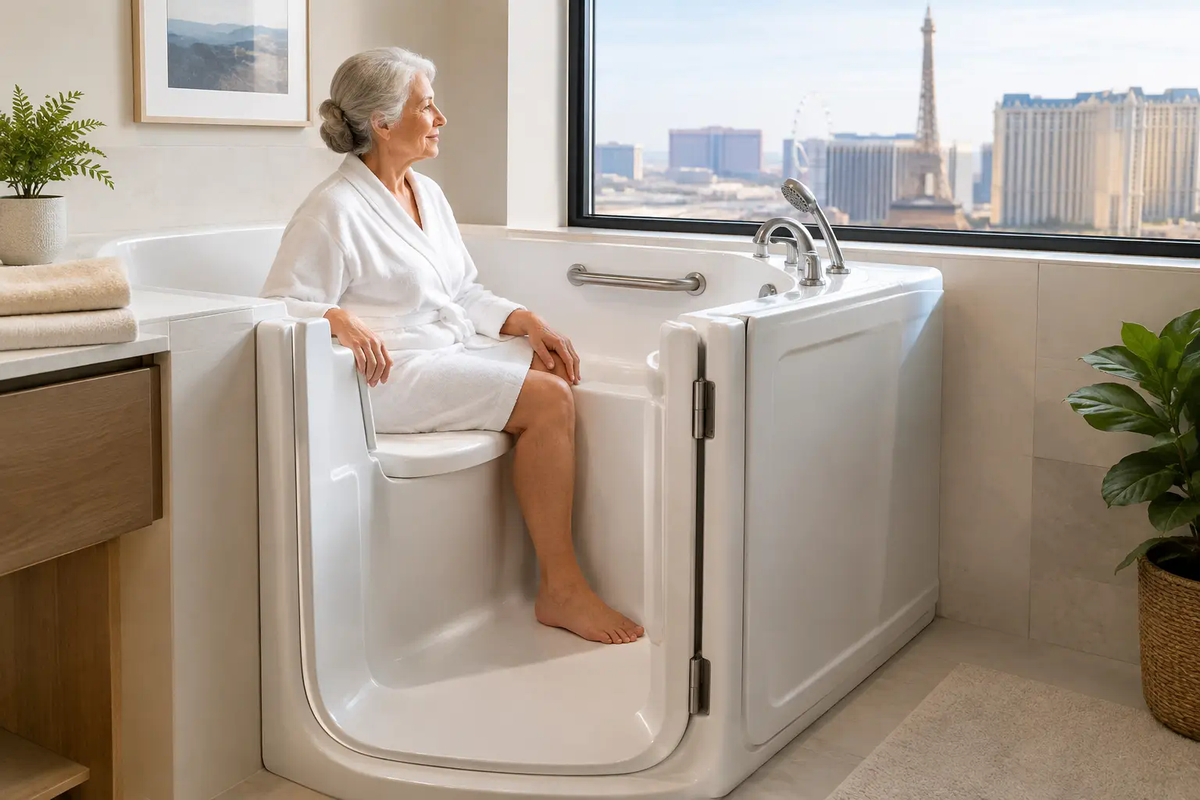
Stepping over a high tub wall can turn a routine shower into the most difficult part of the day. This Las Vegas sit-first bathtub guide is for homeowners who want a more comfortable way to bathe without giving up privacy, independence, or the home they know. The central idea is simple: sit down first, then close the door, rather than balancing on one foot while stepping into a conventional tub.
For many people, that distinction matters more than extra jets or a long feature list. A bathing solution should fit the person using it, the bathroom it is going into, and the way daily life may change over time.
What Does “Sit-First” Mean in a Bathtub?
A traditional tub asks you to lift a leg over a wall that is often 14 inches or higher, then turn and lower yourself onto the tub floor or shower seat. That movement can be awkward for someone with knee pain, reduced balance, limited range of motion, or a recent injury. It can also be stressful for a spouse or adult child who worries about being nearby every time their loved one bathes.
A sit-first bath changes the entry sequence. The user opens the door, enters over a low threshold, sits on the built-in seat, and then closes the door before filling the bath. Secure Bath's sit-in bath uses a 180-degree outswing door with a durable aluminum door and frame. Because the door swings fully outward, there is room to approach, sit, and get situated before closing it.
That is different from simply adding a grab bar to a standard tub. Grab bars can be helpful, but they do not remove the high step. A sit-in bath is designed around the fact that sitting is often steadier and easier than standing while transferring into a tub.
Why the Door Design Matters
Not all walk-in tubs handle entry the same way. Some use inward-swinging doors. Depending on the bathroom layout and the user's mobility, an inward door may make entry or positioning more difficult because the person has to clear the door opening and move into the bathing area before sitting down.
A 180-degree outswing door can be especially practical for someone who uses a walker, needs a caregiver nearby, or transfers from a wheelchair with assistance. The door moves fully out of the way, allowing the person to sit on the seat before closing it. The durable aluminum door and frame also matter because this is a component used every day. Homeowners should ask how the door is built, how it seals, and how it will work in their own bathroom rather than choosing based on a brochure photo alone.
The best configuration still depends on the room. An outswing door needs clear floor space in front of the bath when it is open. In a tight bathroom, the installer should measure door swings, toilet clearance, vanity placement, and the path into the room. A good accessible-bathing plan considers the whole transfer, not just the tub itself.
Key Features to Look for in a Sit-First Bath
The door may be the feature people notice first, but safe, comfortable use comes from several parts working together. Look for a low-entry threshold that reduces the height of the step, a comfortable built-in seat, and slip-resistant surfaces underfoot. Well-placed grab bars give the user something solid to hold while sitting down or standing up.
Faucet controls should be easy to reach from the seated position. A handheld shower can make rinsing more convenient, particularly for someone who cannot stand for long. Some homeowners also consider hydrotherapy features for comfort and relaxation, but these should be viewed as an optional preference, not the reason to choose an accessible bath.
Drain time deserves an honest conversation. Because the door stays closed while water is in the bath, the user remains seated until it drains. Fast-drain systems can reduce that wait, but every model and plumbing setup is different. If waiting in the tub would be uncomfortable due to temperature sensitivity or personal preference, discuss that before making a decision.
Is a Sit-In Bath Better Than a Walk-In Shower?
There is no universal winner. A walk-in shower with a low or curbless entry can be an excellent choice for someone who prefers standing showers, uses a shower chair, or wants a more open layout. A roll-in shower may also be the better fit for certain wheelchair users, depending on transfer needs and bathroom dimensions.
A sit-in bath makes sense when seated bathing is the priority. It offers an integrated seat, an enclosed bathing space, and the option to soak without getting down to the floor of a conventional tub. For a homeowner who already feels unsteady stepping over a tub wall but still values a bath, that can be a meaningful improvement.
Consider a couple in Henderson where one person prefers a quick standing shower and the other needs a stable seated option. In some homes, the practical answer is a sit-in bath in one bathroom and a walk-in shower in another. In other homes, space or budget calls for one carefully chosen solution. The goal is not to buy the most features. It is to make everyday bathing easier for the people who live there.
Planning for Aging in Place Before There Is a Crisis
Many bathroom changes happen after a fall, surgery, or a sudden decline in mobility. Planning earlier gives homeowners more choices and more time to think through layout, comfort, and budget. It does not assume that everyone will have the same needs later. It simply recognizes that a bathroom designed for easy entry can remain useful through many stages of life.
For Las Vegas Valley homeowners, this can be part of a broader plan to remain at home. A person may be fully mobile now but notice that the tub wall feels higher than it used to, that bending is harder after a knee procedure, or that getting in and out requires more concentration. Those are reasonable moments to explore options, not reasons to panic.
A local, in-home consultation is valuable because measurements tell only part of the story. The conversation should include who will use the bathroom, whether they need help transferring, how much space exists outside the tub, and whether the home has another bathing option during installation. It should also cover the homeowner's preferences. Some people want a simple, easy-to-clean bath. Others need a configuration that accommodates a caregiver or mobility device.
What Affects Walk-In Tub Cost and Installation?
Walk-in tub and sit-in bath costs vary because the project is more than the unit itself. The selected features, size, plumbing condition, electrical needs, wall repairs, flooring changes, and layout all affect the final scope. A straightforward replacement in an existing tub alcove is usually less involved than moving plumbing or reworking a small bathroom to create better clearance.
Ask for pricing that explains what is included. Homeowners should understand the cost of the bath, installation labor, removal of the existing fixture, plumbing or electrical work if needed, and finish work around the new unit. A lower initial quote is not always the lower project cost if needed work is left unclear.
Installation timing also varies. Before work starts, a professional should confirm measurements, delivery access, plumbing needs, and how the bathroom will be protected during the project. Most importantly, ask practical questions: Will the bath fit through the home? How long will the primary bathroom be unavailable? What needs to be moved beforehand? Clear answers help a project feel manageable.
Questions Worth Asking Before You Choose
Before selecting a sit-in bath, ask whether the user can comfortably enter, sit, and stand from the seat. Ask how the outswing door will fit the room when open, where grab bars will be located, and whether the controls can be reached while seated. If a caregiver may assist, make sure there is enough working space beside the unit.
It also helps to compare bathing habits. Does the person prefer soaking or showering? Do they need a handheld shower? Would a walk-in shower meet their needs better? Honest answers may lead to a simpler solution, and that is a good outcome.
Secure Bath offers free in-home consultations for homeowners in Las Vegas, Henderson, and nearby Southern Nevada communities who want practical answers without a high-pressure sales experience. The right recommendation starts with the person, not the product catalog.
A well-planned bathing upgrade is not about making a bathroom look medical. It is about making a familiar daily routine feel more manageable. When sitting comes before stepping, the goal is straightforward: No Step. No Slip. No Stress.
Questions about walk-in tubs? Ask away
Free in-home consultation: call (702) 789-7780
Get a free quote →