
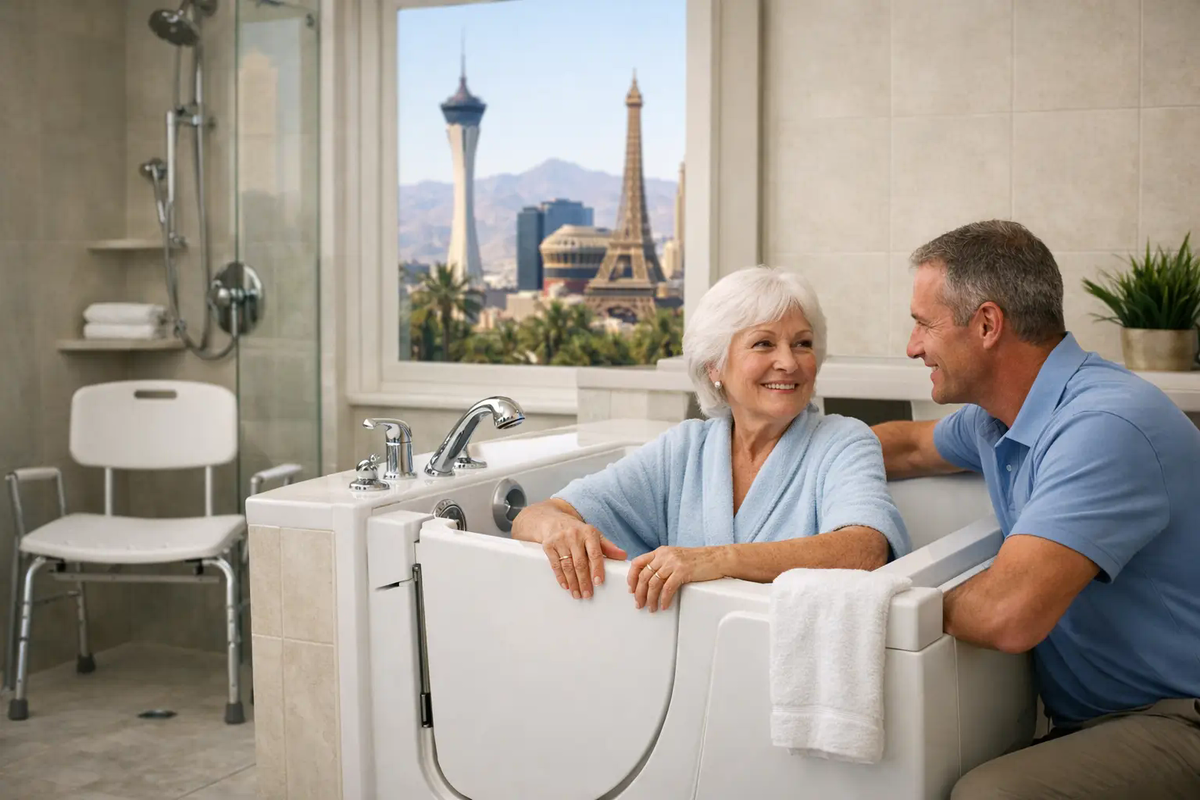
A bathroom can feel perfectly manageable until one small movement becomes difficult: lifting a leg over a tub wall, turning on a wet floor, or lowering down and getting back up again. This Las Vegas accessible bathing guide is for homeowners who want a practical way to make bathing more comfortable now and more manageable if their needs change later.
For many people, the question is not whether they want a luxury bathroom remodel. It is whether their current tub still fits how they live. A safer bathing setup can support independence, privacy, and the ability to remain at home without making the bathroom feel clinical or complicated.
Start With the Real Barrier to Bathing
Traditional tubs create a high step at the exact point when the floor may be wet and balance may be less certain. That does not mean every homeowner needs the same solution. Someone recovering from knee surgery may need an easier option for a period of time, while a couple planning to age in place may want a long-term upgrade that prevents another major remodel later.
Think about what happens during a normal shower or bath. Is stepping over the tub wall uncomfortable? Is standing for the entire shower tiring? Does a spouse or adult child worry about being nearby in case help is needed? These everyday details should guide the decision more than a one-size-fits-all product pitch.
A good accessible bathing plan addresses the movement that feels hardest. For many Las Vegas and Henderson homeowners, that is the first step into a conventional tub and the last step back out.
Why a Sit-In Bath Is Different From a Standard Walk-In Tub
Walk-in tub is a broad industry term. Secure Bath uses the term sit-in bath for its signature accessible bathing solution because the user opens the door, sits down first, and then closes the door. The approach is simple, but it changes the order of movement in a meaningful way.
The defining feature is a 180-degree outswing door. Instead of squeezing through a narrow opening or stepping into a deep basin while standing, the door swings fully outward. The user can back up to the opening, sit comfortably, and close the door from a seated position. For a wheelchair user, someone with limited leg strength, or a homeowner whose balance varies from day to day, that extra room can make entry and exit feel much more natural.
The door and frame are made from durable aluminum, an important practical detail. A bathroom door mechanism is used repeatedly and exposed to moisture, so material quality matters. The low threshold reduces the high step associated with a conventional tub, while built-in seating gives the bather a stable place to sit rather than requiring them to lower themselves into the bottom of a tub.
Grab bars and slip-resistant surfaces add further support. They do not promise that an accident can never happen, but they give users more secure handholds and footing during the parts of bathing where people often feel least steady. Together, these features support the straightforward idea behind Secure Bath's tagline: "No Step. No Slip. No Stress."
Las Vegas Accessible Bathing Guide: Choosing the Right Option
A sit-in bath is often the strongest choice when seated bathing, a low entry threshold, and easier transfers are the priorities. It can be especially useful for homeowners who enjoy soaking, have difficulty standing for a full shower, or want an accessible option that works well as mobility changes.
A walk-in shower may be better for someone who strongly prefers showering and can stand safely with grab bars, a handheld showerhead, and possibly a built-in seat. A curbless or roll-in shower can provide excellent wheelchair access, but it requires careful planning for drainage, bathroom layout, and water containment. Depending on the home, that can involve more extensive renovation than replacing an existing tub with a sit-in bath.
A tub-to-shower conversion can also make sense, particularly when a homeowner needs a faster or simpler shower entry but does not want a soaking option. The trade-off is that removing a tub may not meet the needs of a person who benefits from bathing while seated in a contained, supportive space.
There is no universally best answer. The right choice depends on mobility, bathing preferences, available space, caregiver needs, and how long the homeowner expects to stay in the home. A local in-home consultation is helpful because it evaluates the actual bathroom rather than relying on a generic floor plan or a phone estimate.
Features That Make Everyday Use Easier
Accessible bathing features work best when they solve a specific problem. A low threshold helps with the challenge of clearing a tub wall. Built-in seating reduces the need to stand or lower down into a deep basin. Grab bars create dependable support when changing positions, and a handheld showerhead makes it easier to direct water while seated.
The 180-degree outswing door deserves special attention because clearance affects independence. A door that opens widely can make a meaningful difference for a person using a wheelchair or walker, as well as for a caregiver who needs room to assist without awkward positioning. It also allows users to sit before closing the door, rather than balancing on one foot while trying to enter a bathing area.
Comfort features may matter, too. Some homeowners ask about hydrotherapy for a more relaxing bath experience. While it is not a substitute for medical care, it can be a welcome comfort feature for people who prefer a soothing soak. The best configuration is the one with useful features, not simply the longest list of upgrades.
What Affects Sit-In Bath Cost?
The cost of an accessible bathing project varies because homes and needs vary. The type of unit, bathroom dimensions, plumbing location, wall conditions, electrical requirements, finishes, and any needed modifications can all affect the final price. A straightforward replacement in an existing tub space is generally different from a project that requires major layout changes.
Homeowners should also consider cost in terms of long-term planning. Installing a sit-in bath before mobility becomes a major issue can be easier than waiting until a rushed decision is necessary. This is not an assumption that everyone will lose mobility. It is simply a way to plan once for changing needs instead of remodeling the bathroom again later.
Ask for clear, project-specific pricing and a plain-language explanation of what installation includes. An honest recommendation may be that a sit-in bath is the right fit, or it may be that a shower conversion or a few targeted modifications better match the household's current needs. The goal is a bathroom that works well, not a sale that adds unnecessary features.
Installation Considerations in Southern Nevada Homes
Las Vegas Valley homes come in many layouts, from older properties with compact bathrooms to newer homes with larger primary suites. Before selecting a bathing solution, an installer should inspect the existing tub area, measure door clearances, assess plumbing, and discuss who will use the space.
It is also worth considering the path into the bathroom. A generously opening bath door is valuable, but the overall room still needs enough clearance for comfortable access. For a homeowner who uses a walker or wheelchair, turning space and the placement of the toilet, vanity, and bathroom door can influence the best product choice.
Professional installation matters because a bathing fixture must be properly fitted, connected, and sealed. An owner-led, no-pressure consultation can help homeowners in Las Vegas, Henderson, and nearby communities understand the practical details before they commit. It is the opportunity to ask direct questions about timing, disruption, features, and what the finished bathroom will be like to use.
A Better Time to Plan Is Before You Are Rushed
Many families begin looking at accessible bathing after a close call, a surgery, or a change in a loved one's routine. That is understandable, but planning earlier provides more choices. You can compare a sit-in bath with a walk-in or roll-in shower, decide which features are truly useful, and make a decision based on comfort rather than urgency.
If stepping over the tub has become a regular frustration, or if you simply want a bathroom that will serve you well for years to come, a free in-home consultation can turn broad concerns into clear options. The best accessible bathing solution is one that respects how you want to live at home: comfortably, independently, and with less worry each time you bathe.
Questions about walk-in tubs? Ask away
Free in-home consultation: call (702) 789-7780
Get a free quote →