
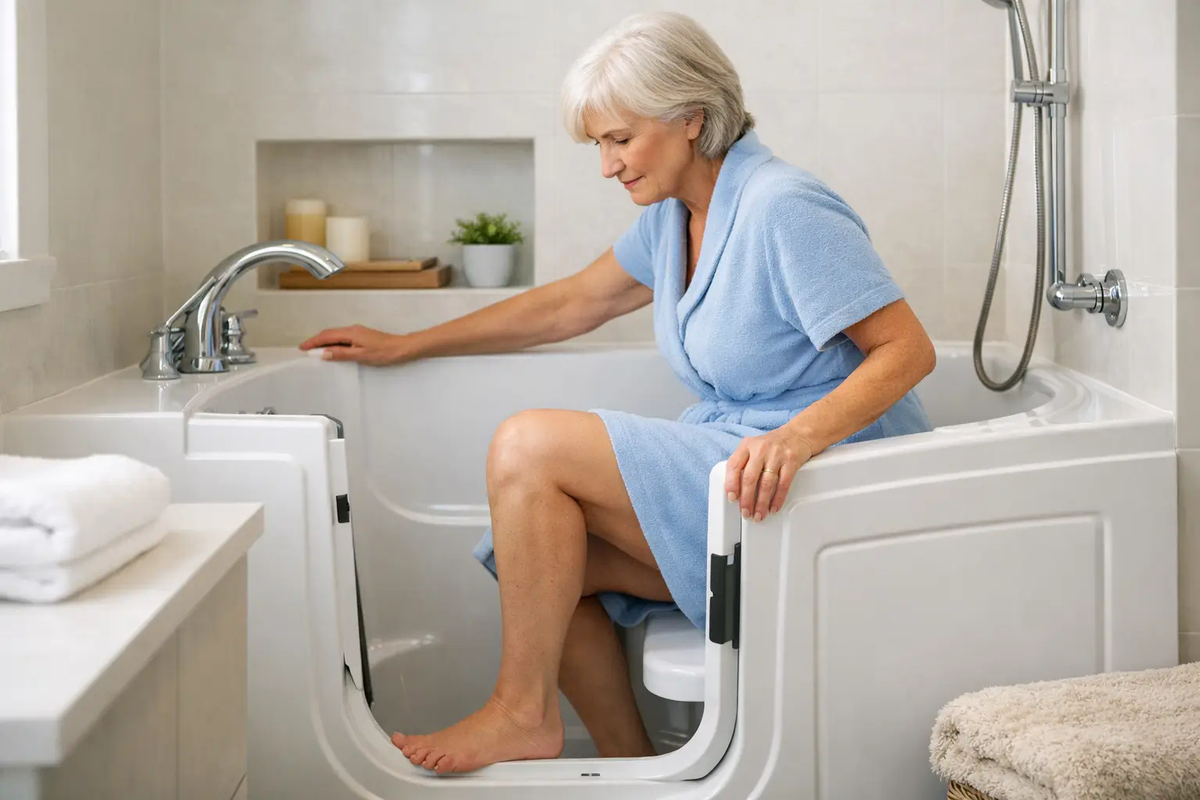
The difficult part of bathing is often not washing. It is the moment you have to lift one leg over a high tub wall while standing on a hard, wet surface. For someone with aching joints, unsteady balance, a recent surgery, or limited leg strength, learning how to enter a seated bathtub is really about changing that moment from a balancing act into a calm, repeatable routine.
A seated bathtub, also called a sit-in bath or walk-in tub, is designed so you can enter through a door and sit down before filling the tub. That is very different from trying to step into a conventional bathtub and lower yourself afterward. The right routine, along with the right features, can make bathing feel more private and manageable at home.
How to Enter a Seated Bathtub Step by Step
Start with the bathtub empty and the floor outside it dry. A sit-in bath is filled only after the bather is seated and the door is closed, so there should be no need to step over a tub wall or climb into standing water.
Open the door fully and make sure it is out of your path. An outswing door can be especially practical for people who use a walker or wheelchair, or for anyone who needs more room to turn and position themselves. Secure Bath's sit-in bath uses a 180-degree outswing door with a durable aluminum door and frame, allowing the door to open wide rather than creating a narrow entry point.
Move close to the opening, using a mobility aid if you normally use one. Turn so your back is toward the built-in seat. Rather than reaching for the seat from a distance, back up until you can feel the seat against the backs of your legs. This gives you a clear reference point before sitting.
Use the grab bar or stable support provided, then lower yourself onto the seat slowly. Once seated, bring one leg in at a time through the low-threshold opening. There is no prize for doing this quickly. A few steady movements are better than twisting, reaching, or trying to balance on one foot.
After both legs are inside, close and latch the door according to the manufacturer's instructions. Check that it is properly sealed before turning on the water. When the bath is over, drain the water completely before opening the door. Then reverse the same process: move your legs out, place both feet securely on the dry floor, pause, and stand with support.
Why the Door and Seat Matter So Much
Not every walk-in tub is equally easy to enter. The width of the opening, the direction the door swings, the threshold height, and the seat position all affect daily use.
A 180-degree outswing door is useful because it lets the user sit before closing the door. This can reduce the awkward maneuvering that may be required with a door that opens inward. It can also give a caregiver more space to assist from outside the tub when help is needed. The durable aluminum door and frame matter, too. They are part of the structure that supports a secure closure over years of normal use.
The built-in seat changes the bathing position from standing and lowering to sitting and settling in. For many homeowners, that is the main benefit. Grab bars offer a reliable handhold during the transfer, while a slip-resistant floor can provide more confidence underfoot. These features do not remove every bathing risk, and they should not replace sensible habits, but together they make the process easier to manage.
Set Up the Bathroom for a Better Transfer
Even a well-designed sit-in bath works best when the area around it supports safe movement. Keep the path between the bedroom or hallway and bathroom clear of laundry baskets, loose rugs, and small furniture. Good lighting is helpful, particularly for evening baths when shadows can make a change in floor level harder to see.
A non-slip bath mat outside the tub can help keep feet on a drier surface, provided it lies flat and does not slide. If you use a walker, cane, or wheelchair, consider where it will rest while you transfer. It should be close enough to reach after exiting but not positioned where it blocks the door swing or creates a tripping hazard.
For some households, a grab bar near the tub entrance is helpful in addition to the bars inside the bathing area. Placement matters more than simply adding hardware. A bar should be where your hand naturally goes while sitting down or standing up, not across the room where it cannot help during the transfer.
A Simple Routine Can Reduce Rushing
Rushing is often what makes an otherwise manageable transfer feel difficult. Before getting into the bath, set out your towel, robe, soap, shampoo, and any items you will want after bathing. Make sure the drain is closed only after you are seated and the door is latched.
If you become tired easily, choose a time of day when your energy and balance are usually at their best. Some people prefer having a spouse or family member nearby after a procedure or during a period of reduced mobility. That does not have to mean giving up privacy. It can simply mean knowing someone is close if you need assistance.
Your own abilities should guide the routine. A person recovering from knee surgery may need a slower, more deliberate turn into the seat. Someone who uses a wheelchair may need extra clearance beside the tub and a transfer approach planned around their chair. A free in-home consultation can help identify these practical details before a tub is selected and installed.
When a Seated Bathtub May Be a Better Choice Than a Shower
A curbless or roll-in shower can be an excellent accessible option, especially for a person who prefers to remain in a wheelchair while bathing or wants a faster shower routine. A shower seat, handheld showerhead, grab bars, and a low or zero threshold can make that arrangement much easier to use.
A sit-in bath may be a stronger fit for homeowners who prefer soaking, want the support of a fixed built-in seat, or find standing in a shower tiring. It may also suit people who want a more contained bathing space with water around them rather than a shower area that requires standing or transferring to a separate chair.
The trade-off is that a sit-in bath requires time to fill and drain while you are seated inside. If waiting in the tub would be uncomfortable, ask about fill and drain performance as part of the product discussion. The best choice is not the one with the longest feature list. It is the one that fits the user's daily habits, physical needs, bathroom layout, and budget.
Questions Homeowners Often Ask
Can I enter a seated bathtub with a walker?
Many people can, provided there is adequate room in front of the tub and the door opens clear of the walking path. You would typically bring the walker close, turn, back up to the seat, and use the tub's support features as you lower yourself. The exact approach depends on your strength, balance, and the bathroom layout.
Do I still need to step over anything?
A sit-in bath is designed with a low threshold, so you step through an opening rather than over the tall wall of a standard tub. You still need to lift your feet over the low entry area one at a time after sitting, but the movement is much smaller and is done from a seated position.
Is this only for people with major mobility problems?
No. Some homeowners choose accessible bathing after a health change, while others plan ahead so they do not need another major bathroom remodel later. Planning once for changing needs can protect both comfort and independence without assuming that mobility will decline.
For Las Vegas and Henderson homeowners, the most useful next step is often seeing what will work in the actual bathroom, not trying to judge from photos alone. Secure Bath offers local, no-pressure in-home consultations to discuss entry space, seating, door clearance, and the features that matter to your household. A bathing routine should feel like a normal part of the day - No Step. No Slip. No Stress.
Questions about walk-in tubs? Ask away
Free in-home consultation: call (702) 789-7780
Get a free quote →