
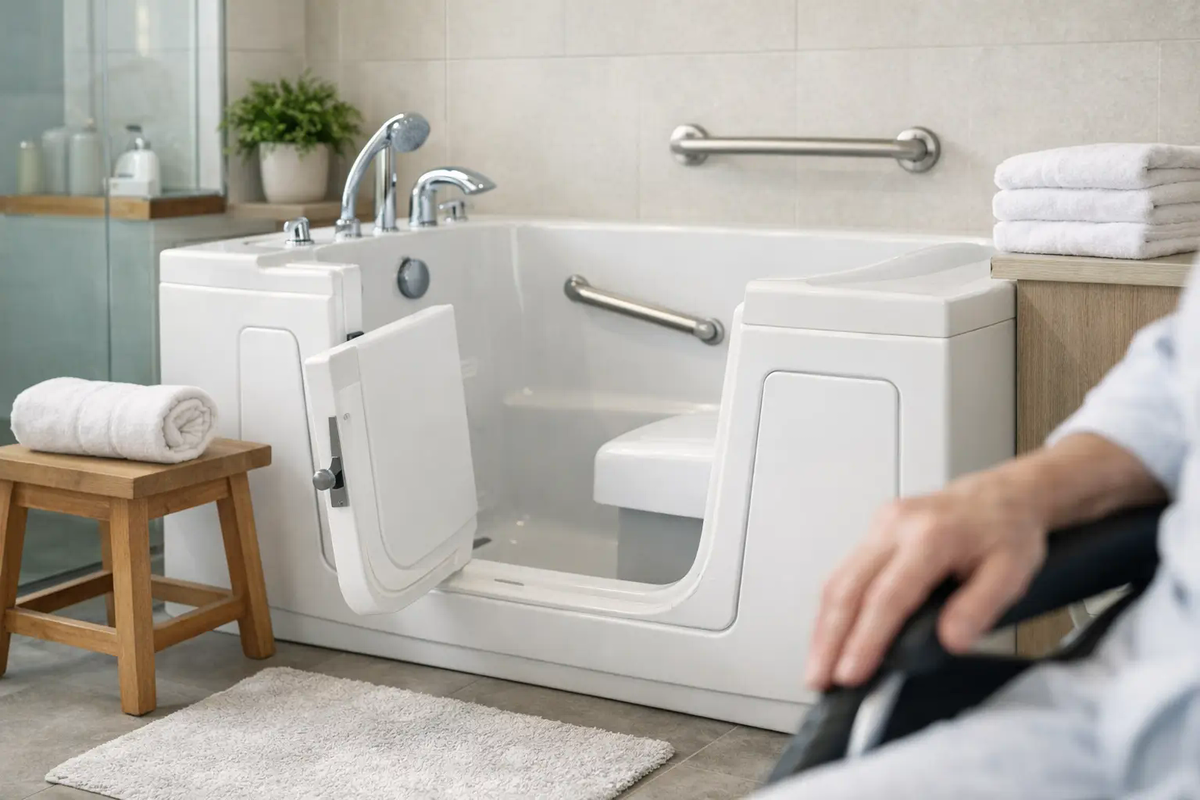
A traditional bathtub asks you to do the hardest part of bathing while standing on one foot: lift a leg over a high wall, balance on a wet surface, and lower yourself down. Learning how to choose an accessible bathtub starts with changing that sequence. The right option lets you get seated first, move at a comfortable pace, and bathe with more privacy and confidence.
For many Las Vegas and Henderson homeowners, the decision is not only about a current mobility concern. It is about planning once for changing needs, whether that means recovering from surgery, helping a spouse bathe more comfortably, or making a longtime home easier to enjoy in the years ahead.
Start with the bathing challenge, not the product name
“Accessible bathtub” can describe several very different solutions. A walk-in tub or sit-in bath is often the best fit for someone who prefers soaking in a tub but has trouble stepping over the side. A low-threshold shower may make more sense for a person who does not enjoy baths, needs a wheelchair-friendly approach, or wants faster daily bathing.
Before comparing features, think through a typical bath from start to finish. Is the main challenge stepping over the tub wall? Lowering down to the tub floor? Standing long enough to shower? Turning in a tight bathroom? Or helping another person safely and respectfully?
Those answers matter more than a brochure photo. An accessible bathing solution should fit the person who will use it most often, while still working for other household members. It also needs to suit the bathroom itself, including the doorway, toilet placement, wall space, plumbing location, and available clearance.
How to choose an accessible bathtub by focusing on entry
The entry is the defining feature of an accessible tub. Look closely at the threshold height, door operation, and room needed around the tub. A low threshold reduces the need to lift a leg over a conventional tub wall, but the door design determines how naturally a person can get in, sit down, and close it.
An outswing door can be particularly helpful for someone who has difficulty backing into a tub opening or who transfers from a wheelchair or mobility aid. Secure Bath’s sit-in bath uses a 180-degree outswing door, allowing the user to sit down before closing the door. Rather than balancing while stepping into a narrow opening, the person can approach the seat, turn, sit, and then bring the door closed.
The durable aluminum door and frame are also practical details, not just design language. A solid door system should feel stable in everyday use and be easy to operate without excessive force. Still, an outswing door needs clear floor space in front of the bath. In a compact bathroom, the layout must be measured carefully so the door does not interfere with a vanity, toilet, or another door.
An inward-swinging door may work in some rooms, but it can make entry more complicated for people with limited balance or reduced leg strength. There is no universal winner. The best choice depends on how the user moves and how much room the bathroom offers.
Make seated bathing genuinely comfortable
A built-in seat is one of the biggest differences between a traditional tub and a sit-in bath. It allows the user to bathe while seated at a comfortable height instead of lowering all the way to the tub floor and trying to rise again afterward.
Do not assume that every seat will feel right. Seat height, width, depth, back support, and the position of the controls all affect comfort. Someone with stiff hips may prefer a higher seat. A larger person may need more interior room. A caregiver may need space to assist without reaching awkwardly across the tub.
During an in-home consultation, it is useful to talk honestly about everyday movement. Can the user stand and pivot? Do they use a walker? Will they need help transferring? A well-chosen sit-in bath supports independence where possible, but it should not force someone into an uncomfortable or unrealistic routine.
Look for the safety features you will use every day
Accessible bathing is usually a collection of small, practical choices. A low entry helps at the start. A seat helps during the bath. Slip-resistant flooring, well-placed grab bars, and easy-to-reach controls help throughout the experience.
Grab bars should be positioned for actual movement, not added as an afterthought. A bar near the entry can help with turning and sitting, while another may provide support when standing up. The grip should be comfortable, and the placement should match the user’s dominant hand and range of motion.
Slip-resistant surfaces are equally valuable because water and soap can make any bathing area less predictable underfoot. They do not guarantee that a fall cannot happen, but they can provide more secure footing as part of a thoughtful bathroom setup.
Consider the faucet and showerhead, too. Controls should be reachable from the seated position and simple to understand. A handheld showerhead can make rinsing easier, especially for someone who cannot comfortably stand or twist. If hydrotherapy features are of interest, treat them as a comfort preference rather than the main reason to choose a tub. First make sure the entry, seat, door, and layout are right.
Account for filling, draining, and daily routine
A walk-in tub or sit-in bath has a different rhythm than a standard shower. Because the door must stay closed while the tub holds water, the user will generally sit inside while it fills and drains. That is perfectly manageable for many homeowners, but it is worth discussing upfront.
Ask how long filling and draining are expected to take, whether the home’s water heater can provide enough hot water for the desired bath, and how the user will stay comfortable during those minutes. In Las Vegas Valley homes, an installer should also evaluate the existing plumbing and electrical setup rather than making assumptions based on the bathroom’s appearance.
A shower conversion can be a better option for someone who wants a quick routine or cannot comfortably remain seated while waiting. A curbless or roll-in shower may be especially appropriate for a wheelchair user, depending on transfer needs and bathroom dimensions. The goal is not to choose the most feature-filled product. It is to choose the bathing routine that feels manageable on an ordinary day.
Compare costs as part of the long-term plan
The cost of an accessible bathtub varies because the project includes more than the tub itself. Door style, fixtures, plumbing changes, electrical needs, wall repairs, removal of the existing tub, and the complexity of installation can all affect the final price.
A lower initial price is not always the better value if the tub does not fit the user or if important safety features are missing. On the other hand, homeowners do not need to pay for options they will never use. Clear, itemized recommendations make it easier to understand what is included and why.
It also helps to weigh the cost against the likelihood of another remodel later. A homeowner who is already replacing an aging tub may choose a sit-in bath now to avoid revisiting the same bathroom when mobility changes. That is not a prediction about anyone’s health. It is simply a practical way to make one renovation serve the home longer.
Choose an installer who measures and listens
An accessible bath should never be selected from dimensions alone. The installer needs to assess the room, the existing plumbing, the home’s access points, and the way the intended user enters and exits the bathing area. Good questions are a positive sign: How do you bathe now? What feels difficult? Who else uses this bathroom? Is a wheelchair or walker part of the routine?
Local experience matters because the recommendation should account for real homes, not a one-size-fits-all sales process. A no-pressure in-home consultation gives homeowners and family members time to compare a sit-in bath with other accessible options and understand the installation work before committing.
The best accessible bathtub is the one that makes the next bath feel less complicated. If stepping over the tub wall has become difficult, or you simply want to plan ahead for a more comfortable home, Secure Bath can help you evaluate the fit in your own bathroom. No Step. No Slip. No Stress.
Questions about walk-in tubs? Ask away
Free in-home consultation: call (702) 789-7780
Get a free quote →