
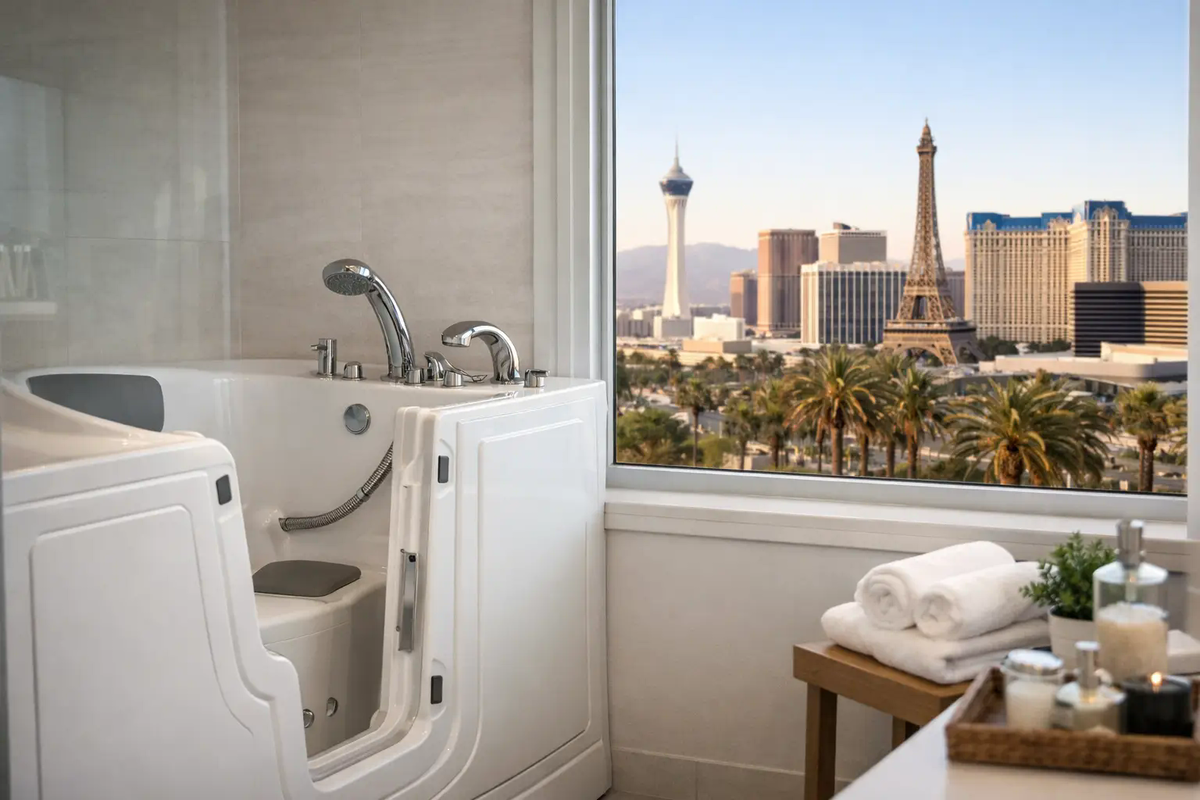
A bathtub should not become the hardest part of the day. When homeowners ask, “how much does a walk in tub cost?” they are usually weighing more than a bathroom purchase. They are thinking about a parent who grips the towel bar for balance, a spouse recovering from surgery, or their own plan to stay comfortable and independent at home.
For most Las Vegas and Henderson homeowners, an installed walk-in tub or sit-in bath is a meaningful investment. The right question is not only what the unit costs, but what is included, whether the design works for the person using it, and whether it can meet changing needs without another major bathroom remodel later.
How Much Does a Walk In Tub Cost?
For a professionally installed walk-in tub in the Las Vegas Valley, homeowners should generally expect an investment of about $12,000 to $35,000, depending on the tub, features, bathroom conditions, and installation requirements.
That is a much more useful range than a national “starting price,” because walk-in tub projects can vary dramatically. A basic soaker tub may be less expensive than a premium model with additional comfort and accessibility features, while a more involved installation can require plumbing, electrical, flooring, wall, or other bathroom modifications.
The company you buy from can also affect the price. Large national brands and corporate dealers may have significantly higher pricing because of their sales structure, advertising costs, product packages, and installation models. Two homeowners can receive very different quotes for what appear to be similar tubs, which is why it is important to compare the actual product and the complete installation scope rather than simply comparing advertised starting prices.
The best way to determine the real cost for your bathroom is an in-home assessment. The layout, existing plumbing, electrical requirements, condition of the bathroom, and the needs of the person using the tub all matter.
At Secure Bath, the goal is to give homeowners a clear understanding of what they are getting and what the project will cost before they make a decision. Dignity first. Safety always. No pressure.
What Drives the Cost of a Walk-In Tub?
The tub itself is only one part of the total. The biggest cost factors are the design, the condition of the existing bathroom, and the features that make bathing safer and more comfortable for the actual user, and which company you choose. Big brands have high overhead costs that transfer to the buyer.
The door and entry design
A low threshold matters because it removes the high tub wall that many people struggle to step over. But the door style matters, too. Secure Bath’s 180-degree outswing door allows the bather to sit down first and then close the door, rather than balancing while standing inside the tub. No Step. No Slip. No Stress.
That can be particularly helpful for people with limited mobility, wheelchair users who transfer into the seat, and anyone whose balance has become less dependable. The durable aluminum door and frame are designed for daily use and give the entry system a solid, practical feel.
An outswing door does require sufficient clear floor space in front of the tub. A good consultation should measure that clearance and discuss how the door will work with a walker, wheelchair, vanity, or bathroom door. A feature is only valuable when it fits the room and the person using it. Secure Baths outswing door opens over top of most toilets that may be close.
Size, seating, and comfort features
Basic sit-in baths are generally less expensive than larger walk-in tubs with more features. Built-in seating, slip-resistant flooring, easy-to-reach controls, and grab bars are common accessibility priorities. Hydrotherapy options can add cost, but some homeowners value them for warmth and relaxation after a long day.
Comfort should never be confused with unnecessary extras. For one person, a wider seat or a specific seat height may make transfers easier. For another, a compact model that preserves bathroom space may be the better answer. The goal is usable comfort, not a feature list that looks impressive on paper.
Plumbing, electrical, and bathroom modifications
If the new tub fits the old bathtub opening and existing plumbing can be used, installation is often more straightforward. Costs can rise when drain lines need to move, water supply lines need updating, electrical circuits are needed for pumps, or walls and flooring need repair.
Las Vegas Valley homes vary widely in age and layout, so a quote based only on a phone conversation is rarely enough. An in-home review can identify practical issues early, including access for installation, water-heater capacity, floor conditions, and the location of electrical outlets.
A walk-in tub also fills with water while the bather is inside and drains after bathing. Faster-drain systems may be available on some models, but homeowners should still ask how long draining typically takes and whether the home’s plumbing is suited to it. Clear answers are more useful than promises.
What Should an Installed Price Include?
When comparing estimates, ask each company to explain the full scope in plain language. An installed price should make clear whether it includes removing the existing tub, hauling away debris, delivering the new unit, plumbing connections, electrical work when needed, wall repair, finishing work, and testing.
It should also identify what is not included. For example, a project may uncover hidden water damage or an outdated plumbing issue after the old tub is removed. No honest contractor can predict every concealed condition, but they should explain how such changes are handled before work begins.
Ask about the product materials, door construction, manufacturer warranty, labor warranty, expected installation timeline, and who will handle service questions after the project. The least expensive quote is not automatically the best value if it leaves major work, unclear service responsibilities, or important safety features out of the plan.
A Walk-In Tub Versus a Walk-In Shower
Some homeowners assume a curbless or roll-in shower is always less expensive. Sometimes it is. In other situations, creating a true low- or no-threshold shower requires extensive floor, drain, waterproofing, and tile work. The best choice depends on mobility, bathing habits, available space, and budget.
A walk-in shower can be an excellent option for someone who prefers standing or uses a shower chair. A sit-in bath may be a stronger fit for a person who feels more secure bathing while seated and wants the comfort of soaking. For homeowners planning ahead, the decision is often about which solution will remain practical if balance, strength, or transfer ability changes.
There is no prize for choosing the most expensive option. There is real value in planning once for changing needs rather than installing a beautiful bathroom now and facing another remodel when the tub wall becomes difficult to manage.
How to Compare Walk-In Tub Companies Fairly
Start with the product and the installation plan, not simply the company’s size or how long it has been in business. Products improve over time. A newer local company may offer updated designs, durable materials, and more personal service, while an established company may have strengths of its own.
Read reviews carefully, including the negative ones. Do not look only at the overall star rating or a handful of five-star comments. Look for patterns in communication, scheduling, installation concerns, warranty questions, and how the company responds when something does not go as planned. Every business can have an occasional unhappy customer. Repeated unresolved problems deserve attention.
During a consultation, notice whether the representative asks who will use the tub, how they currently bathe, and what makes the existing setup difficult. A thoughtful recommendation should account for door clearance, transfer needs, seat comfort, bathroom dimensions, and budget. High-pressure sales games have no place in a decision tied so closely to safety and independence.
Is a Walk-In Tub Worth the Cost?
For a homeowner who already finds stepping over a tub wall stressful, the value can be immediate: less awkward entry, a secure seated bathing position, and more privacy when help is not wanted. For an adult child helping a parent, it can mean greater confidence that the bathroom is designed around the parent’s abilities rather than forcing risky workarounds.
A walk-in tub cannot guarantee that someone will never fall or be injured. It can, however, remove one common challenge: stepping over a high tub wall while wet and balancing. Paired with slip-resistant surfaces, grab bars, and a comfortable seat, it creates a more mobility-friendly way to bathe.
If bathing has become difficult, or if you simply want to prepare your Las Vegas or Henderson home before it becomes difficult, begin with an honest assessment of the bathroom and the person who will use it. The best solution should feel less like a compromise and more like a practical way to keep home feeling like home: No Step. No Slip. No Stress.
Questions about walk-in tubs? Ask away
Free in-home consultation: call (702) 789-7780
Get a free quote →