
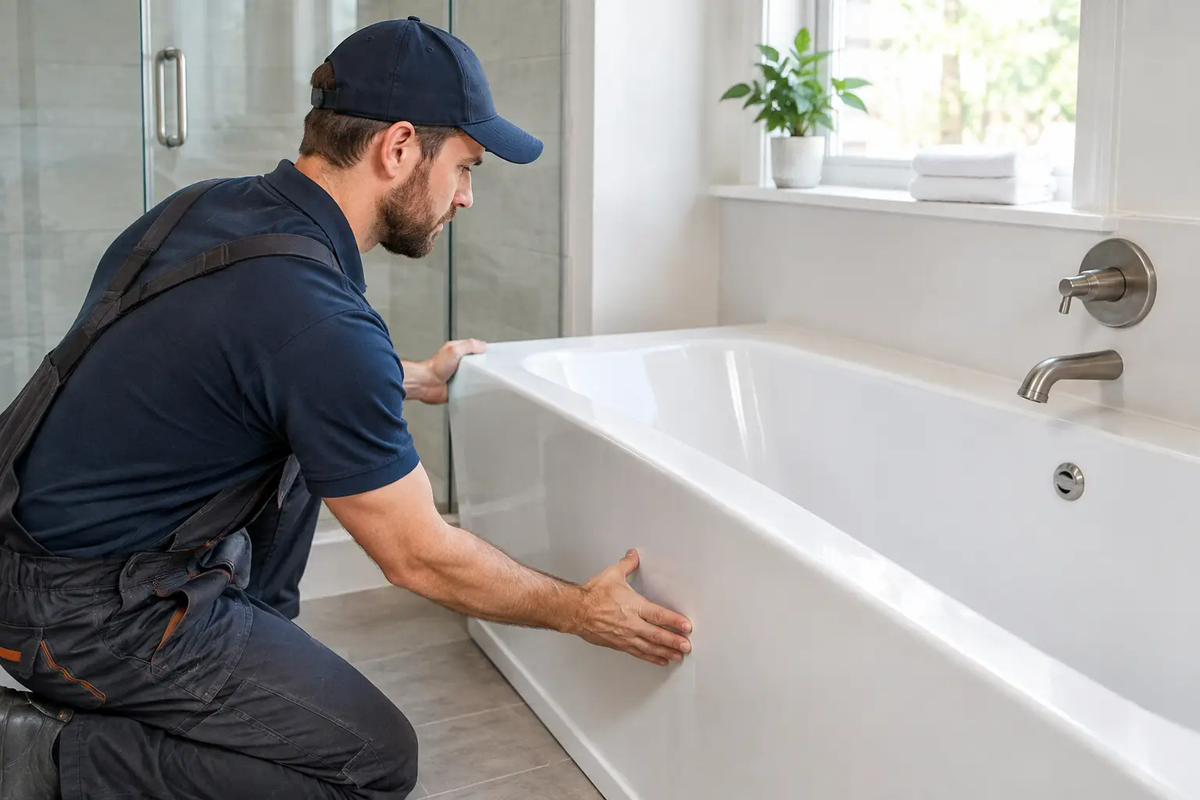
For many Henderson homeowners, the problem is not bathing itself. It is the moment before it: lifting a leg over a high tub wall, finding stable footing on a wet surface, or trying to turn and lower down without losing balance. Henderson outswing tub installers should understand that these are everyday usability concerns, not just bathroom design preferences.
A well-planned sit-in bath can replace a difficult routine with one that feels more comfortable, private, and manageable. The right installation is about more than fitting a new fixture into an existing alcove. It should account for how you move, where you need support, whether a caregiver assists you, and how your needs may change over time.
Why an Outswing Door Changes the Experience
Most people picture a walk-in tub with a door that swings inward. That style can work in some homes, but it asks the bather to step in, turn around, and lower themselves into the seat before closing the door. For someone with limited balance, a painful knee, a walker, or a wheelchair, that sequence may still feel awkward.
A sit-in bath with a 180-degree outswing door approaches entry differently. The durable aluminum door and frame swing fully outward, allowing the person to sit down first and then close the door from a seated position. There is no need to stand inside the bathing area while trying to manage the door.
That difference can be especially meaningful after surgery, during recovery from an injury, or when a spouse or adult child helps with bathing. The person using the bath has room to approach the seat, get situated, and close the door without rushing. The caregiver also has clearer access when assistance is needed.
The aluminum construction matters, too. A door is used every day, often in a warm and wet environment. Homeowners should ask about the door, frame, hinges, latch, and seal as a complete system rather than focusing only on the tub shell. A substantial door and frame help support a dependable, comfortable experience over the long term.
What Henderson Outswing Tub Installers Should Evaluate
A good accessible-bathing consultation starts with questions, not a one-size-fits-all recommendation. The existing bathroom is part of the decision, but so is the person who will use the bath.
An installer should look at the available wall space, doorway clearance, plumbing location, electrical needs, and the condition of the subfloor. In many Henderson homes, a sit-in bath can be installed in the footprint of a standard tub, but every bathroom has its own dimensions and limitations. A visit to the home is the best way to determine what is practical.
Just as important, the installer should ask how the bathroom is used now. Is stepping over the tub wall becoming difficult? Does the homeowner rely on a cane or walker? Is someone recovering from a hip, knee, or back procedure? Would a caregiver benefit from more room around the bathing area? These answers help determine whether an outswing door, seat height, handholds, and other details fit the household.
The goal is not to assume every homeowner needs the same solution. A person who can stand comfortably but dislikes a high tub wall may have different needs than a wheelchair user or someone who requires regular help from a family member. The best recommendation is specific, practical, and explained in plain language.
Safety Features That Work Together
An outswing door is a central feature, but it is not the only feature that affects everyday confidence. A thoughtfully designed sit-in bath combines several details that support easier bathing.
The low threshold reduces the height a person must step over. Built-in seating means there is a stable place to sit rather than lowering down to the floor of a conventional tub. Grab bars provide a secure point of contact when entering, sitting, standing, or shifting position. Slip-resistant surfaces add traction where water is present.
These features do not make a bathroom risk-free, and they should not replace sensible habits such as keeping the floor clear and using proper support. They can, however, reduce the difficult movements that make a traditional tub frustrating for many people.
Comfort also matters. A bath should not feel like a compromise that removes the pleasure of bathing. Depending on the model and homeowner's preferences, features such as a comfortable contoured seat and hydrotherapy options may be worth discussing. The right choice depends on priorities, budget, available space, and how the bath will be used day to day.
Installation Is More Than a Quick Tub Swap
Homeowners sometimes expect a walk-in tub installation to be identical to replacing a standard bathtub. The basic location may be similar, but an accessible bathing project deserves more careful planning.
The old fixture may need to be removed, plumbing may need adjustment, and the bathroom floor must be prepared to support the new unit properly. Electrical requirements can vary by model and selected features. Door swing is another practical consideration: a 180-degree outswing door needs clear space outside the bath, so the installer should confirm that it will not interfere with a vanity, toilet, bathroom entry door, or normal traffic through the room.
Installation timing also depends on the home. Some projects are straightforward replacements, while others uncover aging plumbing, floor repairs, or tight access conditions. A local installer should explain the expected scope before work begins, including what is included, what could change, and why.
This is where a free in-home consultation is valuable. Measurements, access, and real-life movement through the room are hard to judge from a brochure or a phone conversation. Seeing the space in person leads to better recommendations and fewer surprises.
Cost, Value, and Planning Ahead
The cost of a sit-in bath varies based on the unit, selected features, plumbing or electrical work, removal of the existing tub, and the condition of the bathroom. A low advertised starting number rarely tells the whole story. Homeowners deserve a clear explanation of the proposed work and a written price that reflects their actual home.
It can help to view the purchase through the lens of long-term planning. Some families begin looking only after a fall scare, a hospital stay, or a period of reduced mobility. Others decide to make the change while they can still choose features calmly and use the bath independently from the start.
Neither approach is wrong. Still, planning once for changing needs can help avoid a second bathroom remodel later. An accessible sit-in bath may allow a homeowner to stay comfortable in a familiar home longer, while also making the bathroom easier for a spouse, visiting parent, or future caregiver to use.
Secure Bath takes a local, owner-led approach to helping Las Vegas Valley homeowners consider those choices without pressure. The point of a consultation is to understand the problem, explain the options, and let the homeowner decide what fits.
Sit-In Bath or Walk-In Shower?
A walk-in shower may be the better option for some bathrooms, especially for a person who uses a wheelchair or strongly prefers showering. A curbless or roll-in shower can offer open access, and a built-in bench can create a seated showering option.
A sit-in bath is often the better fit for someone who wants the comfort of soaking while avoiding the high wall of a conventional tub. Its enclosed bathing area, built-in seat, low threshold, and outswing door can make a major difference for people who find standing for a shower tiring or unstable.
There is no universal winner. The decision should come down to how the person bathes, how much assistance they need, the dimensions of the room, and whether bathing preferences are likely to change. A practical installer will discuss both paths rather than pushing one answer.
Questions to Ask Before You Choose
Before selecting an installer, ask who will measure the space and who will perform the work. Ask whether the proposed door will open fully in your bathroom, what modifications are included in the price, and how plumbing or electrical issues would be handled if they are discovered.
You should also ask to see how the seat, grab bars, threshold, and door latch work. If the bath is for a parent or spouse, have that person take part in the conversation whenever possible. The best design is one they can use comfortably and confidently, not simply one that looks good on paper.
A bathroom should support independence without asking someone to take unnecessary steps or awkward turns. If a traditional tub is becoming harder to manage, an in-home conversation can clarify whether an outswing sit-in bath is the right next move. No Step. No Slip. No Stress.
Questions about walk-in tubs? Ask away
Free in-home consultation: call (702) 789-7780
Get a free quote →