
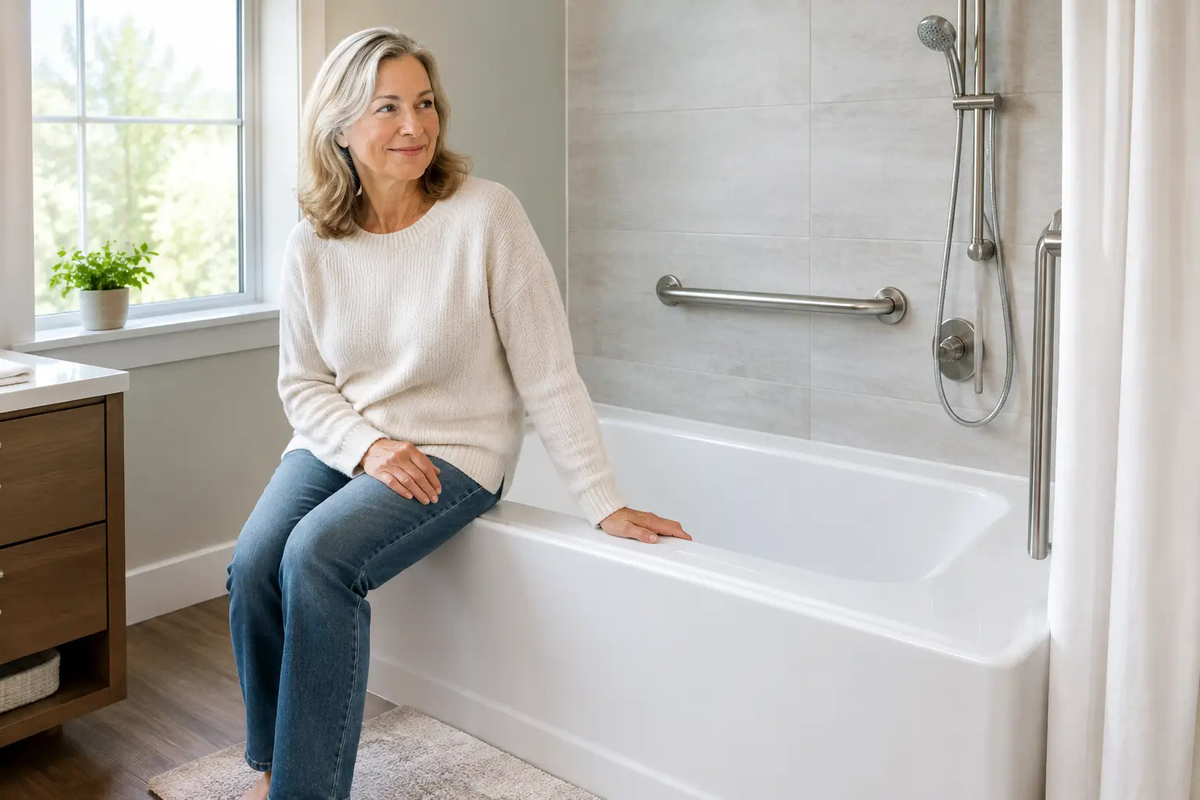
A bathtub that once felt ordinary can become difficult when stepping over its high wall requires balance, flexibility, or help from someone else. This Henderson bathtub replacement guide is for homeowners who want a bathroom that better supports comfort, privacy, and independence - whether they are recovering from surgery, helping a parent, or planning ahead for the years they hope to stay at home.
The right replacement is not automatically a shower, and it is not automatically a standard walk-in tub. The best choice depends on how you prefer to bathe, how your mobility may change, the available bathroom space, and who will use the room every day.
When a bathtub replacement makes sense
Most homeowners do not replace a tub simply because it is old. They do it because a routine task has started to require extra caution. Perhaps you brace a hand on the wall while lifting one leg over the tub edge. Maybe a spouse waits nearby in case assistance is needed. Or a caregiver is concerned about the narrow space and slippery surface around the existing tub.
Those are practical signals to consider a change. Replacing the bathing area before a major mobility issue develops can give you more choices and more time to select a solution that feels right. It is the difference between responding to an urgent problem and planning once for changing needs.
For many Henderson homes, the conversation starts with one question: Do you still want to soak, or would you rather have a stand-up shower? Your answer shapes nearly every other decision.
Henderson bathtub replacement options to compare
Sit-in baths and walk-in tubs
A sit-in bath is designed for people who still enjoy bathing in water but find a conventional tub difficult to enter. Instead of stepping over a tall tub wall, the user opens a watertight door, crosses a low threshold, and sits down before filling the bath. Built-in seating, grab bars, and slip-resistant flooring can make the process feel more stable and manageable.
Secure Bath's sit-in bath uses a 180-degree outswing door with a durable aluminum door and frame. In everyday terms, the door swings fully out of the way, so a person can approach the seat, turn, and sit before closing the door. That can be especially helpful for someone using a walker, someone with limited leg movement, or a homeowner who prefers not to balance while stepping into a bathing area.
The aluminum door and frame matter because the entry system is used repeatedly. A sturdy, well-designed door is not just a visual detail. It affects how confidently the bath can be opened, closed, and used over time.
There are trade-offs. A sit-in bath must be filled after the door is closed and drained before it opens, so it is not the fastest option for someone who prefers a brief shower. The bathroom also needs enough clear floor space for an outswing door. A home consultation can confirm whether the layout supports that door movement and whether adjustments are needed.
Walk-in shower or tub-to-shower conversion
A walk-in shower can be a strong fit for homeowners who do not want baths and want straightforward access. A low-threshold or curbless shower reduces the height of the entry, while a built-in seat, grab bars, handheld showerhead, and slip-resistant floor add useful support.
This approach is often practical for a person who can comfortably stand for part of a shower or who wants a caregiver to have more room to assist. A roll-in shower may be appropriate in certain situations, but wheelchair access depends on the doorway, turning space, drainage, shower dimensions, and the individual transfer method. It should be planned as a complete bathroom-accessibility question, not treated as a simple fixture swap.
The key difference is experience. A shower prioritizes speed and open space. A sit-in bath prioritizes seated soaking with a low-step entry. Neither is universally better.
Keeping a conventional tub
Sometimes the least disruptive option is to retain the existing tub and add safety features, such as professionally placed grab bars and a handheld showerhead. That may make sense for a temporary recovery period or for a homeowner who has no difficulty stepping over the tub wall.
However, grab bars do not remove the need to lift a leg over a high edge. If that step is the central concern, a more accessible bathing solution usually addresses the problem more directly.
Features that make daily bathing easier
A good replacement should solve the specific parts of bathing that feel awkward or tiring. Focus on how each feature will be used, rather than choosing features because they sound impressive.
A low threshold reduces the height you need to cross. Built-in seating allows you to bathe while seated rather than standing through the entire process. Grab bars offer a stable handhold when sitting down or standing up, and slip-resistant surfaces provide better footing when water is present. A handheld showerhead can make rinsing easier from a seated position and can be useful for caregivers as well.
For people considering a sit-in bath, door design deserves close attention. Ask where the door swings, how much room it requires, whether it interferes with the vanity or toilet, and how you will approach the seat. A 180-degree outswing door can provide a wide, clear opening, but it needs clear space in front of it. This is why measurements and a discussion in the actual bathroom matter more than a product photo.
Hydrotherapy features may also appeal to homeowners who enjoy a warm soak, but they should be viewed as comfort features rather than a reason to overlook access and safety. The entry, seat height, controls, and ease of cleaning are the basics to get right first.
What affects bathtub replacement cost?
Bathroom replacement costs vary because the product itself is only one part of the project. A straightforward replacement in an existing footprint can be different from a project that requires plumbing relocation, wall repair, electrical updates, flooring changes, or a larger shower enclosure.
The main cost factors include the type and size of the bathing unit, door and accessibility features, plumbing condition, drain location, wall surrounds, fixtures, and the amount of preparation needed behind the existing tub. If a walk-in shower is being considered, waterproofing and drainage details also matter. If a sit-in bath is being installed, the home may need confirmation that the water heater and electrical setup fit the selected features.
It is reasonable to ask for clear, itemized explanations of what is included: removal of the old tub, installation, plumbing work, wall materials, fixtures, cleanup, and any needed modifications. Transparent pricing is more useful than a low starting number that leaves major work undefined.
Questions to ask before choosing a replacement
Before making a decision, picture the full bathing routine. Who will use the space now? Will another household member use it differently? Is there room for a caregiver if help is needed later? Do you prefer a seated bath, a standing shower, or the flexibility of both in separate bathrooms?
Also think about timing. Waiting until bathing has become extremely difficult can make the decision feel rushed. Planning ahead does not mean assuming your needs will decline. It simply gives you a bathroom that is easier to use and better prepared for life changes.
Is a walk-in tub hard to clean?
Like any bath fixture, it needs regular rinsing and cleaning. Smooth wall surfaces, accessible controls, and a layout that lets you reach the areas you need to clean make upkeep easier. During a consultation, ask to see where the controls, drain, seat, and door seal are located so you can judge the practical cleaning routine.
Can a sit-in bath fit where my old tub is now?
Often, an accessible bath can be planned within an existing tub area, but every bathroom is different. Measurements, doorway access, plumbing locations, and the clearance needed for an outswing door all need to be checked in person.
Should I choose a shower if I use a wheelchair?
It depends on how you transfer, whether you use a shower chair, and the space available. A properly planned roll-in or curbless shower may be the better fit for some wheelchair users. Others may prefer a sit-in bath with a wide-opening door and a transfer approach tailored to their needs. The right answer comes from evaluating the actual bathroom and daily routine.
A local, no-pressure in-home consultation can turn broad options into a practical plan for your Henderson home. Secure Bath can help you weigh the layout, bathing preferences, and long-term value of a sit-in bath or accessible shower, with the goal behind every recommendation kept simple: “No Step. No Slip. No Stress.”
Questions about walk-in tubs? Ask away
Free in-home consultation: call (702) 789-7780
Get a free quote →