
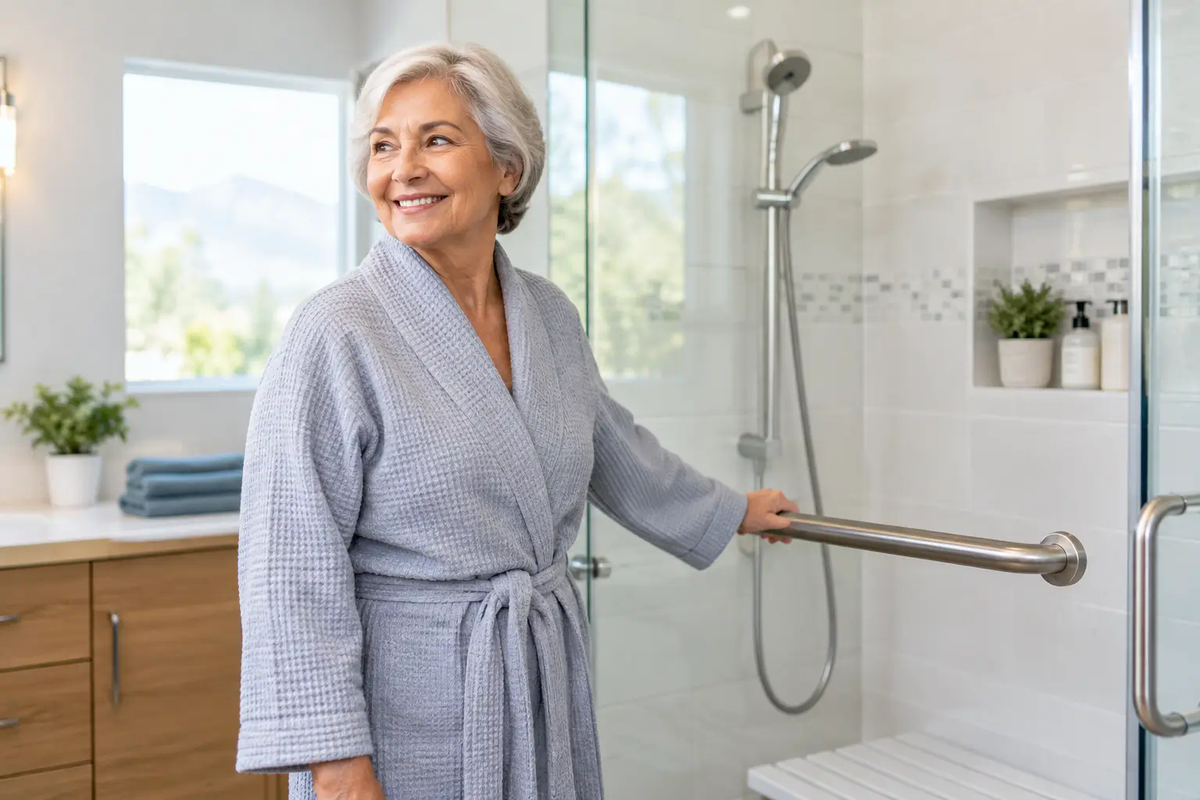
A traditional tub can become difficult long before a homeowner considers themselves to have a mobility problem. Maybe the tub wall feels a little higher after knee surgery. Maybe balance is less certain when stepping out onto a wet floor. Or maybe an adult child notices a parent holding tightly to the towel bar. This Henderson aging in place guide focuses on one practical part of staying comfortably at home: making daily bathing easier to manage.
For many Henderson homeowners, the goal is not to turn a bathroom into a medical-looking space. It is to preserve privacy, routine, and confidence while planning for changing needs. A well-chosen sit-in bath can replace the high step and awkward balancing act of a traditional tub with a more comfortable way to bathe.
Why bathing deserves attention in an aging-in-place plan
Aging in place is often discussed in broad terms: keep the home comfortable, reduce obstacles, and make sure daily routines remain manageable. Bathing deserves special attention because it combines water, hard surfaces, limited space, and movement that can be challenging even for an otherwise active person.
The issue is not always a fall or a major diagnosis. Sometimes it is simply the repeated effort of lifting one leg over a tub wall, turning around in a narrow area, and lowering down into a standard tub. During post-surgery recovery, arthritis flare-ups, or periods of reduced balance, that routine can feel especially demanding.
Planning ahead gives homeowners more choices. Instead of making a rushed change after a difficult incident or health setback, they can consider what would make the bathroom work well now and later. That is the value of planning once for changing needs.
Henderson aging in place guide: start with the bathing routine
Before comparing walk-in tubs, consider what happens during an ordinary bath or shower. A useful conversation starts with everyday details, not a product brochure. Can the homeowner comfortably step over the tub wall? Is there a place to sit while bathing? Is standing for the entire routine tiring? Does a spouse or caregiver need to stay nearby?
Also consider the layout. Henderson homes vary widely, from older properties with compact bathrooms to newer homes with more open floor plans. Available space, plumbing location, doorway width, and the condition of the existing bathroom all help determine which bathing solution makes sense.
A free in-home consultation is useful because it turns general concerns into specific answers. The right recommendation depends on the homeowner, the room, and the bathing habits they want to maintain. A person who prefers a warm soak may have different needs than someone who wants a straightforward seated bathing experience.
How a sit-in bath changes the entry and exit process
A sit-in bath is designed around a simple idea: get seated before dealing with the door. Secure Bath's signature design uses a 180-degree outswing door with a durable aluminum door and frame. The door swings fully outward, giving the user room to approach, sit down, and close the door from a stable seated position.
That difference matters. With a standard bathtub, the user usually needs to step over a high wall while standing, then turn and lower themselves into the tub. A sit-in bath replaces that sequence with a low-threshold entry and built-in seat. The user enters through the open door, turns to sit, closes the door, and bathes from a supported position.
The durable aluminum door and frame are more than visual details. They are built for the repeated opening and closing that comes with daily use. A wide-opening door can also be especially helpful for people using mobility aids, those with limited leg movement, or anyone who needs more room to position themselves comfortably.
The experience is captured in a phrase that is easy to remember: "No Step. No Slip. No Stress." It does not mean any bathroom can remove every risk. It means the bathing setup can reduce the need for one of the most difficult movements in a traditional tub: stepping over the wall.
Features that support comfort, not just access
A low threshold gets attention first, but a practical accessible bathing setup is about the full routine. Built-in seating can reduce the need to stand for the duration of a bath. Grab bars provide a steady handhold when changing position. Slip-resistant surfaces offer more secure footing where water is present.
These features work together. A seat alone is helpful, but it is more useful when getting into it does not require a high step. A grab bar can offer support, but it should be placed where it is actually needed during entry, sitting, and standing. Small design choices make a real difference because bathing is a sequence of movements, not just a few minutes in the water.
Some homeowners also ask about hydrotherapy features. They can add comfort for people who enjoy a warm bath, but they should be considered separately from the core safety features. The first priority is always a bath that is comfortable to enter, use, and exit. Extras should suit the homeowner's preferences rather than complicate the decision.
Walk-in tub or sit-in bath: what is the difference?
"Walk-in tub" is the familiar industry term, and it helps homeowners find accessible bathing options online. Secure Bath uses the term sit-in bath for its product because the design highlights the safer, more natural sequence of sitting before closing the door.
Not every walk-in tub has the same door operation, threshold height, seating feel, or access space. That is why comparisons should go beyond photographs and feature lists. Ask how far the door opens, whether it swings inward or outward, how the seating position feels, and what the process will be on a typical day.
An inward-swing door can be a workable option in some designs, but it may require the user to step inside and position themselves before closing it. An outswing door can be a better fit for someone who wants to sit first, needs more room to enter, or uses a wheelchair or mobility aid. The best choice depends on the person and the bathroom, not on a one-size-fits-all claim.
Cost and long-term value: questions worth asking
Homeowners understandably want a clear picture of walk-in tub costs and installation before moving forward. The final cost can depend on the bath model, selected features, plumbing needs, electrical requirements, and the condition and layout of the existing bathroom. A thorough in-home assessment is the sensible place to discuss those details.
It also helps to consider value over time. Replacing a difficult tub with a sit-in bath may help a homeowner continue using a familiar bathroom with greater comfort and independence. For families, that can mean less worry about a loved one managing a demanding bathing routine alone.
The lowest initial option is not always the most practical long-term choice. A bathroom change should fit the person's current needs while leaving room for reasonable changes in strength, balance, or mobility. At the same time, it is wise not to overbuy features that will not be used. Clear, no-pressure guidance matters here.
Questions to ask during an in-home consultation
A productive consultation should feel like a conversation, not a sales presentation. Ask how the sit-in bath will fit into the existing space, what preparation the installation may require, and how long the household may need to adjust its bathroom routine. Discuss who will use the bath, whether a caregiver may assist, and which features are truly useful.
It is also reasonable to ask about the door, frame, seating, controls, and cleaning. Seeing how the 180-degree outswing door operates in person can make the difference between understanding a feature on paper and knowing whether it suits the household.
Local service can be particularly valuable for Henderson and Las Vegas Valley homeowners because the recommendation is based on the actual home rather than a generic estimate. Secure Bath offers owner-led, no-pressure consultations designed to help homeowners weigh their options with practical information.
A safer bathing plan does not have to begin with a crisis. It can begin with the simple decision to make one daily routine more comfortable and less demanding. If questions are already on your mind, use the "Got Questions? Ask Away!" chat and schedule a free in-home consultation to talk through what would make bathing feel more manageable at home.
Questions about walk-in tubs? Ask away
Free in-home consultation: call (702) 789-7780
Get a free quote →