
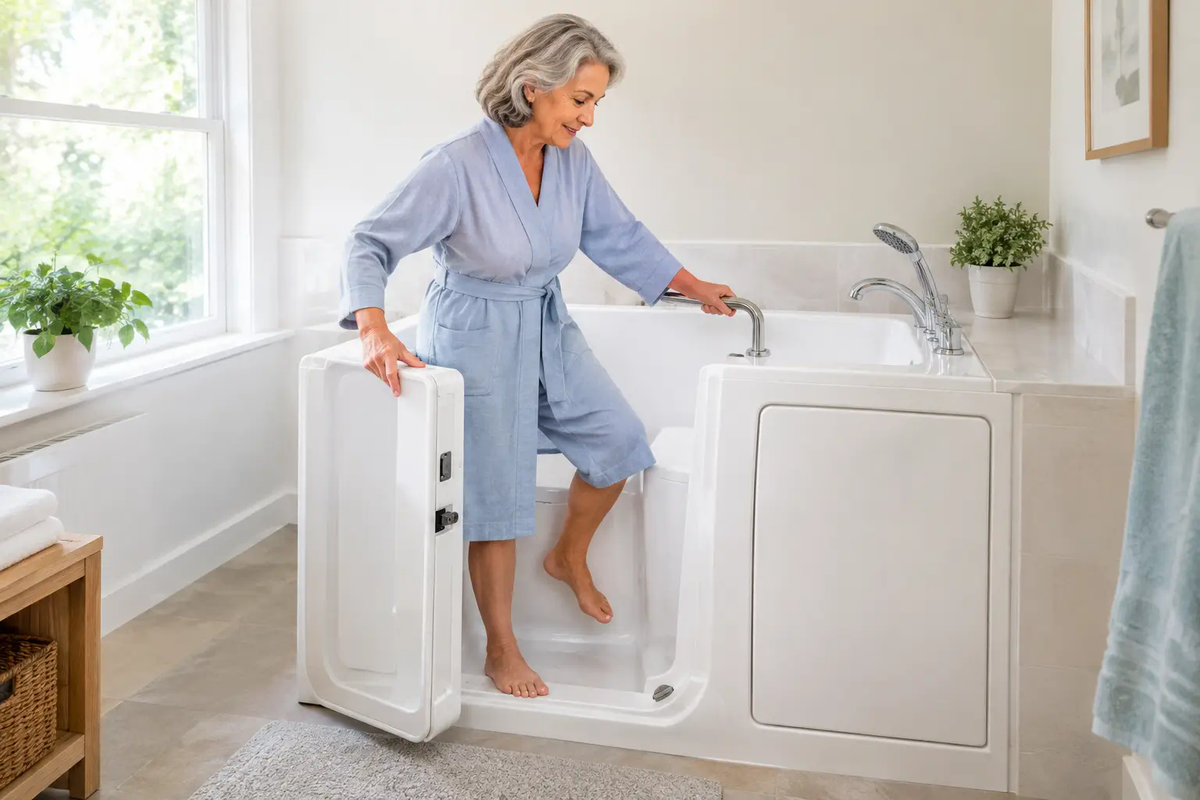
A bathtub wall can feel much higher when balance changes, a knee is healing, or a spouse is waiting nearby just in case. Entering an outswing tub safely is less about rushing through a routine and more about having a bathing space that lets you move deliberately, sit down first, and stay in control.
For many Las Vegas and Henderson homeowners, that is the appeal of a sit-in bath. Instead of lifting a leg over the side of a conventional tub, the bather opens the door, steps across a low threshold, and sits on a built-in seat before closing the door. The process is simple, but the details of the door, seat, floor, and room layout all matter.
Why an Outswing Walk-In Tub Changes the Entry Process
A traditional tub asks you to balance on one foot while stepping over a high wall, then lower yourself to the bottom of the tub. That may be manageable for years, but it can become uncomfortable after surgery, during an injury recovery, or when strength and balance are not as dependable as they once were.
A sit-in bath changes the order of movement. With a 180-degree outswing door, the door opens fully outward, creating a broad entry area. You step through the low threshold, turn, and sit on the built-in seat. Only then do you close the door. There is no need to climb over a tub wall or lower yourself all the way to the floor of the tub.
That distinction can be especially meaningful for a person using a walker, someone who needs room to position a wheelchair nearby, or a caregiver who needs enough space to assist without crowding the doorway. It also depends on the bathroom itself. A fully opening door needs clear floor space in front of the bath, which is why an in-home evaluation should consider the actual room rather than relying on a standard layout drawing.
Preparing for Entering an Outswing Tub Safely
Before using any walk-in tub or sit-in bath, take a moment to make the path to it as uncomplicated as possible. Bath mats, laundry baskets, scales, and other items can narrow the space where you need to turn or position a mobility aid. A clean, dry floor gives you a more predictable place to stand while opening the door.
Open the outswing door fully rather than trying to squeeze around a partially opened door. The 180-degree range is designed to make entry more open and comfortable. Check that the door can move freely and that nothing behind it will interfere with its path.
Next, approach the opening at a pace that feels steady. Use the available grab bars for support, not as something to pull yourself forward suddenly. Step across the low threshold one foot at a time, keeping both feet under you as much as possible. Once inside, back up carefully until you can feel the seat against the backs of your legs, then lower yourself onto it.
There is no prize for doing this quickly. A brief pause to get centered before sitting is a practical part of safe bathing.
Close the Door Only After You Are Seated
One of the practical benefits of an outswing design is that you can sit first. After you are comfortably positioned on the seat, bring the door toward you and secure it according to the bath's instructions. The durable aluminum door and frame are made to provide a solid, dependable structure during everyday use.
Make sure clothing, towels, and fingers are clear of the door seal before closing it. If twisting to reach the handle is difficult, that is worth discussing during a consultation. The right bath should fit the way you move now, not force you into an awkward motion.
Once the door is secured, you can begin filling the bath. Because walk-in tubs are designed to be filled and drained while the bather is inside, comfort includes planning for the full bathing routine. Keep a towel, robe, and any needed toiletries within easy reach before you start.
Features That Support a More Comfortable Bathing Routine
No single feature makes a bathroom safer on its own. A low threshold is useful, but it works best alongside a seat that feels comfortable, grab bars placed where they are useful, and a slip-resistant floor that helps provide stable footing.
The built-in seat is central to the experience. It lets you bathe from a seated position rather than repeatedly standing, lowering, and rising from the tub floor. For someone with sore joints, limited leg strength, or a temporary recovery restriction, that can make the routine feel more manageable.
Slip-resistant surfaces offer added traction when the floor is wet, though they do not eliminate the need for care. Grab bars provide a reliable place to steady yourself as you enter, sit, stand, and exit. The goal is not to make assumptions about a person's ability. It is to reduce unnecessary motions and give them more choices in how they move.
Hydrotherapy options may also be appealing for comfort and relaxation, but they should be viewed as an added feature, not the primary safety solution. The door, low threshold, seating, and stable points of support are what shape the basic entry and exit experience.
A Realistic Example: Planning for Changing Needs
Consider a homeowner who still manages everyday tasks independently but notices that stepping over the existing tub wall requires holding onto the towel bar. They may not feel ready for a major change, yet they also do not want to renovate twice if mobility needs shift later.
A sit-in bath can be a plan-once approach. It supports a comfortable bathing routine today while offering features that may become more valuable after a future injury, surgery, or change in balance. That does not mean every homeowner needs one immediately. It means that planning before a problem becomes urgent allows more time to consider layout, features, and budget without pressure.
For couples, it is also wise to consider both users. One person may need the accessible entry now, while the other is simply looking for a bathing option that will continue to work well at home. The right choice should be based on daily routines, physical comfort, bathroom space, and personal preferences.
What to Discuss During an In-Home Consultation
A product brochure cannot show whether an outswing door will have enough room to open in your bathroom or whether the seat height feels right for you. An in-home consultation makes those questions practical.
Talk through who will use the bath, whether a walker or wheelchair needs to be positioned nearby, and what movements currently feel difficult. Share concerns such as knee pain when lowering into a tub, a recent procedure, limited hand strength, or a caregiver's need for room to help. These are useful details, not inconveniences.
It is also reasonable to ask about installation requirements, the condition of the existing bathroom, door operation, water use, and how the bath will fit into the space. Clear answers help homeowners compare options thoughtfully. A local, no-pressure consultation should leave you with a better understanding of what works for your home, not a sense that you need to decide on the spot.
A Few Everyday Habits Still Matter
Even with an accessible bathing setup, keep the area orderly and use the bath as intended. Avoid leaving items where they block the door swing. Keep frequently used products within reach, take time when standing after bathing, and ask for assistance when you need it. Accessible design supports independence, but good routines remain part of the picture.
A well-planned sit-in bath is built around a straightforward idea: bathing should not require an uncomfortable climb. With a low entry, supportive seating, slip-resistant surfaces, grab bars, and a 180-degree outswing aluminum door and frame, the routine can feel less demanding and more dignified. That is the everyday value behind No Step. No Slip. No Stress.
If you are considering a safer bathing setup in Las Vegas, Henderson, or the surrounding Las Vegas Valley, use the “Got Questions? Ask Away!” chat to start the conversation. When you are ready, schedule a free in-home consultation to see how a sit-in bath could work in your own bathroom.
Questions about walk-in tubs? Ask away
Free in-home consultation: call (702) 789-7780
Get a free quote →