
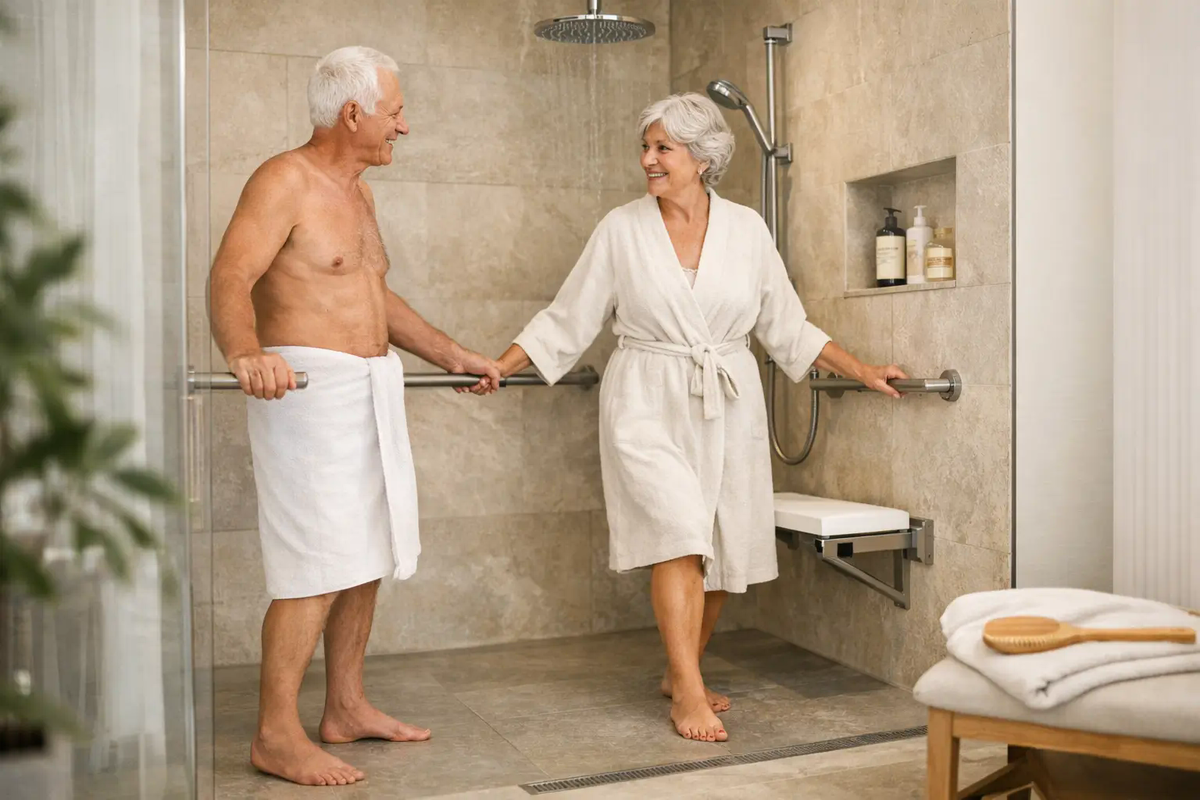
A curbless shower for seniors can make a bathroom feel more open and easier to enter, especially when stepping over a traditional tub wall has become uncomfortable. But a low-entry shower is not automatically the best answer for every homeowner. The right choice depends on how a person bathes now, the support they need while standing, whether a caregiver is involved, and how the bathroom may need to work years from now.
For many Las Vegas and Henderson homeowners, the real question is not simply, “Can we remove the tub?” It is, “What will make bathing feel safer, more comfortable, and more independent every day?” A curbless shower may be part of that answer. In other homes, a sit-in bath with a door, built-in seat, and stable handholds may be the more practical long-term solution.
What Makes a Curbless Shower Different?
A curbless shower has a floor that runs nearly level with the rest of the bathroom rather than rising over a shower curb or tub wall. Water drains through a carefully sloped shower floor, so the entrance can be very low or, in some designs, nearly flush. This removes the familiar lift-step-pause movement required to enter many conventional showers.
That design can be helpful for someone using a walker, someone recovering from a knee or hip procedure, or a homeowner whose balance is not what it used to be. It also gives a caregiver more room to assist than a narrow tub enclosure often allows.
The word “curbless,” however, should not be confused with “maintenance-free” or “right for everyone.” Proper drainage, waterproofing, floor slope, shower size, and slip-resistant materials all matter. A shower that looks accessible but leaves water outside the bathing area or provides no place to sit can still be frustrating to use.
When a Curbless Shower for Seniors Makes Sense
A curbless shower is often a strong option when the person bathing can stand comfortably for most or all of the shower, or when a shower chair can provide enough support. It may also suit a wheelchair user who needs clear entry and enough space to turn or transfer, provided the bathroom layout can accommodate those needs.
The design is especially appealing to homeowners who want an open, modern-looking bathroom without a traditional tub. A hand-held showerhead, securely placed grab bars, a fold-down seat or shower chair, and a textured floor can make the space more usable without making it feel institutional.
A curbless shower can also be a sensible part of a tub-to-shower conversion when a homeowner rarely takes baths and mainly wants to eliminate the high step over a tub wall. For an active older adult planning ahead, it can be a practical way to update the room before mobility changes become urgent.
Still, standing in a shower is not easy for everyone. A homeowner may be able to enter a low-threshold shower but feel unsteady when turning, washing lower legs, or reaching for shampoo. That is where the difference between access and full bathing support becomes clear.
Why a Sit-In Bath May Be the Better Fit
A sit-in bath is designed around one simple advantage: the user can sit down before bathing rather than remain standing. Instead of climbing over a tub wall, the person opens a door, steps through a low threshold, sits on a built-in seat, and closes the door before filling the bath.
Secure Bath’s sit-in bath includes a 180-degree outswing door with a durable aluminum door and frame. The door opens fully outward, giving the user room to approach the seat and sit down before closing it. For someone with limited mobility, a wheelchair, a walker, or difficulty backing into a tight bathing area, that extra clearance can be meaningful.
The aluminum door and frame are not just cosmetic details. They are made for repeated daily use, and the wide-opening design helps reduce awkward positioning at the doorway. Combined with built-in seating, grab bars, and slip-resistant surfaces, the goal is a bathing routine that requires less balancing and less effort.
This does not mean a sit-in bath is the universal choice. It requires time to fill and drain, and the user remains seated while bathing. Some homeowners strongly prefer the quick routine and open feel of a shower. Others find that sitting down comfortably is exactly what gives them confidence to bathe independently. The best decision comes from matching the fixture to the person, not forcing the person to adapt to a fixture.
Compare the Daily Experience, Not Just the Look
When choosing between a curbless shower and a sit-in bath, picture an ordinary morning rather than a showroom. Consider getting in, adjusting the water, washing feet and lower legs, reaching towels, and getting out when the floor may be damp.
A curbless shower generally works best for a person who can stand with reasonable comfort or who has reliable seating within the shower. It offers easy entry and can create more maneuvering room. The trade-off is that the user still needs to manage a standing or transferring routine, even with grab bars and a seat.
A sit-in bath generally works best for someone who wants to avoid standing for the duration of bathing. It provides a stable seated position, enclosed water, and integrated support features. The trade-off is that it is a different bathing experience from a quick shower, although many models include showering features for flexibility.
For couples, the decision may involve two very different needs. One spouse may want a shower, while the other needs seated bathing support. In that situation, the bathroom footprint, available plumbing, budget, and how long the home is expected to serve the family all deserve careful consideration.
Details That Make an Accessible Shower Work Better
If a curbless shower is the right path, do not treat the low entrance as the only accessibility feature. The surrounding details determine whether it works well day after day.
A properly designed shower needs effective drainage and a floor slope that directs water toward the drain without creating an uncomfortable walking surface. Slip-resistant flooring helps provide better footing, but it should still be easy to clean. A hand-held showerhead makes it easier to bathe while seated, while grab bars should be positioned where they can help with entering, turning, and standing up from a seat.
Shower seating deserves special thought. A fold-down bench can save space, but a fixed bench may feel sturdier and more comfortable for regular use. The right height, location, and reach to shower controls matter as much as the presence of a seat itself.
Glass doors can be attractive, yet they may reduce entry width or complicate caregiver assistance. In some bathrooms, a shower curtain or partial glass panel provides more flexible access and better water control. This is one reason an in-home evaluation is more useful than choosing a layout from a photo.
Plan Once for Changing Needs
Many homeowners start considering an accessible bathroom after a difficult step over the tub, a surgery, or a family member expresses concern. Those moments are understandable prompts, but planning does not have to wait for a major mobility problem.
A bathroom update is disruptive enough that it makes sense to think beyond today’s needs. A homeowner who is steady now may still value a lower entry, better lighting, sturdy grab bars, or a seated bathing option later. Planning once for changing needs can help avoid paying for another major remodel when the original design no longer fits.
In Southern Nevada, where many people choose to remain in their homes through retirement, an accessible bathing solution can support that goal while preserving privacy and familiar routines. The right fixture should feel like a practical improvement to everyday life, not a concession.
Questions to Ask Before You Decide
Before committing to a curbless shower or sit-in bath, ask how much standing is comfortable, whether transfers are difficult, and whether a caregiver needs room to help. Consider who will use the bathroom, how often they bathe, and whether the person prefers showering, soaking, or both.
Also ask what the existing bathroom can support. Drain placement, subfloor construction, plumbing, wall structure for grab bars, and available space can all affect the design and installation cost. A low-entry shower may require floor work to create the proper slope. A sit-in bath may require adjustments to plumbing and electrical service, depending on its features.
A local, no-pressure consultation can turn those variables into clear options. Secure Bath offers free in-home consultations for homeowners in Las Vegas, Henderson, and nearby Las Vegas Valley communities, focusing on the bathing setup that best fits the household rather than a one-size-fits-all recommendation.
The best accessible bathroom is the one that makes the next bath feel manageable and comfortable. Whether that means an open curbless shower or a supportive sit-in bath, the goal remains simple: No Step. No Slip. No Stress.
Questions about walk-in tubs? Ask away
Free in-home consultation: call (702) 789-7780
Get a free quote →