
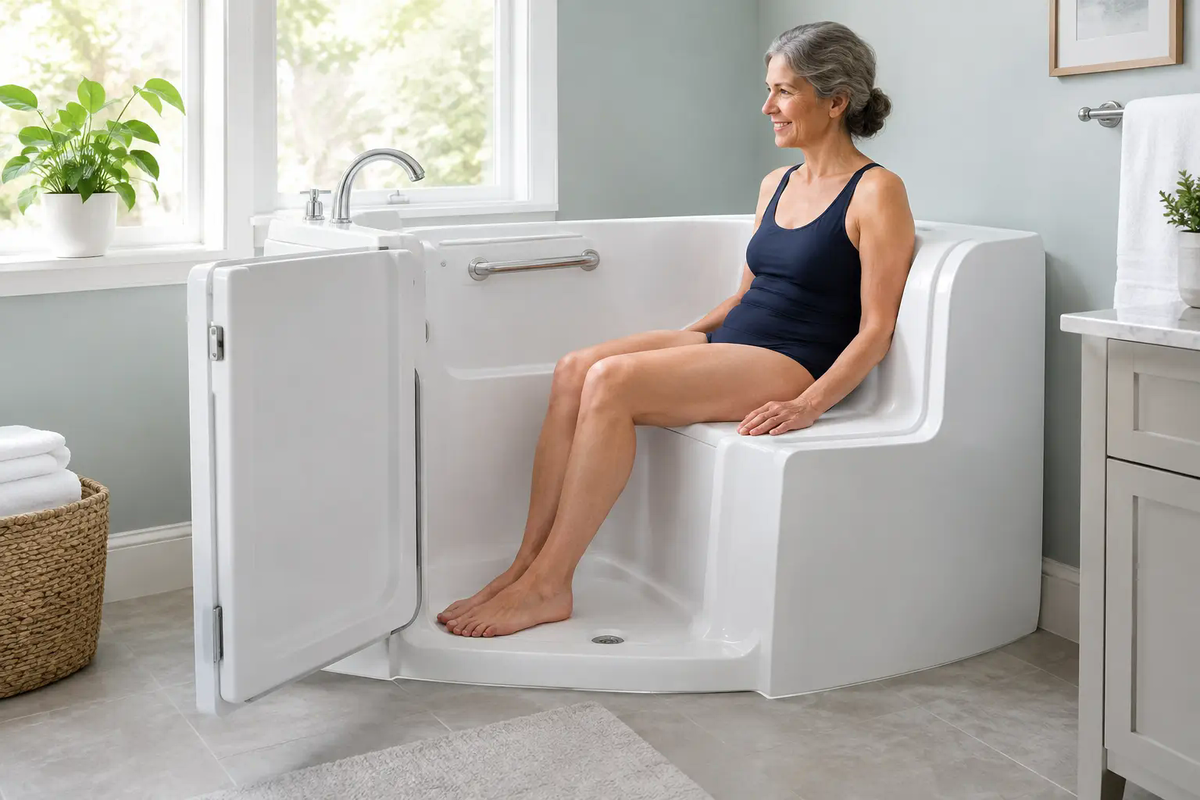
The hard part of bathing is often not the bath itself. It is the moment you lift a leg over a high tub wall, turn around on a wet surface, and try to lower yourself safely. When you choose a sit-first tub, you change that sequence: open the door, sit down, then close the door. For many homeowners, that simple difference makes daily bathing feel more manageable and private.
A sit-first tub is often called a walk-in tub in the broader industry. At Secure Bath, it is called a sit-in bath because the name describes the practical benefit: you can be seated before the door is closed and before water begins to fill. That can be a useful option for people with balance concerns, limited mobility, joint stiffness, post-surgery restrictions, or a plan to remain comfortably at home as needs change.
What a sit-first tub should solve
A good accessible bathing solution should address the specific part of bathing that has become difficult. For one homeowner, it may be stepping over the side of a conventional tub. For another, it may be lowering into a deep bath and trying to stand again afterward. A caregiver may be looking for a setup that lets a spouse bathe with more independence and less hands-on assistance.
Start with the daily routine, not a product brochure. Think about who uses the bathroom, whether they use a cane, walker, or wheelchair, and how easily they can transfer from standing to seated. Also consider whether the person wants a full bath, prefers a shower, or would benefit from both options.
A sit-in bath is not automatically the best answer for every household. Someone who cannot comfortably sit down or who requires a roll-in transfer may be better served by a curbless or roll-in shower. But for homeowners who miss soaking in a bath and need a lower-entry way to do it, a sit-first design can be a strong fit.
Choose a sit-first tub with the right door design
The door is more than a convenience feature. It shapes how the user enters, exits, and positions themselves at every bath. Many walk-in tubs use inward-swinging doors. Those can work well for some people, but they require enough room inside the tub to move into position before the door closes.
An outward-swinging door creates a different experience. Secure Bath’s sit-in bath features a 180-degree outswing door, allowing the door to open fully away from the bathing area. The user can approach the seat, sit down first, and close the door from a stable seated position. This can be especially helpful when standing balance is limited or when a wheelchair or mobility aid needs to be positioned close to the tub.
Look closely at both the door and its frame. A durable aluminum door and frame matters because this is a moving, frequently used part of the tub. It should feel solid, operate predictably, and be designed for regular use in a wet environment. During an in-home consultation, it is reasonable to ask to see how the door opens, how it latches, and how much clearance it needs in the existing bathroom.
Door swing also affects the room itself. A fully outswinging door needs open floor space in front of the tub. In a compact Las Vegas or Henderson bathroom, that may mean measuring around a vanity, toilet, linen cabinet, or existing shower enclosure before selecting a model.
Focus on safe, comfortable transfers
A low threshold reduces how high a person must lift their feet to enter. That is a major change from stepping over the tall sidewall of a standard bathtub, but the threshold is only one part of the transfer. The seat height, seat depth, grab bar placement, and floor surface all work together.
A built-in seat should allow the user to sit comfortably with their feet supported and their back in a natural position. If the seat is too low, standing up may still be challenging. If it is too narrow or shallow, it may not feel secure for the person who will use it most. Whenever possible, evaluate these dimensions based on the actual user rather than choosing by appearance alone.
Grab bars should be placed where hands naturally reach during entry, seating, and exit. Slip-resistant surfaces can provide added footing where water is present. These features do not eliminate every risk, and safe bathing habits still matter, but they can reduce the number of awkward movements required in a traditional tub.
This is the practical meaning behind “No Step. No Slip. No Stress.” It is not about making big promises. It is about removing unnecessary obstacles from a routine that should not require a difficult climb, a deep squat, or a rushed balancing act.
Think about bathing preferences, not just mobility
A sit-in bath should fit the way the household actually bathes. Some people want a deep soak and may value hydrotherapy features for comfort after a long day. Others mainly want a hand shower for rinsing, hair washing, and easy cleanup. A homeowner with limited stamina may care most about controls that are simple to reach from the seated position.
Water fill and drain times deserve an honest conversation as well. Because the user must remain seated in the tub while it fills and drains, the bathroom should be reasonably comfortable, and the plumbing should support the selected unit. Fast-drain systems may be available depending on the product and installation, but the right setup depends on the home’s plumbing and electrical conditions.
Do not assume more features are always better. Extra jets, lights, and control options can be appealing, yet they may add cost and complexity for a household that simply needs safe entry, a reliable seat, and an easy-to-use shower wand. Choose the features that will be used consistently.
Consider the bathroom and the installation plan
Before selecting a tub, assess the full room. Measure the tub alcove, doorways, hallways, and turning space. A replacement project may involve removing an existing tub, adjusting plumbing, updating wall surrounds, and ensuring electrical requirements are handled correctly. The best design on paper is not helpful if it makes the bathroom crowded or blocks access to the toilet or vanity.
A local, in-home assessment is particularly valuable because older homes can have unexpected framing, plumbing, or space limitations. It also allows the homeowner to discuss real routines: where a walker is parked, which side a caregiver stands on, and whether the bathroom needs a grab bar outside the tub as well.
Installation costs vary for good reasons. Tub size, door style, plumbing changes, electrical work, wall repairs, and the condition of the existing bathroom all affect the final scope. Be cautious with any quote that treats every bathroom as identical. Clear pricing should explain what is included, what may require additional work, and which features are optional.
Plan once for changing needs
Many people wait until bathing has become extremely difficult before considering an accessible tub. That is understandable, but planning earlier can provide more time to compare options and make decisions without pressure. It can also help homeowners avoid remodeling twice - once for a standard update and later for accessibility.
Planning ahead does not mean assuming mobility will decline. It means recognizing that a bathroom can either support independence through life changes or become another obstacle to work around. A sit-in bath can be chosen for current comfort, a recovery period, or a long-term aging-in-place plan.
Questions to ask before you decide
Before committing to a sit-first tub, make sure you can answer these practical questions:
- Can the primary user safely transfer to and from the built-in seat?
- Does an outswing door have enough room to open fully in this bathroom?
- Will the tub’s seat, controls, grab bars, and shower wand be comfortable to use?
- What plumbing, electrical, wall, or flooring work is included in the installation?
- Is a sit-in bath the better fit, or would a curbless shower better support the user’s needs?
A better next step than guessing
Photos and measurements online can help narrow the choices, but they cannot show how a particular person will approach the door, sit, reach the controls, or move through their own bathroom. A free in-home consultation with a knowledgeable local team gives homeowners room to ask those questions in context, without trying to force a one-size-fits-all solution.
If stepping over the tub wall has started to feel uncertain, or if you simply want to plan ahead for a more accessible home, take the time to see how a sit-in bath would work in your space. The right choice is the one that makes bathing feel more comfortable, more dignified, and easier to keep doing on your own terms.
Questions about walk-in tubs? Ask away
Free in-home consultation: call (702) 789-7780
Get a free quote →