
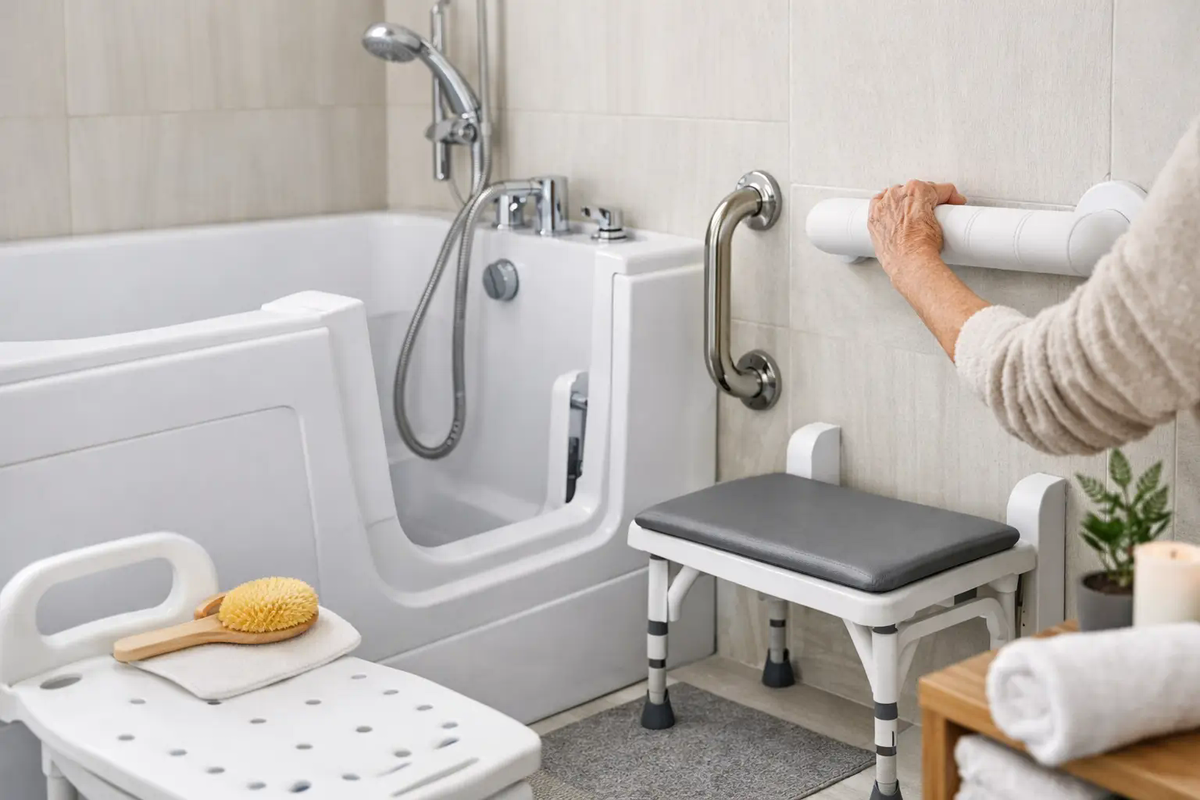
A bathtub can become difficult long before someone considers themselves unable to bathe independently. A higher tub wall, an unsteady turn while stepping in, or the need to lower down and stand back up can turn a familiar routine into a source of hesitation. The best options for bathtub safety address the part of bathing that is actually challenging, whether that is stepping over the edge, maintaining balance, standing for too long, or getting help from a spouse or caregiver.
For many Las Vegas and Henderson homeowners, the right answer is not a collection of add-ons. It is an accessible bathing setup that fits their home, comfort level, and plans for remaining there. The goal is simple: make bathing easier without giving up privacy, dignity, or the comfort of a warm bath.
Best Options for Bathtub Safety Start With the Daily Routine
Before choosing a product, consider where the current routine feels difficult. Someone who is steady on their feet but wants an extra handhold may benefit from professionally installed grab bars. Someone recovering from knee or hip surgery may need a place to sit while bathing. A homeowner who has begun avoiding baths because stepping over the tub wall feels uncertain may need a more complete change.
This distinction matters because safety features work best when they solve a specific problem. A bath mat can improve footing on the bathroom floor, for example, but it does not lower a high tub wall. A shower chair may provide a resting place, but it may still require the person to step over the side of a traditional tub. The most useful solution reduces the difficult movements instead of asking the bather to work around them.
Grab bars and slip-resistant surfaces for added support
Grab bars, properly secured to wall framing, can provide a dependable handhold when entering, exiting, sitting, or standing. Placement matters. A bar near the entry helps with the transition over a tub wall, while another near the faucet wall can support standing or repositioning. Towel bars are not designed to carry body weight and should not be used as a substitute.
Slip-resistant surfaces also help address a common concern: wet feet on a smooth tub floor. A textured bathing surface is generally easier to stand on than a slick finish. Outside the tub, a stable, non-slip mat can reduce movement on a wet floor.
These are practical improvements for a person who can still comfortably step over the tub wall. They are less complete solutions when balance, leg strength, joint pain, or wheelchair use makes that step itself the problem.
Bath seats and handheld showerheads for seated bathing
A bath seat or transfer bench can make it possible to bathe while seated. Paired with a handheld showerhead, it can be especially helpful during short-term recovery or when standing through an entire shower is tiring. A transfer bench extends over the tub edge, allowing a person to sit outside the tub and slide across.
There are trade-offs. The equipment takes up room, may need to be moved for other users, and can make a smaller bathroom feel crowded. It also does not eliminate the tub wall. For some households, this is a useful interim approach. For others, it becomes a sign that the bathroom layout no longer matches their needs.
A Sit-In Bath Removes the High-Step Challenge
A walk-in tub, often called a sit-in bath, is designed around a different sequence: open the door, step through a low threshold, sit down, close the door, and fill the bath. Rather than balancing while stepping into a high-sided traditional tub, the bather is seated first.
This can be a strong long-term option for homeowners who value soaking but want a more accessible way to bathe. Built-in seating, grab bars, and a slip-resistant floor bring key supports into one purpose-built bathing space. It is particularly worth considering for people with limited mobility, changing balance, or concerns about safely getting down into and up from a conventional tub.
Secure Bath's sit-in bath uses a 180-degree outswing door with a durable aluminum door and frame. The door opens fully outward, giving the bather room to approach and sit before closing it. That can feel more natural than maneuvering around a partially opened door, and it can offer useful access for a caregiver when assistance is needed.
The aluminum construction is meaningful for everyday use. The door and frame are central moving parts of the bathing experience, so durable materials and a secure fit matter. As with any outswing door, the bathroom needs enough clear floor space for the door to open. A free in-home consultation can confirm whether the layout supports it and identify any practical adjustments before installation begins.
What to know before choosing a walk-in tub
A sit-in bath is not automatically the right answer for every bathroom or every household. Because the door seals before the bath fills, the person generally remains seated while it fills and drains. People who strongly prefer a quick shower may find a walk-in shower more convenient as their primary bathing method.
The size of the person using the bath, available bathroom space, plumbing condition, water-heater capacity, and electrical needs can all affect the final plan. A smaller bathroom may still be a candidate, but measurements and door swing must be considered carefully. If two people share the bathroom, it is also worth discussing how each person bathes now and what may be easier in the years ahead.
Costs vary based on the bath model, installation work, plumbing or electrical updates, and the condition of the existing space. That is why a personalized estimate is more useful than a broad advertised number. A local, owner-led consultation should explain what is included and why a particular recommendation fits the home.
When a Walk-In Shower May Be the Better Choice
A low- or no-threshold shower can be an excellent accessible bathing option, especially for a homeowner who does not enjoy soaking or needs room for a mobility aid. A curbless or roll-in shower removes the traditional tub wall and can create a more open approach. Built-in seating, grab bars, a handheld showerhead, and slip-resistant flooring can make the space comfortable for both standing and seated use.
For wheelchair users, the turning space, shower entry, seat configuration, and location of controls deserve careful planning. A shower that looks accessible on paper can still be awkward if the layout does not allow a person to enter, transfer, or reach the controls comfortably.
A tub-to-shower conversion is often best for homeowners who want fast shower access and do not need a bath. A sit-in bath may be better for someone who finds a warm soak soothing, prefers a seated enclosed bathing experience, or wants the reassurance of bathing without climbing over a conventional tub edge. Neither choice is universally better. The right one follows the person's routine and the home's constraints.
Plan Once for Changing Needs
Waiting until a bathroom becomes a daily struggle can narrow the choices and make a project feel urgent. Planning ahead does not mean assuming mobility will decline. It means recognizing that a bathroom should continue to work through temporary recovery, normal changes in balance, and the practical realities of aging in place.
Many homeowners begin this conversation after a parent has started holding onto counters, a spouse has had surgery, or a once-simple bath has become tiring. Others simply want to remodel once with the future in mind. In both cases, choosing an accessible design early can avoid paying for a second major bathroom change later.
For Las Vegas Valley homeowners, a free in-home consultation with Secure Bath offers a practical way to compare a sit-in bath with other accessibility options in the actual room where it will be used. There is no need to guess whether a door will clear a vanity, whether seating will feel comfortable, or whether a shower conversion would better suit the household.
The best bathing solution is the one that makes the next bath feel manageable and familiar: No Step. No Slip. No Stress.
Questions about walk-in tubs? Ask away
Free in-home consultation: call (702) 789-7780
Get a free quote →