
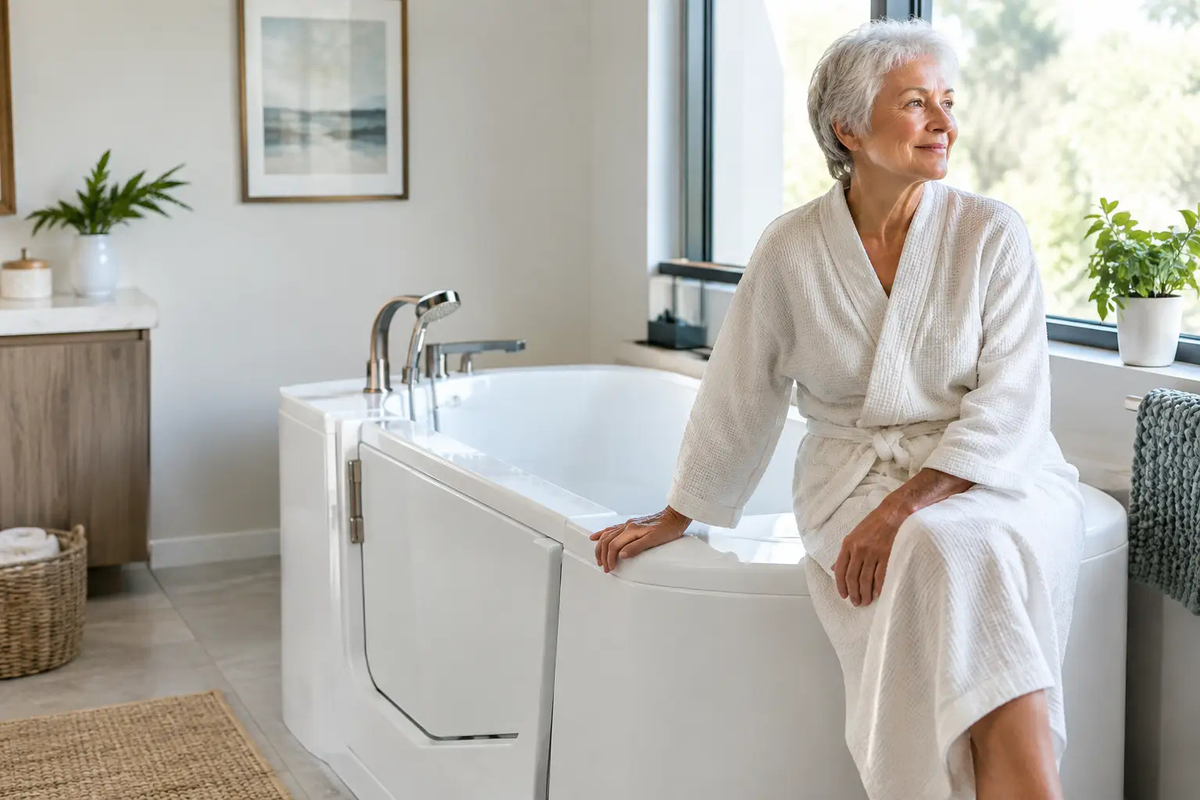
The best bathtubs for aging homeowners are not always the largest, deepest, or most feature-filled models. The right choice is the one that makes the everyday task of bathing easier to manage without asking someone to balance on one foot, climb over a high tub wall, or rely on help they would rather not need.
For many Las Vegas and Henderson homeowners, the question starts with a familiar moment: stepping over the side of a conventional tub feels less comfortable than it used to. That may follow knee surgery, a change in balance, or simply a desire to make the home work well for years to come. An accessible bathing upgrade can support privacy and independence while helping a bathroom feel more practical for changing needs.
What Makes a Bathtub Better for Aging in Place?
A traditional tub requires a person to lift a leg over a wall that is often 14 inches or higher, then lower themselves to the tub floor and stand back up afterward. That sequence can be inconvenient for anyone, but it becomes a real consideration when joints are stiff, balance is uncertain, or a caregiver is involved.
A better aging-in-place bathtub changes that sequence. Instead of stepping over a tall wall, the bather enters through a low threshold, closes a watertight door, and sits on a built-in seat. Useful features work together: a secure handhold, a stable place to sit, a slip-resistant floor, and controls that are easy to reach while seated.
The goal is not to make a bathroom look clinical. It is to make bathing less demanding. “No Step. No Slip. No Stress.” is a simple way to describe why these details matter.
Best Bathtubs for Aging Homeowners: Main Options
There is no single best choice for every household. A person who enjoys soaking and needs a seated bathing position may be best served by a sit-in bath. Someone using a wheelchair, or who needs caregiver assistance, may find a roll-in shower more appropriate. The layout of the bathroom, water-heater capacity, budget, and whether a spouse also uses the space all affect the decision.
Sit-in baths with an outswing door
A sit-in bath is often the most practical choice for homeowners who want the comfort of a tub without the high step-over. It has a low entry threshold, a built-in seat, grab bars, and a door that seals before the bath fills.
Door design deserves close attention. Secure Bath's sit-in bath uses a 180-degree outswing door with a durable aluminum door and frame. The bather can approach the open unit, turn, and sit down before closing the door. This can be especially helpful for people who find it difficult to back into a tight opening or maneuver around an inward-swinging door.
The aluminum frame is a practical advantage as well. It is designed for repeated daily use and gives the door a sturdy feel. The full outswing opening can also make access easier for a caregiver and may better accommodate a wheelchair transfer, depending on the bathroom layout and the person's needs.
As with any walk-in tub, there is a trade-off: the bather enters before filling the unit and remains seated while it drains. For many people, that routine is reasonable, especially when the seated position and low threshold are the priorities. It is worth discussing fill and drain time during an in-home consultation, along with the home's hot-water supply.
Traditional walk-in tubs
The term walk-in tub covers many styles, including units with inward-swinging or outward-swinging doors. Most include a seat, low threshold, grab bar, and textured floor. Some add hydrotherapy features such as air or water jets.
These tubs can be a strong option for a homeowner who prefers soaking and wants to remain in a familiar bath routine. Hydrotherapy may feel soothing after a long day, but it should be treated as a comfort feature, not the main reason to choose a tub. The entry, door swing, seat height, controls, and ease of cleaning are usually more important day to day.
When comparing walk-in tubs, ask to see exactly how the door opens and where the handle sits. A small difference in door clearance can have a large effect in a compact bathroom.
Low-threshold showers and tub-to-shower conversions
A low-threshold or curbless shower removes the need to climb into a bathtub at all. A built-in bench, hand-held showerhead, grab bars, and slip-resistant flooring can create a flexible space for standing or seated bathing.
This may be the better fit for a homeowner who dislikes baths, wants more room to move, or regularly uses a mobility aid. A roll-in shower can be particularly useful when wheelchair access is a key requirement. On the other hand, it does not provide the enclosed, seated soaking experience that many people prefer in a sit-in bath.
A tub-to-shower conversion may seem like the simplest project, but its suitability depends on the person and the household. If bathing while seated in water is important, replacing the existing tub with a shower could solve one problem while creating another. Planning once for changing needs means thinking beyond the next few months.
Features Worth Comparing Before You Buy
Marketing claims can make every accessible tub sound similar. The details are where usability changes. During a comparison, focus on how the tub will work on an ordinary morning, not only how it looks in a brochure.
Start with the threshold height and doorway. Can the person enter without a high step? Does the door open in a direction that suits the room and their mobility? An outswing door may provide valuable clearance, but the surrounding bathroom must have enough open space for it.
Next, consider the seat. A comfortable seat height makes it easier to sit and stand, while a well-positioned grab bar gives the user a reliable place to hold on. Slip-resistant surfaces matter underfoot, and easy-to-reach faucet and shower controls reduce awkward twisting or stretching.
Also ask about the showerhead, drain speed, and cleaning access. A hand-held showerhead is helpful for rinsing while seated. Faster drainage can shorten the time spent waiting after bathing. Smooth, accessible surfaces are easier to keep clean than designs with difficult-to-reach gaps.
Cost and Installation: Look at Long-Term Fit
Walk-in tub and sit-in bath costs vary based on the model, bathroom layout, plumbing, electrical needs, wall surrounds, and any necessary modifications. A lower advertised price does not always reflect the complete installed project, so homeowners should ask what is included before comparing proposals.
A clear proposal should address removal of the old fixture, installation, plumbing work, finishes around the new unit, and any upgrades needed to support the bath. It should also explain the practical limitations of the existing room. In some homes, a tub can fit within the current footprint. In others, additional changes may be needed to improve access or door clearance.
It can be tempting to wait until mobility is a major concern. But a planned update is usually easier to consider when there is time to compare options, discuss preferences with family, and choose the solution that feels right rather than simply urgent. That does not mean every homeowner needs a walk-in tub. It means the bathroom deserves the same forward thinking as ramps, better lighting, or a first-floor bedroom.
Questions Homeowners Often Ask
Is a walk-in tub right for someone who can still use a regular tub?
Possibly. Many people choose an accessible bath before they feel unable to use a conventional tub. If stepping over the tub wall is becoming uncomfortable, or if the homeowner wants to stay in the home long term, planning ahead can be sensible. The right timing depends on personal comfort, budget, and future plans.
Is an outswing door always better?
Not always. An outswing door can make entry and transfers easier because it opens fully into the bathroom, but it requires adequate floor space. An in-home evaluation should confirm that the door swing will work without interfering with the vanity, toilet, or bathroom entry.
Can a sit-in bath work for couples?
Often, yes. One household member may appreciate the seated bath while the other uses the shower function. Before choosing, both people should try the seat height, review the controls, and consider their usual bathing preferences.
A free, no-pressure in-home consultation can turn broad ideas into a realistic plan. For homeowners in Las Vegas, Henderson, and nearby Las Vegas Valley communities, Secure Bath can assess the existing space, explain options in everyday terms, and help identify a bathing solution that fits the home and the person who uses it. The best time to make bathing easier is when you can choose calmly, comfortably, and on your own terms.
Questions about walk-in tubs? Ask away
Free in-home consultation: call (702) 789-7780
Get a free quote →