
For many homeowners, the question is not whether they still enjoy a bath. It is whether stepping over a high tub wall, lowering down, and getting back up feels harder than it used to. The best baths for limited mobility make those everyday movements simpler, helping people bathe with more comfort, privacy, and confidence at home.
A good accessible bathing choice is personal. Someone recovering from knee surgery may need a temporary easier entry. A spouse with balance concerns may want a permanent solution that supports aging in place. A wheelchair user may need a different layout altogether. The right answer depends on how a person moves, who uses the bathroom, the available space, and whether soaking in a bath remains important.
Best Baths for Limited Mobility: Start With How You Bathe
The most useful question is not, "Which model is best?" It is, "What part of bathing has become difficult?" For many people, the biggest challenge is crossing the side of a conventional tub. A traditional tub requires a person to lift one leg over the wall while standing on a wet surface, then lower themselves into the basin. Reversing that movement after bathing can be even more demanding.
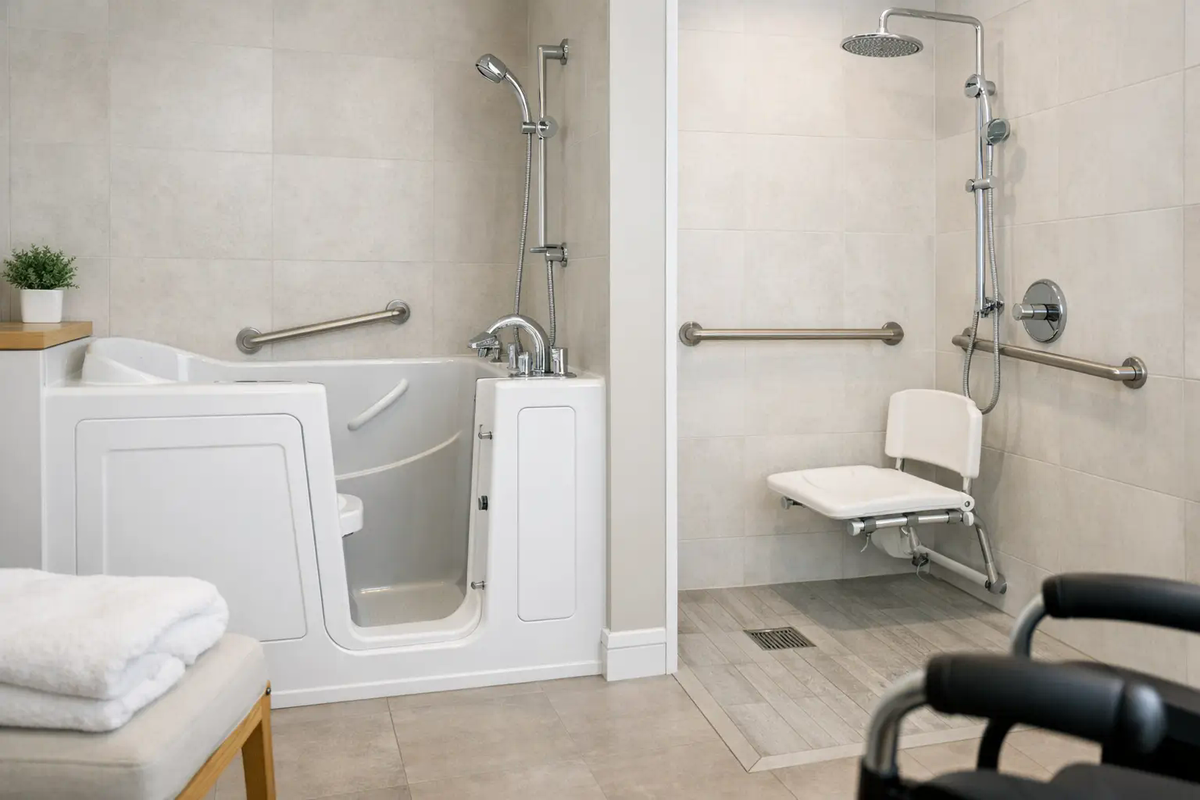
A sit-in bath is often the strongest option when a homeowner wants to keep the comfort of a bath without climbing over a standard tub wall. Instead of stepping over a high side, the user enters through a low-threshold door and sits on a built-in seat. Grab bars and a slip-resistant floor provide useful points of support while getting settled.
This can be a practical fit for seniors, people with arthritis or reduced balance, and homeowners who find it difficult to rise from a low tub floor. It also gives caregivers a more manageable setup than trying to assist someone in and out of a conventional bathtub.
Why an Outswing Door Changes the Experience
Not every walk-in tub door works the same way. Some doors swing inward, which can limit entry space and require the user to maneuver inside the bath before closing it. A sit-in bath with a 180-degree outswing door opens fully into the room. The user can sit down first, then close the door from a stable seated position.
That sequence matters. It removes the need to stand in a narrow opening while trying to turn, balance, and close a door. The full opening can also make transfers easier for people using wheelchairs, walkers, or caregiver assistance.
Secure Bath's sit-in bath uses a durable aluminum door and frame rather than a lightweight plastic arrangement. Aluminum offers strength where the door is used every day, while the outswing design creates the open, approachable entry many homeowners are looking for. Of course, an outswing door needs clear floor space in front of the bath. During an in-home consultation, that clearance should be measured along with the room's overall layout.
What to Look for in a Mobility-Friendly Bath
The entry is only one part of the decision. A bath should feel practical from the moment a person approaches it until they are dried off and leaving the bathroom.
Built-in seating is especially valuable because it removes the need to lower all the way to the floor of the tub. Look for a seat that feels comfortable for the primary user's height and allows enough room to reposition safely. Well-placed grab bars should be easy to reach without stretching or twisting.
Slip-resistant surfaces can provide added footing when entering and exiting. They do not replace careful movement or assistance when needed, but they are a sensible part of a safer bathing design. Easy-to-reach controls, a hand-held shower wand, and a shower riser can also make rinsing and cleaning more comfortable while seated.
For homeowners who enjoy a warm soak, hydrotherapy features may be worth considering. They can add comfort, but they should be viewed as an optional preference, not the main reason to choose a bath. Entry, seating, door operation, and fit for the user should come first.
Sit-In Bath vs. Walk-In Shower
A walk-in shower can be an excellent accessible option, particularly for someone who does not use a tub for soaking. A curbless or roll-in shower may accommodate a wheelchair and can offer a more open feel. A folding or built-in seat, grab bars, and a hand-held showerhead can make it a functional choice for daily bathing.
The trade-off is simple: a shower replaces the bathing experience with a standing or seated shower routine. For people who prefer soaking, feel cold easily, or find a bath helps them relax at the end of the day, a sit-in bath preserves something a shower conversion cannot.
A sit-in bath does require filling and draining before the user exits. That means it is not always the fastest option, and it may not suit someone who strongly prefers a quick shower. Many homeowners find the added time worthwhile for the ability to bathe seated, but it is a real consideration to discuss before choosing.
Planning Ahead Is Often the More Affordable Decision
It is easy to postpone a bathroom change while the current tub is still usable. Yet planning before mobility becomes a daily concern gives homeowners more choices. They can compare designs, consider the bathroom layout, and select features based on comfort rather than making a rushed decision after an injury or surgery.
An accessible bath can also help avoid doing the same bathroom work twice. A basic remodel that keeps a high-sided tub may look updated but may not meet changing needs later. Planning once for changing needs can make more sense than investing in a second remodel a few years down the road.
Costs vary based on the bath selected, plumbing requirements, wall surrounds, electrical needs for optional features, and the condition of the existing bathroom. A personalized estimate is more useful than a broad online price range because every Las Vegas or Henderson home has different dimensions and installation conditions. Clear explanations of what is included help homeowners compare options fairly.
Questions to Ask Before Choosing a Bath
Before deciding, consider how the primary user enters the bathroom, transfers from standing to sitting, and manages a shower or bath today. Ask whether a walker, wheelchair, or caregiver needs space beside the unit. Think about whether other household members will use the same bathroom and whether keeping a soaking bath matters to them.
It is also wise to ask who will measure the space, explain door clearance, review plumbing needs, and handle installation. Local, owner-led guidance can be especially helpful because the recommendation can be based on the actual bathroom rather than a one-size-fits-all sales script.
A free in-home consultation gives homeowners a chance to test the logic of a design before committing. The goal is not to choose the most feature-packed bath. It is to choose one that makes everyday bathing feel more manageable and fits the home for years to come.
If stepping over the tub wall has become an uncomfortable routine, or if you simply want to plan ahead, a sit-in bath can offer a straightforward path forward: No Step. No Slip. No Stress. A thoughtful conversation in your own bathroom can turn an uncertain decision into a practical next step.
Questions about walk-in tubs? Ask away
Free in-home consultation: call (702) 789-7780
Get a free quote →