
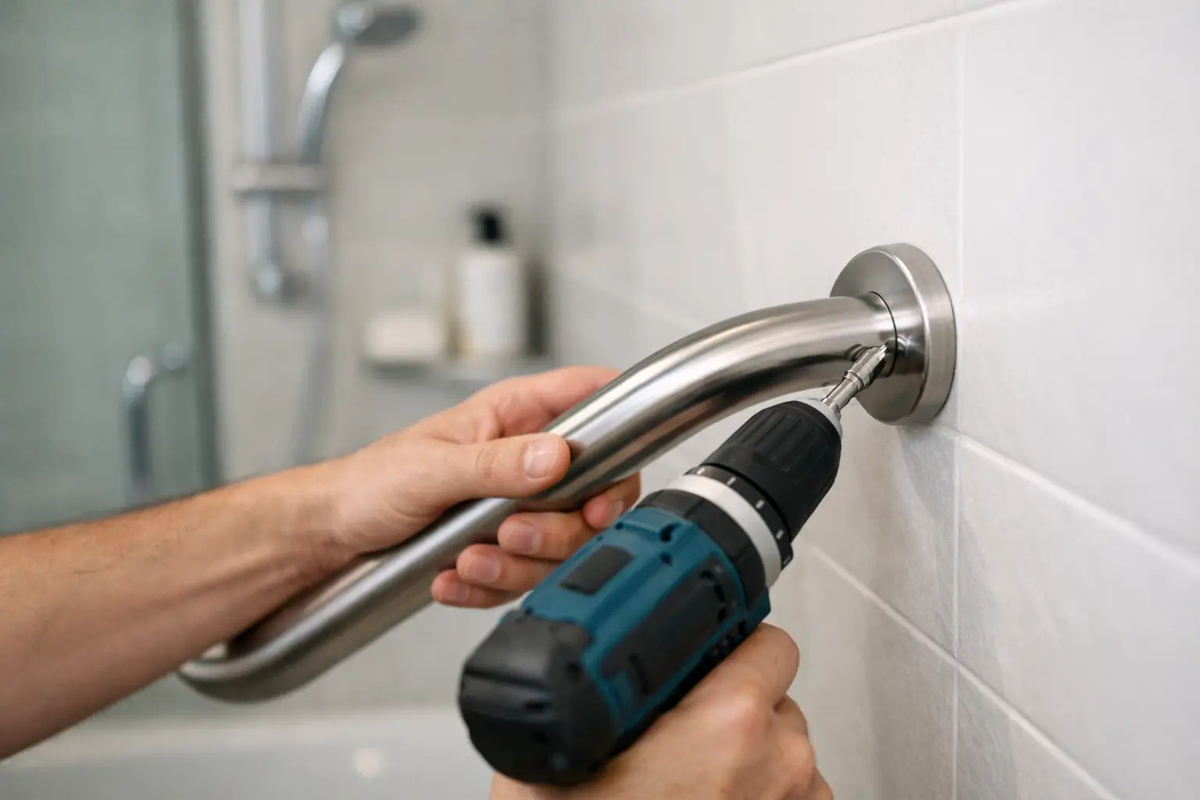
A grab bar that is placed a few inches too far away can be almost as frustrating as having no bar at all. Bathroom grab bar installation is not simply a matter of adding hardware to a wall. The right placement, solid anchoring, and a bathing layout that fits the person using it all matter when staying independent at home is the goal.
For many Las Vegas and Henderson homeowners, the trouble starts at the traditional tub. Stepping over a high tub wall, turning on a wet surface, and lowering down into the tub can become uncomfortable after surgery, during recovery from an injury, or as balance changes over time. Grab bars can make that routine easier, but they work best as one part of a thoughtfully planned accessible bathing space.
What Makes Bathroom Grab Bar Installation Safe
A grab bar is meant to support real body weight during a transfer, a turn, or a moment of lost balance. It is not a towel bar, and it should never be attached with ordinary wall anchors designed for lightweight décor.
The strongest installation usually fastens the bar into wall studs or into solid wood blocking installed behind the finished wall. In some bathrooms, particularly those with tile walls or unusual framing, an experienced installer may use a specialized anchoring system designed for the wall construction. The right method depends on what is behind the surface, not just what the bar looks like from the outside.
This is why a quick, do-it-yourself installation can be risky when the wall structure is unknown. Tile can crack, plumbing may run through the wall, and a bar that feels secure when lightly tugged may not be prepared to handle the force of someone using it to stand. Professional installation helps confirm that the bar is secured where it can do its job.
Placement Matters More Than Most People Expect
A grab bar should be placed for the movement a person actually makes. Someone may need a stable handhold while stepping into a shower, lowering onto a built-in seat, standing from a toilet, or turning after washing. Those are different movements, and they may call for different bar locations.
Inside a shower or next to a bathing area, a horizontal bar is often useful for steadying during entry and exit. An angled or vertical bar near the entry can provide a natural handhold while stepping through the opening. Near a toilet, placement should support sitting down and standing up without forcing the user to twist or reach too far.
There is no single height or arrangement that works for every household. A taller homeowner, a wheelchair user, and a person who relies on a walker may each have different needs. Before drilling into a finished bathroom wall, it helps to have the future user practice the movement and identify where their hand naturally reaches.
Start With the Full Bathing Routine
Grab bars are valuable, but they cannot remove the challenge of climbing over a conventional tub wall. This is where homeowners often recognize that the issue is bigger than one accessory.
Consider the complete sequence: entering the bathroom, turning around in a limited space, stepping into the tub, lowering down, bathing, standing again, and stepping back out. If the highest-risk or most difficult part is getting over the tub wall, a bar can offer support, but it does not eliminate the step itself.
A sit-in bath changes that routine. Instead of stepping over a standard tub wall and balancing while standing, the user opens the door, sits down first, then closes the door. Secure Bath's sit-in bath includes a 180-degree outswing door with a durable aluminum door and frame. The wide swing can be especially practical for people who need room to approach the bath with a walker, wheelchair, or caregiver nearby.
The point is not that every bathroom needs a full replacement. A properly installed grab bar may be the right answer for a homeowner who is comfortable with their current shower or tub entry. But if the main difficulty is the step over the tub wall, planning around a low-threshold, seated bathing option can be a better long-term use of the remodeling budget.
Grab Bars in a Sit-In Bath Layout
A sit-in bath can include grab bars as part of a broader bathing design. The built-in seat reduces the need to lower all the way to the tub floor and stand back up from that position. Slip-resistant surfaces and conveniently placed handholds can help the user move with more confidence during the bathing routine.
The door path deserves special attention. With a 180-degree outswing door, the surrounding bathroom must have enough clear space for the door to open fully and for the user to approach the seat comfortably. A wall-mounted bar should support entry without blocking the door swing or making the transfer path tighter.
This is one reason an in-home evaluation is more useful than choosing equipment from a picture. The installer can look at the door clearance, toilet location, vanity depth, wall construction, and the way the homeowner currently moves through the room. A compact bathroom may need a different solution than a spacious primary bath.
Choose the Right Style Without Choosing by Appearance Alone
Grab bars are available in several finishes and shapes, so homeowners do not have to settle for a clinical-looking bathroom. However, appearance should come after function.
A smooth stainless-steel bar can be easy to clean, while a textured surface may feel easier to hold with wet hands. Some bars include an integrated shelf or toilet paper holder, though added features should never reduce the strength of the support. A fold-down seat can be useful in some shower layouts, but it needs appropriate wall reinforcement just like a grab bar.
For most accessible bathing projects, the best choice is a bar with a comfortable diameter, adequate clearance between the bar and wall, and a location that supports a natural grip. It should be easy to reach without stretching, especially when hands are wet or mobility is limited.
When a Grab Bar Is Enough and When It Is Not
A grab bar installation may be a sensible improvement when a homeowner has good access to the bathing area and mainly wants added stability. For example, someone with a curbless shower may benefit from a horizontal bar near the controls and another near the exit. A homeowner recovering from a temporary procedure may only need a practical support point near an existing shower seat.
It may be time to consider a sit-in bath or a tub-to-shower conversion when the tub wall itself has become the obstacle. Reaching over a high edge while holding a bar can still require one-leg balance and a careful turn. That may not suit someone with chronic joint pain, reduced strength, or a caregiver who needs room to assist.
A roll-in or curbless shower can be an excellent option for some households, particularly where wheelchair access is the priority. A sit-in bath may better fit someone who prefers soaking, wants the comfort of a built-in seat, and needs to avoid stepping over a standard tub wall. The right choice depends on the user's mobility, bathing preferences, bathroom layout, and plans for the home.
Plan Once for Changing Needs
Waiting until bathing becomes extremely difficult can limit options and add pressure to the decision. Planning ahead does not mean assuming the worst. It means recognizing that a bathroom should continue to serve the people who live there as their needs change.
For homeowners who want to age in place, accessibility improvements can be approached in stages. A grab bar and better lighting might be an appropriate first step. If a remodel is already planned, reinforcing walls for future bars or selecting a low-threshold bathing solution can prevent having to open finished walls again later.
A local, no-pressure consultation can help sort through those choices. In Las Vegas, Henderson, and nearby Las Vegas Valley communities, Secure Bath can assess the existing bathroom, explain sit-in bath options, and discuss placement details without treating every home as if it needs the same answer.
The best bathroom safety improvement is the one that makes everyday bathing feel manageable, private, and comfortable for the person using it. Whether that begins with a securely anchored grab bar or a more complete accessible bathing update, thoughtful planning supports the simple promise behind a better bath: No Step. No Slip. No Stress.
Questions about walk-in tubs? Ask away
Free in-home consultation: call (702) 789-7780
Get a free quote →