
A traditional tub can become frustrating long before someone needs full-time help at home. Stepping over the side, lowering down to the tub floor, and standing back up on a wet surface can ask a lot of sore knees, limited balance, or a recovering body. So, are walk-in tubs worthwhile? For many homeowners, the answer depends less on the tub itself and more on whether it makes everyday bathing feel safer, more comfortable, and more manageable.
For people who want to remain in their Las Vegas or Henderson home as their needs change, an accessible bathing solution can be a practical investment in independence. It is not the right answer for every bathroom or every household, but it can solve a very specific problem: bathing should not require a difficult step, a risky transfer, or assistance that takes away privacy.
When a walk-in tub is worth considering
A walk-in tub is often worthwhile when the existing bathtub has become an obstacle. Maybe a homeowner holds tightly to the towel bar while stepping in. Maybe an adult child worries about a parent bathing alone after surgery. Or perhaps someone is planning ahead, while they can still use a standard tub, because they do not want to face another major bathroom decision later.
The value is usually clearest for people who prefer a seated bath. A built-in seat means the user does not need to lower themselves to the bottom of a conventional tub and then push back up from a low position. A low entry threshold, grab bars, and slip-resistant flooring can further reduce the awkward movements that make bathing stressful.
That is the practical idea behind a sit-in bath: sit down first, then bathe in a more supported position. It can preserve a familiar bathing routine for someone who enjoys soaking but no longer feels confident stepping over a high tub wall.
The feature that can change the daily experience
Not all walk-in tubs use the same door design. Many have inward-swinging doors, which can require the person to step inside the tub before the door can close. That layout may work for some users, but it is not always convenient for people with limited mobility, people using a wheelchair, or anyone who has trouble turning in a tight space.
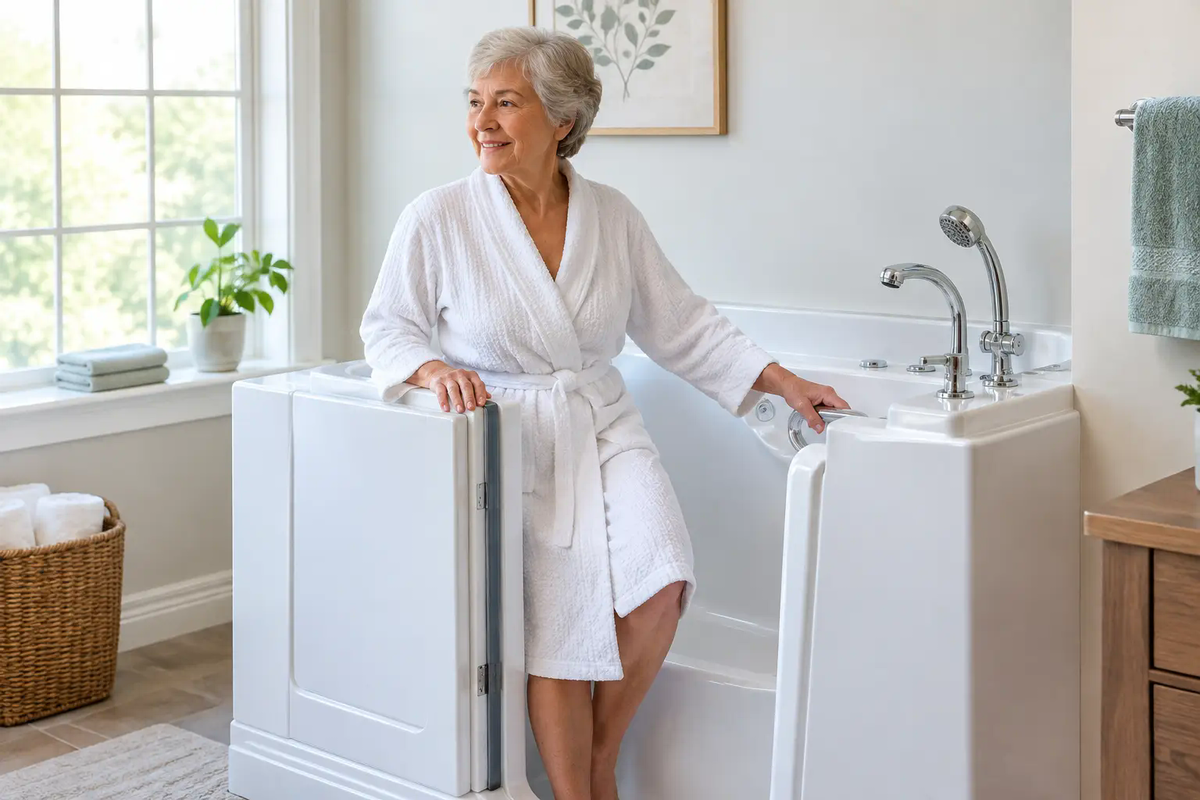
Secure Bath's sit-in bath uses a 180-degree outswing door with a durable aluminum door and frame. In everyday terms, the door opens fully outward, so the person can approach the seat, sit down, and then close the door from a stable seated position. There is no need to step into the tub and balance while standing inside it.
The aluminum door and frame matter, too. A bathing door is used repeatedly in a wet environment, so homeowners should look closely at how it is built and how it feels to operate. A durable, easy-to-manage door can make the difference between an accessibility feature that gets used comfortably and one that feels cumbersome.
For a homeowner with a cane, a walker, reduced leg strength, or a temporary recovery limitation, this approach can make entering and exiting feel more straightforward. It does not remove every bathing challenge, and each person’s transfer needs are different, but it can eliminate the high tub wall that causes the most concern.
Are walk-in tubs worthwhile compared with a walk-in shower?
The better question is often, “Which accessible bathing option fits the way I bathe?” A walk-in shower, curbless shower, or roll-in shower may be the better choice for someone who prefers standing or needs wheelchair access directly into the bathing area. A shower can also be quicker for households that do not enjoy baths.
A sit-in bath may make more sense for a person who wants the support of seated bathing, appreciates a soak, or finds it difficult to remain standing through a shower. Some models may include therapeutic-style water features, but those should be considered comfort options rather than a reason to expect medical results.
There is also a lifestyle difference. With a walk-in tub or sit-in bath, the user enters, closes the watertight door, fills the tub, bathes, drains the water, and then opens the door to exit. That means the person needs to be comfortable sitting for the full bathing process. A shower is generally faster, while a seated bath can offer a more relaxed routine.
A good recommendation should account for mobility, bathroom layout, caregiver involvement, personal bathing habits, and future plans. The goal is not to sell every homeowner the same fixture. It is to choose an option that will remain useful as needs evolve.
Costs and long-term value: what homeowners should weigh
Walk-in tub costs vary because the final project includes more than the tub. Bathroom dimensions, plumbing location, electrical needs, wall repairs, flooring, demolition, and the accessibility features selected can all affect the price. A straightforward replacement may be simpler than a project that requires reworking a small bathroom or adapting an older home.
Rather than focusing only on the initial number, consider what the project replaces. A sit-in bath can replace years of awkward workarounds: avoiding baths, relying on another person for help, or using a standard tub that no longer matches the homeowner’s abilities. For many families, the value is comfort, privacy, and the ability to continue living at home with greater confidence.
Planning ahead can also be financially sensible. Waiting until a major mobility change forces an urgent decision can limit choices. Installing an accessible bathing solution while the homeowner can participate fully in selecting the layout, features, and finish gives the project a better chance of serving them well over time.
That does not mean every household should remodel early. If the current shower or tub is easy to use, has secure grab bars, and fits the homeowner’s needs, a full replacement may not be necessary yet. But if the tub wall is already a daily challenge, postponing the conversation rarely makes that step easier.
Questions to ask before choosing a walk-in tub
A useful in-home consultation should begin with the person who will use the bath, not with a product brochure. Ask whether they can comfortably sit and stand from the built-in seat, how they move through the bathroom, and whether a caregiver needs enough room to assist when necessary. It is also wise to discuss door swing, faucet controls, hand-held shower options, threshold height, and how long the user is comfortable sitting while the tub fills and drains.
Homeowners should also ask what installation will involve. Will the tub fit through the home’s entry and into the bathroom? Are plumbing or electrical changes expected? How will the surrounding walls and flooring be finished? Clear answers before work begins help prevent surprises and make it easier to compare proposals fairly.
For Las Vegas Valley homeowners, local experience can be especially helpful because homes vary widely in bathroom size and layout. An owner-led, no-pressure consultation allows the recommendation to reflect the actual space and the household’s routine, rather than a one-size-fits-all package.
A practical choice, not a one-size-fits-all answer
Walk-in tubs are worthwhile when they solve a real accessibility problem and fit the user’s bathing preferences. They are less worthwhile when someone strongly prefers a quick shower, cannot comfortably remain seated for the fill-and-draining process, or would be better served by a roll-in or curbless shower.
The best projects make daily life easier without making the bathroom feel clinical. A comfortable seat, low threshold, dependable door, grab bars, and slip-resistant surface are simple features, but together they support a more independent routine. That is the meaning behind “No Step. No Slip. No Stress.”
If stepping over the tub has become a concern, or if you are planning once for changing needs, a free in-home consultation can help turn a vague worry into a clear, practical plan.
Questions about walk-in tubs? Ask away
Free in-home consultation: call (702) 789-7780
Get a free quote →