
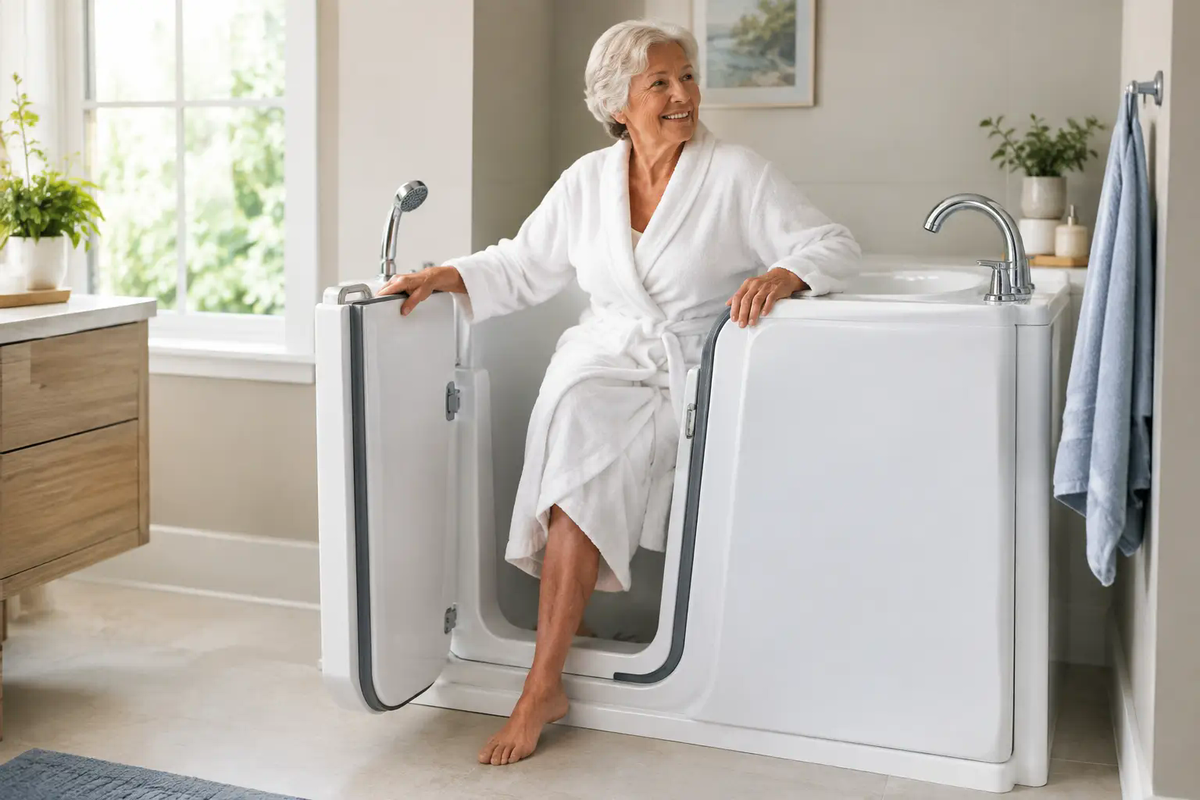
A tub can become difficult long before a person feels ready to give it up. Maybe stepping over the side now requires holding the wall, or a spouse waits nearby just in case. So, are outward opening tubs safe? For many homeowners, they can be a very safe and practical choice when the tub is properly designed, professionally installed, and selected for the person and bathroom using it.
An outward-opening door changes the order of bathing. Instead of stepping over a high tub wall and lowering down while standing on one leg, the bather opens the door, steps over a low threshold, sits down, and then closes the door. That simpler sequence can make a meaningful difference for people with reduced balance, painful joints, post-surgery limitations, or a desire to remain independent at home.
Still, an outswing door is not automatically the right answer for every bathroom. The space in front of the tub, the person’s mobility, caregiver needs, and the quality of the door system all matter.
How an outward-opening tub door works
A traditional walk-in tub or sit-in bath is filled after the user is seated and the door is closed. The water stays contained by a gasket and a firmly secured door system. Once bathing is finished, the tub drains before the door is opened.
With an outward-opening door, also called an outswing door, the door swings into the bathroom rather than into the bathing area. Secure Bath’s sit-in bath uses a 180-degree outswing door with a durable aluminum door and frame. The wide opening allows a person to approach the seat more directly, sit down before closing the door, and avoid the awkward turn-and-lower movement that a conventional tub often requires.
This design can be especially useful for someone using a wheelchair or walker, or for a caregiver who needs room to assist from outside the bath. A door that opens fully out of the bathing space can make transfers feel less cramped than a door that opens inward.
Are outward opening tubs safe? The short answer
Yes, they can be safe, but safety comes from the complete bathing setup rather than the direction of the door alone. A well-chosen sit-in bath combines a low entry threshold with a stable seat, slip-resistant flooring, reachable controls, and grab bars positioned where they are useful. The door must close securely and the bathroom must have enough clear floor space for it to open without striking a vanity, toilet, or nearby fixture.
The main safety advantage is straightforward: the user can get seated before closing the door and filling the tub. That reduces the need to step over a standard tub wall while wet, balance while lowering into a deep basin, or pull themselves up from the floor of a conventional tub.
For many families, the question is less about whether one door style is universally safer than another. It is whether the current bathing routine asks too much of the person using it. If every bath begins with a high step, a careful pivot, and a worried hand on the towel bar, an accessible bathing solution deserves consideration.
What makes an outswing door a good safety feature
An outswing door provides a broad, open path to the seat. A person can back up to the opening, turn carefully, and sit before bringing their legs into position. This can be more comfortable for people with limited hip movement, knee pain, or difficulty lifting their feet.
The 180-degree opening is also valuable when assistance is needed. Rather than reaching around an inward-swinging door, a caregiver may have more room to help someone transfer safely and preserve as much privacy and dignity as possible. For wheelchair users, a wider approach can make positioning alongside the bath more manageable.
Door construction matters just as much as door direction. A durable aluminum door and frame are designed for regular use in a wet environment and provide a solid feel when opening and closing. A properly fitted seal and latch are essential. During an in-home consultation, the condition of the bathroom floor, wall layout, plumbing location, and clearance around the tub should all be reviewed before installation.
The safety trade-offs to consider
An outward-opening door needs clear space in front of it. In a compact bathroom, the door could interfere with a toilet, vanity, or the natural path through the room. That does not necessarily rule out a sit-in bath, but it may affect the model, placement, or whether another accessible bathing option makes more sense.
The user also needs to remain in the bath while it fills and drains. For some people, that is a comfortable rest period. For others, particularly someone who gets chilled easily or cannot sit comfortably for long, it is a practical factor to discuss. Features and installation details can influence the experience, but it is best to talk through everyday needs honestly rather than assume one solution fits everyone.
Finally, no tub door replaces sensible bathing habits. Keeping frequently used items within reach, using the built-in grab bars as intended, drying the floor, and avoiding loose bath mats around the entry are all part of a safer routine.
Features that support safer, easier bathing
The most useful features are often the simplest ones. They support the movements people make every day: entering, sitting, standing, reaching, and exiting.
A low threshold reduces the height of the step into the bath. Built-in seating means there is no need to lower all the way to the floor of a tub or rise from it afterward. Slip-resistant surfaces help create more secure footing at the entry and underfoot. Grab bars offer a stable handhold during transitions, unlike a towel rack or shower door, neither of which is designed to support body weight.
The outswing door brings these features together in a practical way. A homeowner can open the door wide, take one low step inside, sit, close the door, and bathe from a supported seated position. That is the idea behind “No Step. No Slip. No Stress.” It is not a promise that a bathroom will remove every risk. It is a better bathing setup for people who want fewer difficult movements in their daily routine.
Who may benefit most from an outward-opening sit-in bath?
Outswing doors are often a strong option for people who have trouble stepping over a standard tub wall, need a seated bathing position, or use mobility equipment. They can also suit homeowners who are planning ahead. A bathroom remodel is disruptive and expensive, so choosing an accessible solution before a major mobility change can help avoid redoing the room later.
Consider the homeowner recovering from knee surgery who expects to regain strength but needs a manageable bathing routine now. Or the adult child who has noticed that a parent has started skipping baths because getting in and out feels like too much work. In both situations, a sit-in bath may provide comfort and independence without requiring the person to leave home for personal care.
For someone who primarily wants an open showering area, a curbless or roll-in shower may be worth comparing. It can be a good fit when standing showering is preferred or when wheelchair access is the primary concern. A sit-in bath may be better when the person values bathing while seated, wants the comfort of soaking, or needs the security of a built-in seat. The right choice depends on daily habits, room dimensions, and future needs.
Questions to ask before choosing an outswing tub
Before committing to any walk-in tub, ask how the door will work in the actual bathroom. Can it open fully without blocking other fixtures? Is there space for a walker, wheelchair, or caregiver to move comfortably? Will the person using the tub be able to reach the controls and grab bars from the seat?
It also helps to ask about the threshold height, door and frame material, drainage process, seating dimensions, and installation scope. A useful consultation should not begin with a one-size-fits-all model. It should begin with the homeowner’s routine: what feels difficult now, what kind of assistance is available, and what would make bathing more comfortable over the years ahead.
For homeowners in Las Vegas, Henderson, and the surrounding Las Vegas Valley, a free in-home consultation with Secure Bath can make those details easier to evaluate. A local, owner-led conversation allows the bathroom layout and the individual’s needs to be considered together, without pressure to choose a solution that does not fit.
A safer bathing plan does not have to wait for a crisis. If getting over the tub wall has become uncomfortable, uncertain, or simply more tiring than it used to be, the next helpful step is to look closely at the movements involved and choose a setup that supports the way you want to live at home.
Questions about walk-in tubs? Ask away
Free in-home consultation: call (702) 789-7780
Get a free quote →