
A bath should be the part of the day when you can close the door, take your time, and feel comfortable handling things on your own. Yet many homeowners begin to notice that the high wall of a conventional tub demands more balance, flexibility, and confidence than it once did. An aging in place bathroom remodel addresses that daily challenge with a practical goal: make bathing easier now while preparing the home for changing needs later.
For many Las Vegas and Henderson homeowners, the most meaningful change is not a full bathroom makeover. It is replacing a difficult tub with an accessible bathing solution that allows them to enter, sit down, and bathe with less strain. The right choice depends on the person using the bathroom, the room itself, and whether bathing independently is the highest priority.
Start an Aging in Place Bathroom Remodel With Bathing
Bathroom accessibility includes lighting, flooring, fixtures, and room layout. But the tub or shower is usually where the biggest day-to-day barrier exists. Stepping over a tub wall while wet, turning in a narrow space, or lowering into a deep tub can become uncomfortable after surgery, with joint stiffness, or when balance is less reliable than it used to be.
A well-planned remodel begins by asking simple, useful questions. Can the person safely step over the existing tub wall? Do they need to sit while bathing? Is a spouse or family member concerned about helping in a tight bathroom? Is this a short-term recovery need, or a long-term plan to remain at home comfortably?
The answers help determine whether a sit-in bath, a walk-in shower, or a combination of improvements makes sense. Planning before a mobility issue becomes urgent gives homeowners more choices and helps avoid remodeling twice. That is the value of planning once for changing needs.
Why a Sit-In Bath Is Often the Better Fit
A walk-in tub is a broad industry term. At Secure Bath, the product is called a sit-in bath because the experience centers on sitting down first, rather than stepping into a conventional tub and trying to lower yourself afterward.
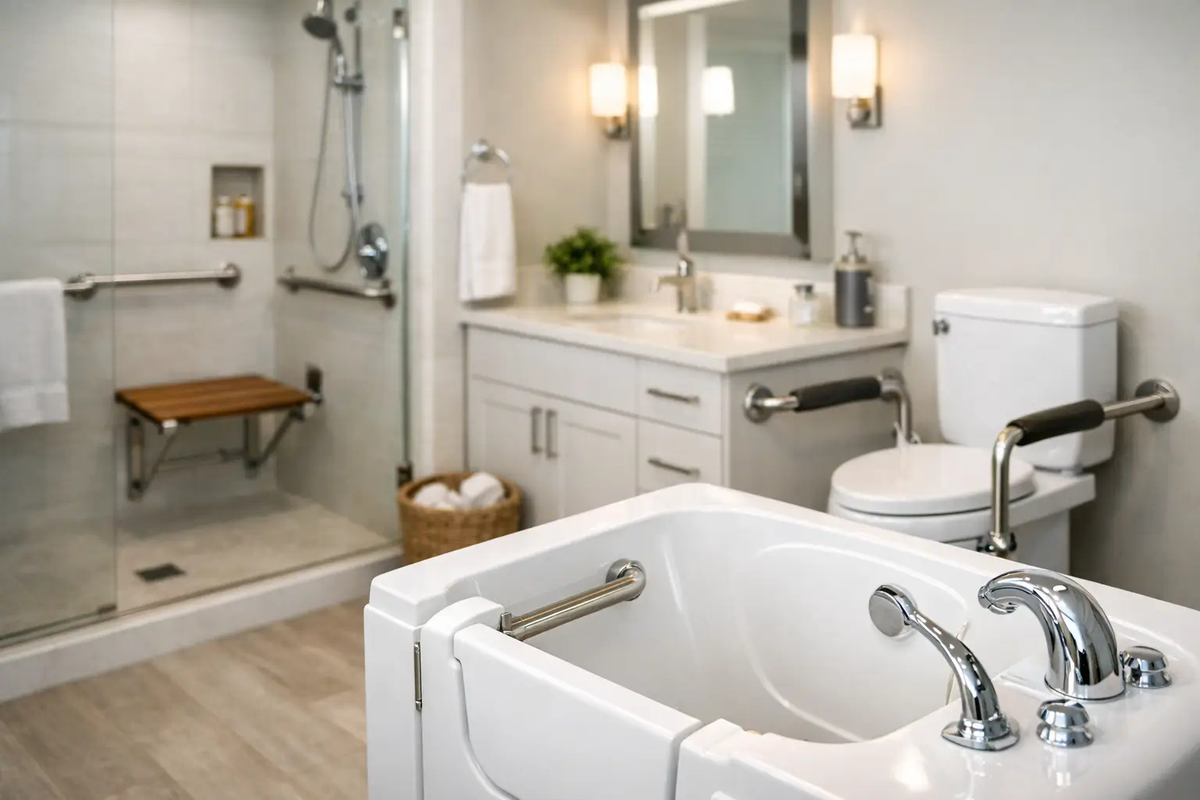
Its 180-degree outswing door is especially useful for people who use a wheelchair, walker, or mobility aid, as well as those who simply prefer more room when getting situated. The door opens fully outward, so the bather can approach the seat, sit down, and then close the door. There is no need to balance while stepping across a high tub wall.
The door and frame are made of durable aluminum, an important detail in a feature that gets used every day. Once seated, the bather can use built-in grab bars and a slip-resistant floor for added stability. Comfortable seating also reduces the need to lower down to a tub floor or stand through the entire bath.
These features are not a promise that every bathing risk disappears. Good routines still matter, including keeping the floor dry, using adequate lighting, and choosing a setup that fits the user. They can, however, remove a common and frustrating obstacle: the high step over the side of a standard tub.
That is the practical meaning behind No Step. No Slip. No Stress. It is about making the bathing routine feel more manageable, private, and dignified.
When a walk-in shower may make more sense
A curbless or roll-in shower can be an excellent choice for a person who prefers showering, uses a wheelchair, or needs a caregiver to assist. A shower bench, handheld showerhead, properly placed grab bars, and a low or zero threshold can create a more open bathing area.
Still, a shower is not automatically the best answer for every household. Some homeowners find that a seated bath is more comfortable, particularly when standing for a shower is tiring or when they value soaking. The decision should reflect actual bathing habits, not just the look of a finished room.
Features That Make a Real Difference
Accessibility works best when individual features work together. A low entry reduces the first barrier. A wide-opening door creates room to approach the seat. A secure place to sit changes the entire transfer process. Grab bars offer a stable handhold where one is needed, and a slip-resistant surface provides more dependable footing.
In an aging in place bathroom remodel, small supporting changes can matter as much as the main fixture. A brighter light near the bathing area helps with visibility. A handheld showerhead provides more control while seated. A nonslip bathroom floor outside the bath can help the room feel safer from entrance to exit. Lever-style faucet handles may be easier to use for people with limited hand strength.
The best layouts also leave enough clearance to move naturally. This is particularly relevant when someone uses a walker or wheelchair, or when a family member occasionally provides assistance. A free in-home consultation can identify those room-specific issues before selections are made.
Consider Cost as Long-Term Value, Not Just a Fixture Price
The cost of a bathroom accessibility project varies widely. The unit selected, plumbing condition, bathroom layout, electrical needs, finish choices, and installation complexity all affect the final price. A sit-in bath is a more specialized investment than a basic replacement tub, so it should be evaluated based on how it will be used over time.
For a homeowner who expects to remain in the house for years, an accessible bathing solution may help avoid the expense and disruption of another remodel later. It can also reduce the pressure to make a rushed decision after an injury, surgery, or sudden change in mobility. That does not mean every home needs the same level of modification today. It means selecting a solution that is useful now and sensible for the future.
Be wary of trying to compare projects by a single advertised starting price. A meaningful estimate should account for the actual bathroom and the features that matter to the person bathing there. Ask what installation includes, how long the work is expected to take, and whether the proposed design preserves comfortable access around the bath.
A locally owned provider can be particularly helpful here. Rather than treating every bathroom as a standard replacement, an owner-led consultation can focus on the household's routines, space constraints, and priorities without pressure to choose features that do not serve a purpose.
Common Questions From Homeowners
Will a sit-in bath fit in my existing bathroom?
Often, it can be designed to replace a conventional tub area, but no two bathrooms are exactly alike. Door swing, wall space, plumbing placement, and clearance outside the unit all need to be measured in person. An in-home assessment is the reliable way to determine fit.
Is a sit-in bath only for seniors?
No. It can be a practical option for adults recovering from surgery, people with temporary or ongoing mobility challenges, wheelchair users, and homeowners who simply want to plan ahead. Aging in place is less about assigning a label and more about keeping everyday routines workable at home.
Should I wait until bathing is difficult?
Waiting is an understandable instinct, especially if the current tub is still usable. But planning earlier usually allows for a calmer decision, more time to consider options, and a remodel scheduled around the household rather than an immediate need. The best timing depends on personal comfort, budget, and future plans.
Make the Decision Around Everyday Life
An accessible bathroom should not feel clinical or temporary. It should make a normal routine easier to manage in the home you know and enjoy. For some people, that means a sit-in bath with a wide-opening aluminum door, supportive seat, grab bars, and a low threshold. For others, it means a roll-in shower with room for a wheelchair or caregiver.
If stepping over the tub wall has become a point of hesitation, or if you want to make a thoughtful plan before it does, a free in-home consultation can turn general ideas into clear options. The right remodel is the one that supports comfort and independence without asking you to change how you want to live at home.
Questions about walk-in tubs? Ask away
Free in-home consultation: call (702) 789-7780
Get a free quote →