
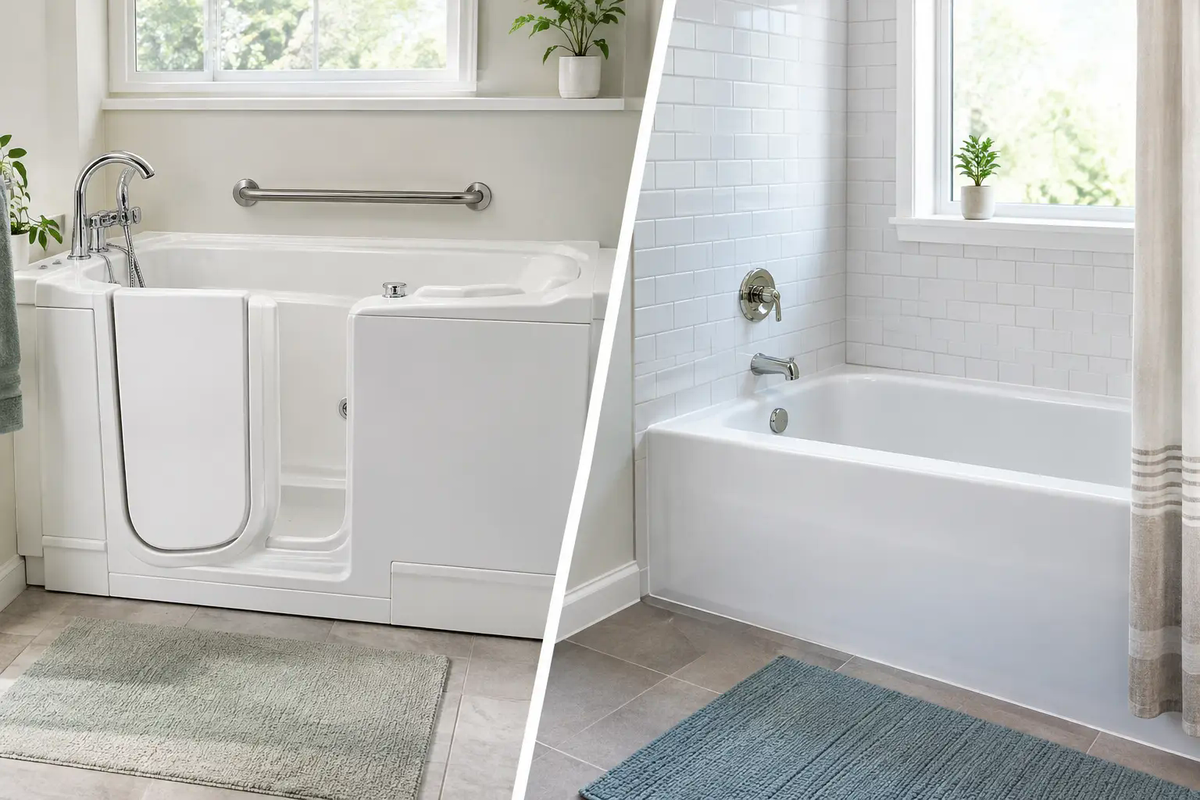
A bathtub that worked comfortably for years can become frustrating after knee surgery, a change in balance, or simply the realization that stepping over a high tub wall no longer feels easy. When comparing an accessible tub versus standard bathtub, the central question is not which one is better for every home. It is which one lets the person using it bathe with greater comfort, privacy, and confidence now and as needs change.
For many Las Vegas and Henderson homeowners, that question comes up before there is a major mobility concern. Planning an accessible bathroom update early can mean avoiding a second remodel later. The right choice depends on who uses the bathroom, how they bathe, available space, and whether a seated bathing experience would make daily life easier.
Accessible Tub Versus Standard Bathtub: The Main Difference
A standard bathtub requires the bather to step over the tub wall, lower themselves into the basin, and stand back up when finished. That may be routine for a healthy, steady person. But the tub wall can become a difficult obstacle for someone with limited leg strength, arthritis, an injury, or balance concerns.
An accessible tub, often called a walk-in tub, is designed to reduce that obstacle. Secure Bath's sit-in bath has a low entry threshold and a built-in seat, so the user steps through the door, sits down, and bathes in a supported position. Rather than climbing into a deep basin and lowering down, they enter at floor level and sit first.
The design of the door matters just as much as the threshold. A 180-degree outswing door opens fully outward, giving the user room to approach and enter without squeezing around a partially open door. Once seated, the door can be closed from a stable position. Its durable aluminum door and frame are made for regular use and provide a solid, practical alternative to a high-sided conventional tub.
That is the everyday meaning behind No Step. No Slip. No Stress. It is not a promise that a bathroom feature removes every risk. It is a straightforward approach to making one of the home's most challenging routines less demanding.
Where a Standard Bathtub Still Makes Sense
A conventional tub is not automatically the wrong choice. It may suit a household with young children, occasional guests, and no current need for a seated bathing solution. It is also familiar, and a basic replacement can sometimes cost less upfront than a specialized accessible bathing installation.
However, lower initial cost does not always mean lower long-term cost. If a homeowner replaces a tub today and later finds the step-over wall difficult, they may face another renovation to make the bathroom workable. For homeowners who expect to remain in their home for years, it can be wise to consider changing needs while the bathroom is already being updated.
A standard tub can also be paired with grab bars, a bath seat, a handheld showerhead, or a nonslip surface. These additions may improve comfort, especially for a temporary recovery period. Still, they do not remove the need to step over the tub wall. For some people, that remaining step is the deciding factor.
Why Built-In Seating Changes the Experience
The biggest practical difference is often what happens after entry. In a standard tub, the bather may need to lower themselves close to the bottom of the basin, then push up from a low position when done. That movement can be uncomfortable for people with painful joints, reduced strength, or limited range of motion.
A sit-in bath provides a chair-height built-in seat. The user can remain seated while washing, then stand from a more manageable height when it is time to exit. Grab bars provide a stable handhold, while a slip-resistant floor helps support careful footing during entry and exit.
This can also make a difference for a spouse or adult child who is concerned about helping a loved one. The goal is not to make family members responsible for every bath. It is to support independence and preserve dignity where possible.
The value of an outswing door
Not all accessible tubs use the same door design. Many walk-in tubs have inward-swinging doors, which can require the person to step inside and maneuver into position before the door closes. An outswing door changes that sequence.
With a full 180-degree outswing door, the doorway is open and accessible before entry. A person using a wheelchair, walker, or cane may find that open approach easier to manage, depending on the room layout and their individual mobility. After stepping through the low threshold, they can sit before closing the door. It is a simple design detail with a meaningful effect on how controlled the entry process feels.
Cost, Installation, and Bathroom Layout
Accessible tub costs vary because the project involves more than the bathing unit itself. The existing bathroom layout, plumbing location, wall condition, electrical needs, chosen features, and any related accessibility work can affect the final scope. A homeowner should be cautious about comparing only a headline price without understanding what installation includes.
A professional in-home consultation is useful because it looks at the actual room, not just a photo or rough measurement. The installer can assess whether the new sit-in bath can fit the existing tub area, how the door will open, where a caregiver or mobility aid may need room, and whether adjustments are needed for plumbing or electrical service.
In many homes, replacing an existing tub with a sit-in bath can be more direct than completely redesigning the bathroom. In other homes, a curbless shower or roll-in shower may be a better fit, particularly for a wheelchair user who prefers showering. There is no one-size-fits-all answer. The best option is the one that matches the user's bathing preferences and practical access needs.
For Las Vegas Valley homeowners, local experience matters because an installer who visits the home can make recommendations based on the space, rather than selling a standard package designed for someone else's bathroom. Secure Bath offers free, no-pressure in-home consultations to help homeowners understand those options and the related costs before making a decision.
Questions to Ask Before Choosing an Accessible Bath
Before replacing a standard tub, think through the regular bathing routine. Does the person prefer soaking or showering? Can they comfortably step over a tub wall today? Would sitting down before closing a door feel easier? Is the change intended for short-term recovery, or is it part of a long-term aging-in-place plan?
Also consider the bathroom around the fixture. A low threshold is helpful, but the path to the bath should be clear enough for the person who will use it. The placement of a toilet, vanity, door, walker, or wheelchair can influence which product and configuration makes the most sense.
It is worth asking about cleaning, water temperature controls, drain time, seating comfort, and the placement of grab bars. These are not minor details. A bathroom accessibility update should make the full routine easier, from entering the room to drying off and leaving it.
Frequently Asked Questions
Is an accessible tub only for seniors?
No. Seniors aging in place are a common audience, but accessible tubs can also help adults recovering from surgery or injury, people with chronic mobility limitations, and households planning ahead. The right time to explore options is when the existing bathtub feels inconvenient or when a homeowner wants to prepare thoughtfully, not only after a problem becomes urgent.
Can an accessible tub fit where my current bathtub is?
Often it can, but every bathroom should be measured and evaluated in person. The available width, plumbing, wall construction, and door clearance all matter. An in-home assessment provides a more reliable answer than a general online size chart.
Is a walk-in shower better than a sit-in bath?
A walk-in shower may be preferable for someone who wants to remain standing or needs roll-in wheelchair access. A sit-in bath may be better for someone who enjoys soaking, needs a stable seated position, or finds stepping over a shower curb or tub wall difficult. The better choice depends on the person, not a trend.
A bathroom should support the life being lived in the home, not ask someone to work around a fixture that has become difficult to use. If stepping over the tub wall has started to feel like the hardest part of bathing, a free in-home conversation can provide clarity and a practical path forward.
Questions about walk-in tubs? Ask away
Free in-home consultation: call (702) 789-7780
Get a free quote →