
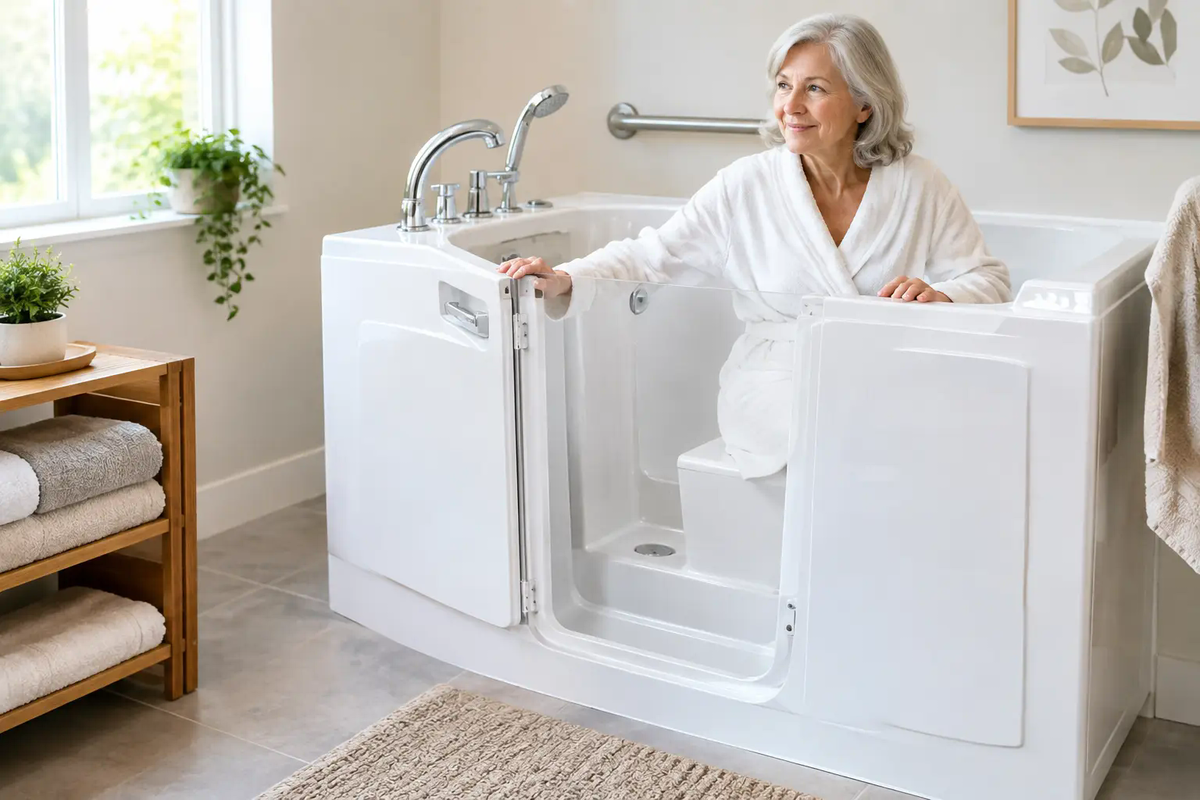
The hardest part of bathing is often not the bathing itself. It is the moment someone has to lift a leg over a high tub wall, turn around in a tight space, and lower themselves while trying to keep their balance. Accessible bathtubs are designed around that everyday challenge, giving homeowners a more comfortable way to bathe without giving up the privacy and routine they value.
For many Las Vegas and Henderson homeowners, the question comes up after a knee replacement, a change in balance, or a caregiver’s concern. Others are simply planning ahead. A bathroom that works well today may not work as comfortably a few years from now, and making one thoughtful change can be easier than facing another remodel later.
What Makes a Bathtub Accessible?
An accessible bathtub should make getting in, sitting down, bathing, and getting back out more manageable. The right solution depends on the person, the bathroom layout, and whether bathing independently is the main goal.
A standard tub asks the bather to step over a wall that may be more than a foot high. A walk-in tub, often called a sit-in bath, replaces that move with a low entry threshold and a watertight door. Once inside, the bather sits on a built-in seat rather than lowering themselves all the way to the floor of the tub.
This is a practical difference, not just a product feature. Sitting before bathing can feel more stable for someone with arthritis, limited range of motion, balance concerns, or fatigue during recovery. Built-in grab bars and slip-resistant flooring add useful points of support, while controls placed within reach can reduce awkward twisting or stretching.
Why an Outswing Door Changes the Experience
Not all walk-in tubs work the same way. Many have doors that open inward, which can require a person to step into the tub and maneuver around the door before sitting down. That may be workable for some homeowners, but it is not always the easiest fit for someone using a wheelchair, walker, or caregiver assistance.
Secure Bath’s sit-in bath uses a 180-degree outswing door with a durable aluminum door and frame. The door opens fully outward, allowing the user to approach the seat directly, sit down first, and then close the door. There is no need to balance inside the tub while trying to turn or position the door.
The aluminum construction matters, too. A bathing door gets used repeatedly and is exposed to water and humidity every day. A durable door and frame support a solid, dependable feel without treating accessibility as an afterthought.
For a homeowner who has begun using a walker, the difference may be straightforward: walk up to the opening, hold the available support, turn, and sit. For a family caregiver, the wider access can make it easier to assist without crowding into a narrow doorway. It is one reason a consultation should look beyond the word “walk-in” and focus on how the person actually moves through the room.
The Benefits of Sit-In Baths for Aging in Place
A sit-in bath can support aging-in-place planning because it addresses a common obstacle before it becomes a daily source of frustration. It does not have to mean someone is giving up independence. In many cases, it is a way to preserve it.
The main benefits are simple: a low threshold reduces the need to step over a tub wall, a built-in seat offers a stable bathing position, and grab bars and slip-resistant surfaces provide practical support. Some homeowners also appreciate hydrotherapy features for a more relaxing bathing experience, although those features should be viewed as comfort options rather than medical treatment.
There is also value in familiarity. A person who has always preferred a bath may not feel at home with a shower-only conversion. A sit-in bath keeps the experience of soaking while making entry and exit more approachable.
That said, a sit-in bath is not automatically the best choice for every household. A roll-in or curbless shower may better suit a full-time wheelchair user who needs open access, or a household that strongly prefers standing showers. Some homes benefit from combining a sit-in bath in one bathroom with a low-threshold shower in another. The best plan is based on real routines, not a one-size-fits-all answer.
Walk-In Tub Costs: What Homeowners Should Consider
The cost of accessible bathing includes more than the unit itself. Installation requirements vary by bathroom, plumbing placement, electrical needs, wall conditions, and the extent of any surrounding updates. A simple replacement in an existing alcove may be different from a project that requires changes to accommodate a new door swing or improve access around the tub.
It is helpful to think about value over time. Choosing a bathing solution that fits changing needs can help a homeowner avoid paying for a second remodel if mobility changes later. It can also make a home more comfortable for a spouse, visiting parent, or future caregiver.
Price should be clear enough to support a confident decision. During a free in-home consultation, the useful conversation is not just, “What does a tub cost?” It is, “What will work in this bathroom, what installation is involved, and which features will actually make daily bathing easier?” A local, owner-led consultation gives homeowners a chance to ask those questions without pressure.
Details That Matter in Accessible Bathtubs
The small details often determine whether a bathroom feels easier to use. Before choosing among accessible bathtubs, consider how a person will enter the room, approach the tub, transfer to the seat, and reach towels or controls afterward.
A few features deserve close attention:
- Entry height: A low threshold reduces the distance a person needs to lift their feet.
- Door direction and opening width: An outswing door can be particularly useful when someone needs to sit before closing the door or uses mobility equipment.
- Seat height and comfort: The seat should support a natural, stable sitting position rather than forcing a deep bend at the knees.
- Grab bar placement: Bars work best when they are positioned for the actual movements of entering, sitting, standing, and exiting.
- Floor surface: Slip-resistant flooring provides more secure footing, especially when the floor is wet.
- Bathroom clearance: A good tub design still needs enough room around it for a walker, wheelchair, or caregiver when applicable.
Homeowners should also consider the practical trade-off of a walk-in tub: it must fill before bathing and drain before the door can be opened. For people who enjoy soaking and benefit from seated access, that trade-off is often reasonable. For someone who wants the fastest possible daily routine, an accessible shower may be worth comparing.
When Is the Right Time to Make the Change?
Waiting until bathing becomes extremely difficult can limit choices and make a project feel urgent. Planning earlier gives homeowners more time to compare layouts, choose features that feel right, and schedule installation around their lives.
That does not mean every homeowner needs to remodel immediately. If the existing bathroom is working comfortably and safely, there may be no reason to rush. But recurring difficulty stepping over the tub, holding onto towel bars for support, avoiding baths because entry feels uncertain, or needing temporary help after surgery are all reasonable reasons to explore options.
For homeowners in Las Vegas, Henderson, and the surrounding Las Vegas Valley, Secure Bath offers free in-home consultations centered on the bathroom, the person using it, and the practical realities of the installation. The goal is not to push every household toward the same product. It is to help people plan once for changing needs and choose a bathing solution that supports everyday confidence.
No Step. No Slip. No Stress.
A more accessible bathroom is not about anticipating the worst. It is about making one of the most personal daily routines feel easier, calmer, and more comfortably your own.
Questions about walk-in tubs? Ask away
Free in-home consultation: call (702) 789-7780
Get a free quote →