
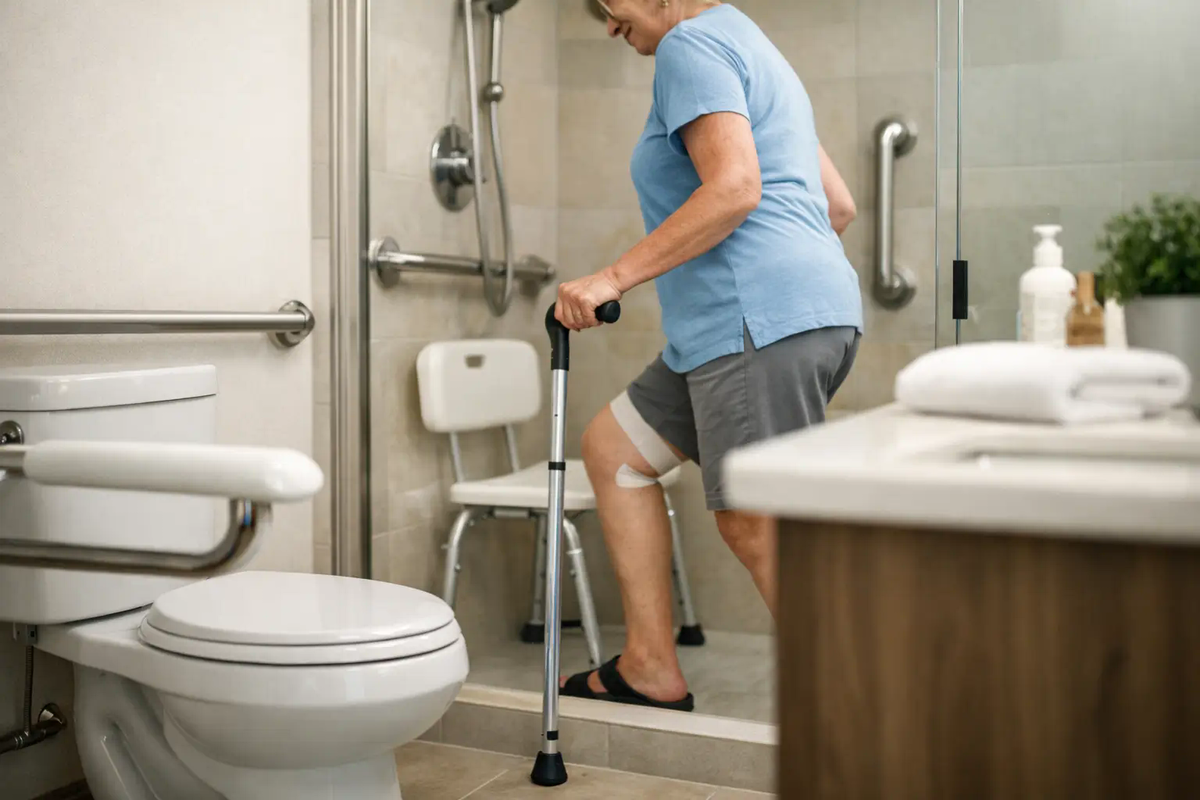
The first shower home after knee surgery can make a familiar bathroom feel unexpectedly difficult. An accessible bathroom after knee replacement is not about turning your home into a hospital room. It is about reducing the awkward movements that make bathing harder while you recover - especially stepping over a tub wall, standing on a wet surface, and trying to lower yourself into a standard tub.
For many homeowners, the bathroom becomes the room that reveals whether the house will continue to support independent living. A few well-chosen changes can make daily routines more comfortable now and more practical later, whether you are recovering from surgery, helping a spouse, or planning ahead for changing mobility needs.
Start With the Movement That Feels Hardest
Knee replacement recovery varies from person to person, and your surgeon or physical therapist should guide your personal activity limits. Still, most homeowners can identify the bathroom movements that feel least comfortable: lifting a leg over the side of the tub, balancing while turning, bending deeply to sit down, or pushing up from a low surface.
A traditional tub asks a lot of the body. You typically stand on one leg while stepping over a high wall, turn in a confined area, and lower yourself to a position that may be difficult to rise from. Even with improving strength, that sequence can feel inconvenient or unsteady.
Before choosing any product, stand in the bathroom and think through the full routine. Where do you enter? Where do you place a towel? Can you reach the toilet and vanity without twisting around a walker or cane? Is there room for another person to assist if needed? The best solution is one that works with the actual room and your everyday habits, not just a product photo.
Accessible Bathroom After Knee Replacement: Prioritize Bathing
For homeowners who prefer soaking baths, a sit-in bath can be a particularly practical change. Unlike a conventional tub, it lets the bather enter through a low threshold and sit down before bathing. Secure Bath's sit-in bath uses a 180-degree outswing door with a durable aluminum door and frame. The door swings outward fully, allowing a person to approach, sit in the built-in seat, and close the door from a stable seated position.
That detail matters after knee replacement. Rather than stepping up and over a tub wall while standing, the user can focus on a simpler sequence: open the door, take a seat, close the door, and bathe. It is a thoughtful approach for people with limited knee flexibility, balance concerns, or a need to move at a slower, more deliberate pace.
Built-in seating also changes the experience. A seat gives you a defined place to rest instead of asking your knees to support you through the entire shower or forcing you to lower yourself to the floor of a tub. Grab bars provide a secure handhold for repositioning, while slip-resistant surfaces help create better footing in an area where water is unavoidable.
The goal is not to promise that any fixture eliminates every risk. It is to remove unnecessary challenges from a routine that should feel private, comfortable, and manageable. That is the meaning behind No Step. No Slip. No Stress.
When a walk-in shower may fit better
A sit-in bath is not the only accessible bathing option. Some homeowners do not enjoy soaking baths, have a bathroom layout that better supports a shower, or need easier wheelchair access. In those cases, a curbless or roll-in shower may be worth considering.
A walk-in shower can provide an open entry and space for a shower chair. However, it should still be designed carefully. A shower seat needs to be comfortable and securely installed, grab bars must be placed where they are useful, and the floor should drain properly without creating a slippery area outside the shower.
The trade-off is simple: a low-entry shower is ideal for some mobility needs, while a sit-in bath offers the comfort of a warm, seated soak with a contained bathing space. The right choice depends on your range of motion, bathing preferences, available space, and whether your needs may change over time.
Features That Make a Real Difference
An accessible bathroom does not have to include every possible modification. It should include the features that solve the problems you actually have. After knee replacement, these are often the most useful considerations:
- Low-threshold entry: Reduces the need to lift the recovering leg over a high tub wall.
- A stable seat: Lets you bathe while seated instead of repeatedly lowering and rising from a traditional tub.
- Properly placed grab bars: Offers support near the entry, seating area, toilet, and anywhere you naturally need leverage.
- Slip-resistant flooring: Helps improve traction in wet areas, inside and outside the bathing space.
- Clear floor space: Makes room for a cane, walker, shower chair, or caregiver assistance without squeezing through tight paths.
Small details matter, too. A handheld showerhead can make it easier to rinse while seated. A raised toilet seat or comfort-height toilet may reduce how far you need to bend. Lever-style faucet handles can be easier to use than small knobs when one hand is holding a support bar.
Plan for Recovery, but Think Beyond It
It is tempting to treat bathroom changes as temporary equipment for a temporary recovery. Sometimes that is enough. A shower chair and a few well-positioned supports may make a standard shower workable while mobility improves.
But a knee replacement often prompts a larger question: if stepping over the tub is hard now, will this bathroom still feel practical five or ten years from now? Planning once for changing needs can be more sensible than completing a short-term fix now and facing another remodel later.
This does not mean assuming everyone will lose mobility. It means recognizing that a well-designed accessible bathing space can support many stages of life - an orthopedic recovery, arthritis flare-ups, a spouse with balance concerns, or simply the desire to remain comfortably at home. A sit-in bath can be a long-term home improvement because it keeps a preferred bathing routine available without the high wall of a conventional tub.
Consider Layout, Installation, and Cost Honestly
The cost of an accessible bathroom after knee replacement depends on the solution, existing plumbing, bathroom size, electrical needs, wall repairs, and finishing work. A straightforward replacement in an existing tub location is usually less involved than moving drains or redesigning the entire room. It is wise to ask for a clear, itemized explanation of what installation includes.
Door clearance deserves special attention. An outswing door is convenient because it allows you to sit before closing it, but the bathroom needs enough open space for that door to operate. During an in-home consultation, a knowledgeable installer should measure the room, identify obstacles such as vanities or toilets, and discuss how you will enter and exit the bathing area.
In Las Vegas and Henderson, homeowners also benefit from working with a local team that sees the home rather than guessing from a floor plan. Secure Bath provides free, no-pressure in-home consultations to help homeowners compare practical options based on their space, routines, and budget. That conversation should feel educational, not rushed.
Questions to Ask Before You Choose
Ask yourself whether you want to shower, soak, or have the flexibility to do both. Consider whether you can comfortably stand long enough to bathe, whether a caregiver may need access, and whether the doorway and floor space accommodate mobility equipment.
Then ask the installer practical questions: How high is the threshold? Where will the grab bars be located? How does the door operate? What is included in the installation price? How will the surrounding walls and flooring be finished? Clear answers help you compare choices fairly and avoid paying for features that do not solve your daily challenge.
A bathroom should not require a complicated strategy every time you want to bathe. If your current tub now feels like the hardest part of recovery, use that experience as useful information. A well-planned accessible bathing solution can make the next shower feel less like an obstacle and more like a return to your normal routine.
Questions about walk-in tubs? Ask away
Free in-home consultation: call (702) 789-7780
Get a free quote →