
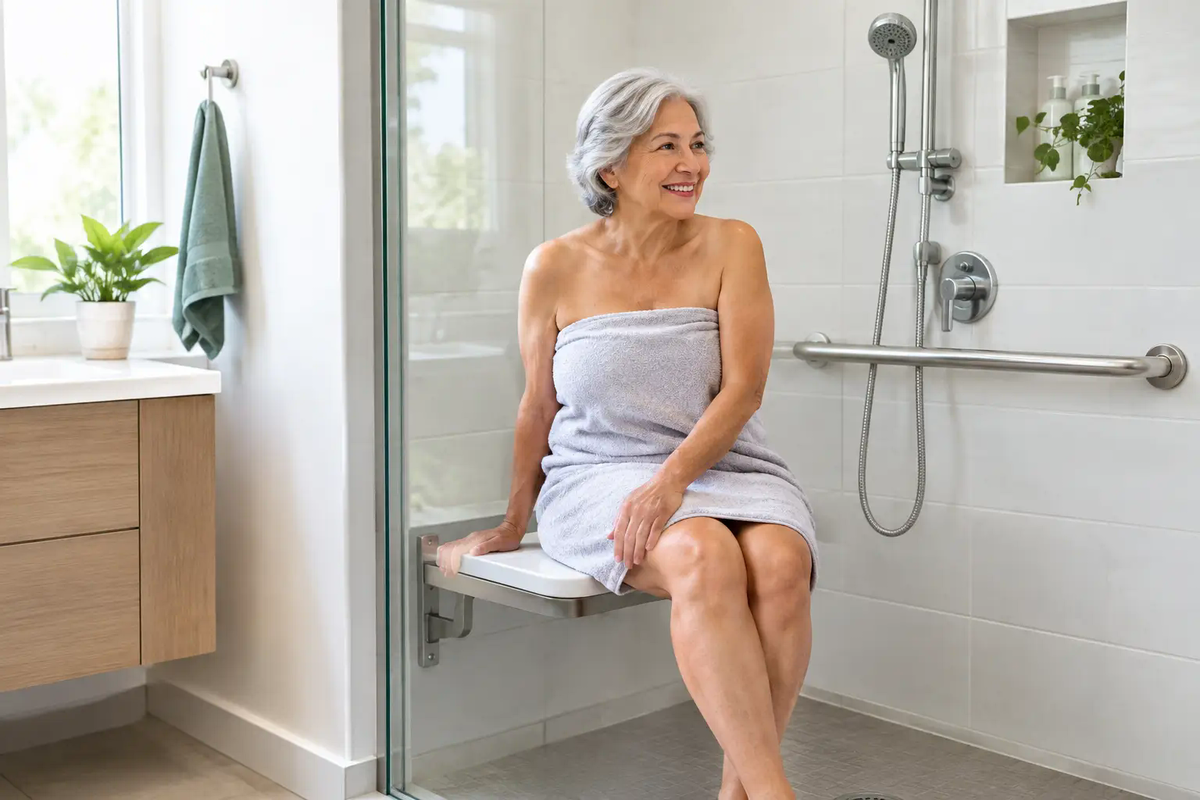
A bathtub can become difficult long before someone considers themselves to have a mobility problem. Maybe stepping over the tub wall now requires holding the counter. Maybe a knee replacement has made the routine temporarily harder. Or perhaps an adult child notices that a parent is avoiding baths and showers altogether. This accessible bathing guide explains the practical choices that can make bathing more comfortable, private, and manageable at home.
The goal is not to turn a bathroom into a medical space. It is to remove unnecessary difficulty from a daily routine. For many homeowners, especially those planning to remain in their Las Vegas or Henderson home for years to come, that starts with choosing a bathing setup that works while needs are changing, not only after a major problem develops.
What makes bathing accessible?
Accessible bathing is about reducing the physical demands of getting in, bathing, and getting back out. A traditional tub asks a person to lift one leg over a high wall, shift their weight while standing on a wet surface, lower themselves to the bottom of the tub, and reverse every step when finished. That sequence may be easy for some people. For someone with limited balance, joint pain, reduced strength, or a recovery-related restriction, it can be stressful.
An accessible setup changes the sequence. Instead of stepping over a high side and lowering down into the tub, the bather can enter through a low threshold, sit down first, and bathe from a stable seated position. Supportive features such as grab bars and slip-resistant flooring further reduce the need to twist, reach, or balance on one foot.
There is no single right answer for every household. A person who uses a wheelchair may need different clearance and transfer considerations than a homeowner who simply wants a more comfortable option for aging in place. The best choice depends on the person, the bathroom layout, how the space is used today, and how it may be used later.
Why a sit-in bath is different from a standard walk-in tub
Walk-in tub is the broad industry term, but the details of the entry system matter just as much as the low threshold. Secure Bath's sit-in bath is designed around a 180-degree outswing door with a durable aluminum door and frame. The door opens fully outward, allowing the user to approach the seat, turn, and sit down before closing the door.
That order of movement is meaningful. With some bathing designs, a person may still need to maneuver around a door opening or position themselves carefully before sitting. An outswing door creates wide access to the seat and can be especially helpful for people with limited mobility, people using a wheelchair, and caregivers assisting a loved one.
The aluminum door and frame are also practical. They are built for a bathroom environment where water, humidity, and regular use are part of daily life. More importantly, the door gives the person room to get settled before the bath begins. It is a straightforward approach to the promise many homeowners want from an accessible bathing solution: No Step. No Slip. No Stress.
Features that make everyday bathing easier
A low entry threshold is often the first feature people notice, but it works best as part of a complete bathing experience. Built-in seating means the user does not have to lower themselves to the floor of a tub or remain standing through the entire wash. Grab bars offer a reliable place to hold during entry, exit, and position changes. Slip-resistant surfaces provide added footing where water can make a smooth floor less predictable.
These features are not about assuming a homeowner cannot bathe independently. They are about making independence easier to maintain. A person may use every feature every day, or only appreciate them after a tiring day, an injury, or a change in balance.
Some homeowners are also interested in hydrotherapy features for a more relaxing soak. That can be a worthwhile comfort consideration, but it should not distract from the basics: safe entry, comfortable seating, easy controls, and a layout that suits the person using the bath.
A practical accessible bathing guide for choosing the right setup
Start with the daily routine, not a product brochure. Think about where bathing becomes awkward. Is the main issue getting over the tub wall? Is standing for a full shower tiring? Does someone need a place to sit while washing? Is there enough room for a caregiver to assist if needed?
A sit-in bath is often a strong fit for homeowners who enjoy soaking, want the security of a seated bathing position, or need to eliminate the high step of a conventional tub. It can also be a sensible long-term choice for someone who wants to plan once for changing needs rather than complete another remodel later.
A walk-in or roll-in shower may be preferable for someone who strongly prefers showering, needs wheelchair access, or has a bathroom layout that better supports a larger open shower area. Curbless showers can reduce the entry barrier, although the floor slope, drainage, shower seating, and available space all need careful planning. A tub-to-shower conversion can be useful, but it removes the option to soak, which matters to some households.
The trade-off is personal. The most accessible option is not automatically the one with the most features. It is the one that lets the user bathe with the least strain and the most confidence in their own home.
Consider the bathroom, not just the bath
Before choosing a solution, measure more than the existing tub opening. Doorways, turning space, nearby toilet placement, plumbing locations, and the path into the home can all affect installation planning. In older Las Vegas Valley homes, bathrooms can vary widely even within the same neighborhood.
It also helps to consider who will use the bathroom in the years ahead. If a spouse has different needs, a shared household may prioritize a versatile setup. If the bathroom is a guest bath, the homeowner may choose a different level of modification than they would for a primary bathroom.
A free in-home consultation is valuable because it replaces guesswork with a look at the actual space. A local, owner-led recommendation should explain what fits, what does not, and why, without pushing a one-size-fits-all answer.
Cost and long-term value: what homeowners should weigh
Accessible bathing projects vary in cost because bathrooms vary. The final scope can depend on the selected sit-in bath or shower, plumbing work, wall finishes, flooring needs, electrical requirements, and whether other modifications are needed to make the room work well.
It is reasonable to ask for clear pricing and an explanation of what is included. Homeowners should also look beyond the initial number. A less expensive change may solve one immediate issue while leaving another barrier in place. For example, adding a grab bar can be helpful, but it does not eliminate a high tub wall. On the other hand, a full bathroom remodel may add cost and disruption without improving the parts of the room that actually make bathing difficult.
Planning ahead can offer value because decisions can be made calmly. When a homeowner is recovering from surgery or facing a sudden mobility change, there may be less time to compare layouts and features. Choosing an accessible bathing solution earlier allows the project to be shaped around preferences, not urgency.
Small improvements that can support safer bathing
A sit-in bath is often the central upgrade, but surrounding details matter. Better lighting can make it easier to see wet areas and controls. A handheld showerhead can improve reach while seated. Properly placed grab bars are more useful than decorative towel bars, which are not designed to support body weight.
Keep frequently used items within easy reach so the bather does not need to stretch or turn abruptly. If a shower is part of the plan, include a stable seat and make sure controls can be reached from that seated position. These are simple decisions, yet they can make the finished space feel more natural to use.
When it is time to explore options
You do not need to wait for a fall, a major diagnosis, or a crisis to think about accessible bathing. Difficulty stepping over the tub, reluctance to bathe when alone, and concern about a spouse or parent are all reasonable signals to start a conversation.
For homeowners in Las Vegas, Henderson, and nearby Southern Nevada communities, Secure Bath offers free in-home consultations focused on the way you actually use your bathroom. A thoughtful plan can preserve the comfort of home while making one of the most personal daily routines easier to manage.
Questions about walk-in tubs? Ask away
Free in-home consultation: call (702) 789-7780
Get a free quote →