
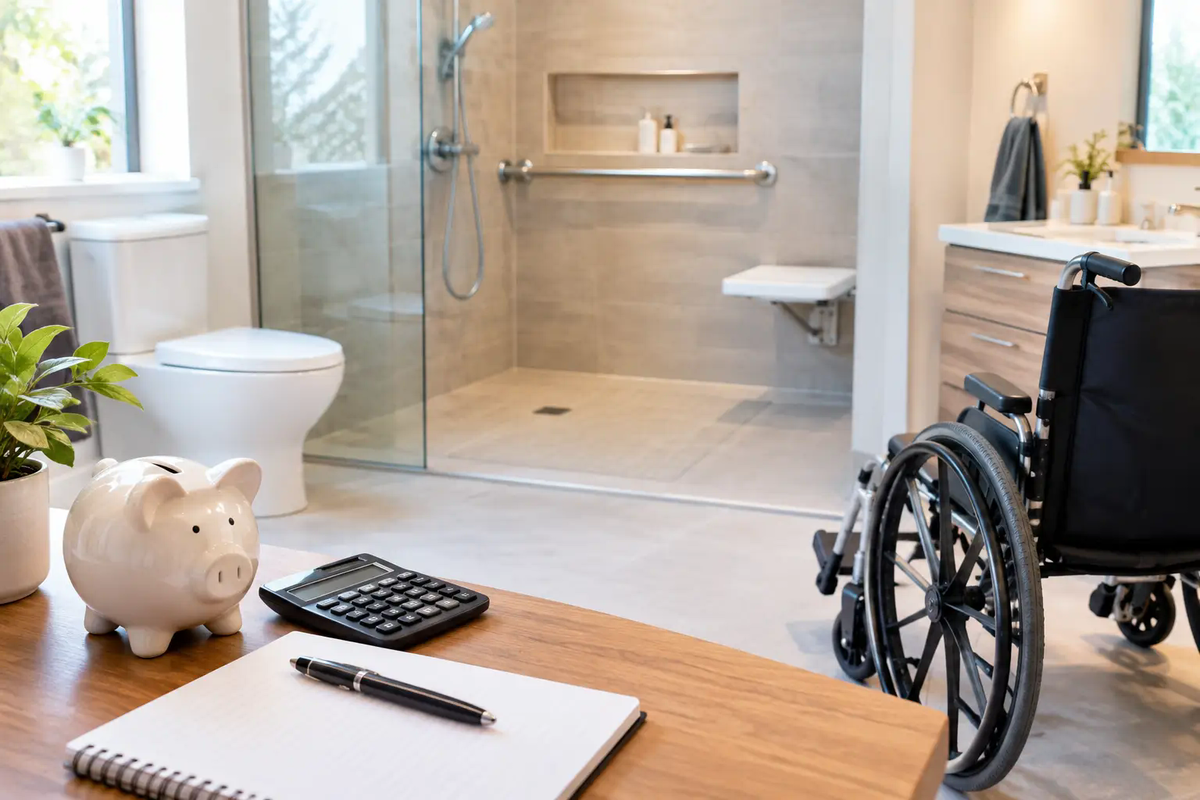
A bathroom can become difficult long before it looks outdated. Maybe stepping over the tub wall now requires holding the counter, or a spouse is recovering from surgery and needs a stable place to sit. An accessible bathing budget helps homeowners address those everyday concerns thoughtfully, without paying for features that do not fit their home or needs.
For many Las Vegas and Henderson homeowners, the decision is less about a full bathroom makeover and more about making one essential routine easier. A well-planned sit-in bath or walk-in tub can support privacy, comfort, and independence while helping a household plan once for changing needs.
Start an Accessible Bathing Budget With the Right Question
The first question is not, “What is the least expensive option?” It is, “What makes bathing difficult now, and what will make it easier to use this bathroom over time?” The answer may be a sit-in bath with a low entry, a walk-in shower with a seat, or a few focused modifications to an existing bathing area.
A homeowner who can stand comfortably but dislikes climbing over a tub wall may have different needs than someone who uses a wheelchair, has limited knee movement, or needs help from a caregiver. That difference affects the design, installation work, and total budget.
A practical budget should account for the bathing product itself, labor, plumbing and electrical work if needed, wall and flooring repairs, and any accessibility features that make the finished space genuinely useful. A low initial price can be misleading if it leaves out required installation work or does not solve the reason the project began.
The bathing solution itself
Walk-in tubs vary widely because their doors, seating, controls, water capacity, and comfort features vary. Secure Bath's sit-in bath centers on a feature that matters in daily use: a 180-degree outswing door. Instead of stepping into a tub and balancing while closing a door, the user can sit down first, then close the door from a stable seated position.
The door's durable aluminum door and frame are also more than a cosmetic detail. A bathing door is opened, closed, and sealed repeatedly, so homeowners should consider how its construction supports dependable everyday use. Built-in seating, grab bars, slip-resistant surfaces, and a low threshold all contribute to the overall value of a sit-in bath.
Hydrotherapy features may be worthwhile for people who enjoy a more spa-like bathing experience, but they should be considered separately from core access and safety needs. If the primary goal is getting in and out of the bath more comfortably, prioritize the entry, seat, door operation, and surfaces before optional upgrades.
Installation can change the total more than expected
The simplest installations often use the existing tub location because plumbing is already nearby. Even then, a professional installer may need to remove the old tub, adjust water lines, update a drain connection, repair surrounding walls, or make room for a new unit.
Older homes can bring added variables. The bathroom layout may be tight, flooring may need repair after tub removal, or an electrical circuit may be needed for certain features. These are not reasons to avoid an accessible bathing project. They are reasons to request a clear, in-home assessment rather than relying on a broad price range found online.
A local consultation also allows the installer to measure doorways, turning space, and the path into the bathroom. In some homes, the practical challenge is not fitting the new bathing unit into the alcove but safely bringing it through the house without unnecessary disruption.
Where to Spend in an Accessible Bathing Budget
When every dollar matters, spend first on the features that make bathing easier for the person who will use the space. A sit-in bath should feel comfortable and manageable, not simply different from a conventional tub.
The most valuable features are usually the low step-in threshold, stable built-in seat, easy-to-reach controls, slip-resistant floor, supportive grab bars, and a door that can be operated without awkward twisting or balancing. For someone with mobility limitations, these details are the project, not add-ons.
It also makes sense to budget for professional installation. A properly fitted bathing unit, secure plumbing connections, and finished surrounding surfaces help protect the investment and avoid the frustration of a bathroom that is only partly complete.
There are cases where a walk-in shower is the better use of funds. A curbless or roll-in shower may suit a wheelchair user, a person who prefers showering, or a household where a caregiver needs more room to assist. A tub-to-shower conversion can also be a practical choice when a deep soaking bath is not important.
Still, a shower is not automatically the lower-cost or simpler option. Creating a truly low- or no-threshold shower can involve drain changes, waterproofing, floor slope adjustments, and wall work. Comparing solutions means comparing the full installed project and the experience of using it, not only the advertised product price.
Plan for Long-Term Value, Not a Perfect Prediction
No homeowner can predict every future need. Planning ahead does not mean assuming that mobility will decline. It means choosing a bathroom that gives the household more options if balance changes, an injury occurs, or standing becomes less comfortable.
That long-term view is especially useful for homeowners who want to remain in the home they know and love. A sit-in bath can make it easier to keep a private daily routine without asking family members for help at every bath. For adult children helping a parent, it can also provide reassurance that the bathroom has been considered before a small challenge becomes a daily source of stress.
Consider how long you expect to stay in the home, who will use the bath most often, and whether the bathroom is the main bathing space. A primary bathroom may justify a more complete accessibility upgrade, while a guest bath may only need targeted improvements. There is no single correct scope.
In Las Vegas Valley homes, homeowners should also think about timing. Making changes before an urgent need can allow more time to compare options, consider layouts, and schedule installation around family routines. Waiting is sometimes necessary, but a project usually feels more manageable when it is planned rather than rushed.
Questions to Ask Before You Approve the Project
A clear proposal should explain what is included and what may change based on conditions found during installation. Ask whether removal and disposal of the existing tub are included, what wall and floor finishing is expected, and whether plumbing or electrical changes are anticipated.
Ask to see how the door opens and closes, where the seat sits, and how the user reaches the controls. If a family member or caregiver may assist, discuss that early. The best solution for independent use may differ from the best solution for assisted bathing.
It is also reasonable to ask who will handle the installation, how the space will be protected during work, and what the expected project schedule looks like. Honest answers are more useful than a rushed promise. A free in-home consultation should leave you with a clearer picture of the product, the work, and the total investment.
Secure Bath approaches these conversations as a local, owner-led service for homeowners who want practical recommendations rather than pressure. The goal is simple: No Step. No Slip. No Stress.
A well-built accessible bathing budget is not about choosing the most elaborate bathroom. It is about putting your money toward a bathing space that feels safer, more comfortable, and easier to use on an ordinary morning.
Questions about walk-in tubs? Ask away
Free in-home consultation: call (702) 789-7780
Get a free quote →